
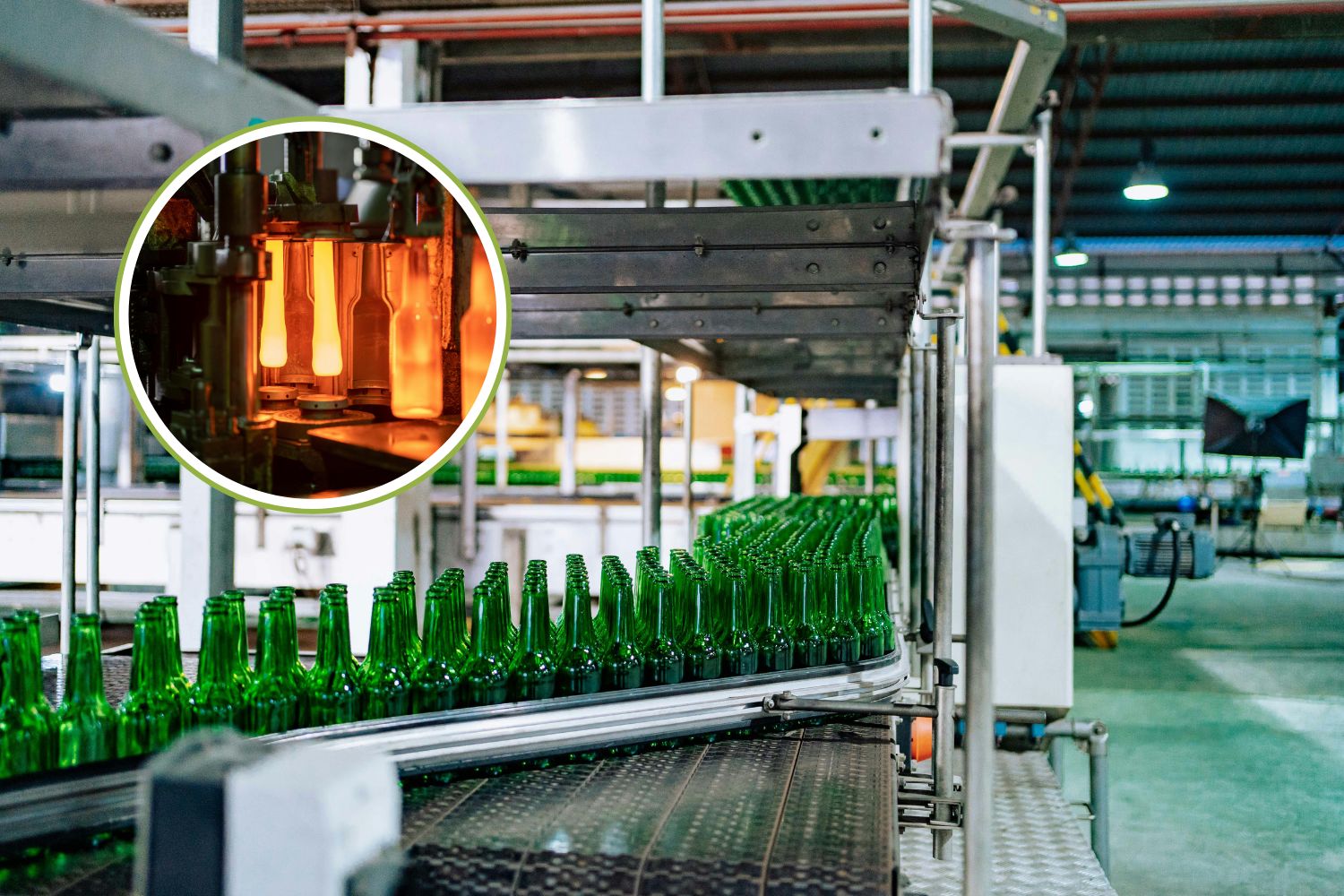
In an economic landscape characterized by uncertainties, volatile energy costs and geopolitical tensions, the Italian glass packaging industry stands as an example of resilience and success. According to data presented by Assovetro, the Italian Association of Glass Industrialists, 2025 promises to be a record year, with significant growth in production and an even more marked affirmation of glass as a bastion of food safety and environmental sustainability.
The sector recorded a 4% increase in overall production of bottles, jars, flacons and tableware compared to the previous year, with a peak of 6% for glass bottles alone. A positive trend that is also reflected on the commercial front, with an 8% increase in exports and a 3.6% decrease in imports. In particular, bottles intended for wine and beer are confirmed as the favorites among consumers in large-scale retail trade, a tangible sign of consolidated trust.
A constantly growing sector and consumer confidence
The exceptional performance of the glass sector in 2025 is not a coincidence, but the result of deep appreciation by consumers. Glass is perceived as a “doc” brand for food safety and the environment. Its intrinsic characteristics – waterproofness, chemical inertness, hygiene, versatility and total recyclability – make it the ideal container for preserving the quality and nutrients of food and drinks.
As underlined by Biagio Costantini, president of the Assovetro containers section, food packaging has always been looking for solutions that combine integrity, safety and sustainability. Glass fully responds to these needs, and the awareness of this is reflected in the numbers: 87% of Europeans and 96% of Italians recommend glass for preserving food and drinks.
The total production of glass containers exceeded 4.5 million tonnes in 2025. Bottles for wines, oils, beers and juices, in particular, reached 3.9 million tonnes, marking a +5.8% compared to 2024. This sector saw a real export boom, with a +23.8% on the previous year and a decrease in imports of 4.3%. Food jars, after a production explosion in 2024 (+24.5%), recorded a decline of 6.5% in 2025, while maintaining significant volumes (350 thousand tons).
The numbers of success: record production and recycling
In addition to production growth, the glass sector boasts impressive numbers in terms of recycling, a fundamental aspect for the circular economy and the environment. In 2025, the estimated glass collection rate stands at 89%, with an actual recycling rate of 80.5%. This figure far exceeds the European target of 75% expected for 2030, placing Italy at the forefront.
The environmental benefits of such an efficient recycling system are enormous: thanks to the recovery of glass, over 3.9 million tonnes of virgin raw materials, more than 400 million Smc of natural gas and over 2.4 million tonnes of CO2 emissions are saved every year. Figures that highlight the positive impact of glass on the environment and on reducing the carbon footprint.
Supermarkets: wine and beer top the list of preferences
The Nomisma Observatory on large-scale consumption confirms the trend: in 2025, sales of food & beverage products packaged in glass in large-scale retail trade (GDO) increased by 2.4%. Bottles of still wine and beer lead the purchasing list, with over one million bottles of beer and around 400,000 of still wine sold in national supermarkets alone, generating significant value for the sector.
Next in the ranking of the best-selling glass packaged products are tomato puree (390,000 packs), ready-made sauces (265,000) and sparkling wines (233,000). This demonstrates the profound integration of glass in the consumption habits of Italians and its versatility in different product categories.
Sustainable packaging: what Italians are looking for
The Nomisma survey also highlights how the concept of sustainability is now a fundamental criterion in the choice of packaging. For the consumers interviewed, sustainable packaging must mainly be: without excess packaging (45%), entirely recyclable (43%), with recycled material (35%), plastic free (29%), produced with responsible use of resources (28%), reusable (28%) and returnable (22%). Glass, with its intrinsic characteristics, perfectly embodies all these attributes, confirming itself as the ideal choice for conscious and environmentally friendly consumption.
Italy is the European leader in hollow glass
Italy confirms itself as the leading producer in Europe for glass containers, surpassing countries such as Germany and France. The sector is made up of 17 companies and 40 factories, directly employing 7,952 workers and generating a turnover of 3 billion euros. The Italian glass industry is also a significant consumer of resources: every year it uses 660 million cubic meters of natural gas and 1.62 TWh of electricity.
At a European level, the sector has 144 production plants distributed in 21 countries, which employ approximately 50,000 direct workers and 125,000 including related industries. These numbers highlight the economic and employment importance of the glass industry, a pillar not only for Italy but for the whole of Europe.
A crystal clear future for glass in Italy
The data provided by Assovetro paint an extremely positive picture for the future of glass packaging in Italy. Its steady growth, European leadership, record recycling rates and deep consumer trust make it a key player in food safety and environmental sustainability. Glass is not just a container, but a symbol of quality, respect for the environment and innovation, projecting Italy towards an increasingly crystalline and sustainable future.
