
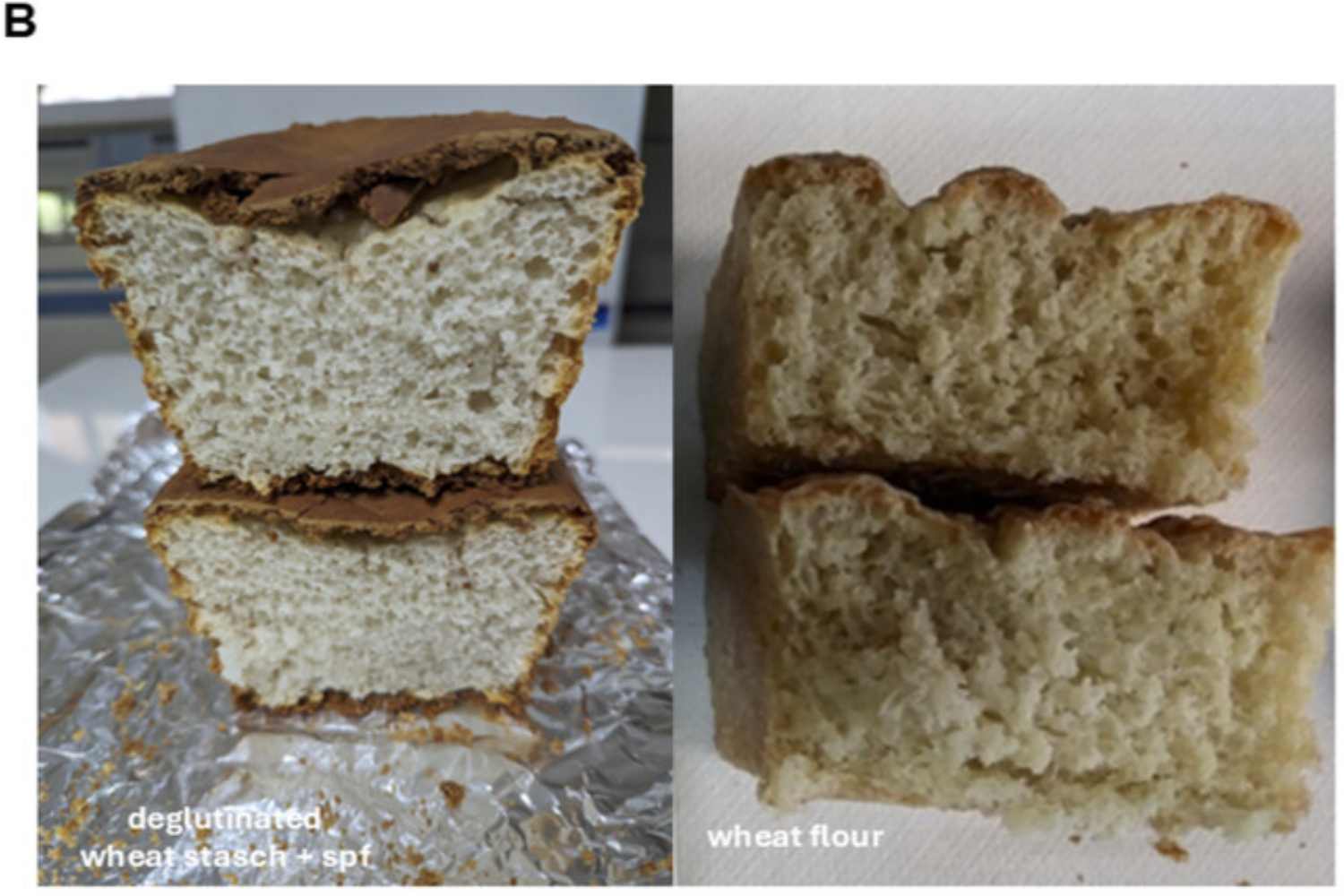
For years the concept appeared almost contradictory: a wheat bread designed for those who cannot consume gluten. Today, however, what seemed like an unachievable challenge takes shape in the laboratories of the Cnr of Avellino, where a group of researchers from the Institute of Food Sciences has developed a prototype destined to spark discussion in the food sector. The result is bread with a gluten content of less than 20 parts per million, the international threshold that allows a food to be classified as “gluten free”. But the real novelty is not just the technical data: this product still comes from wheat and maintains characteristics very close to those of traditional bread. A step that could profoundly change the market dedicated to people with celiac disease, intolerant or sensitive to gluten.
The technology that “transforms” gluten
At the basis of the discovery is an enzymatic technology developed over years of research and now covered by an international patent. Cnr scholars used microbial transglutaminase, a food enzyme capable of modifying the structure of gluten proteins. The process does not simply eliminate gluten by replacing it with alternative flours, as happens in most gluten-free products on the market.
Here the gluten is instead detoxified, selectively recovered and then reintegrated with wheat starch to obtain a new flour. The final result is surprising: a base that retains workability, consistency, aroma and taste very similar to those of ordinary bread. And this is precisely the point that makes the project so innovative. Until now, the gluten-free world has relied mainly on flours made from rice, corn or other naturally gluten-free cereals, often far from the flavor and structure of traditional bread.
More taste, but also a better nutritional profile
The research did not stop at the technological aspect. The studies conducted together with the Catholic University of Piacenza also highlighted a decisive element: the new bread has a superior nutritional profile compared to many gluten-free products already available on the market. An important detail, because one of the most frequent problems of gluten-free diets concerns foods that are often poorer from a nutritional point of view and less satisfying on a sensorial level. For this reason, the prototype developed in Avellino is considered by researchers to be the first true example of a wheat-based dietary therapeutic product designed for the gluten-free sector.
A turning point for millions of people
The market for gluten-free products continues to grow around the world and the possibility of consuming bread that really resembles traditional bread could represent a real turning point in the daily lives of millions of people. Because the goal achieved by the Cnr does not just speak of scientific research. It speaks of rediscovered normality, quality of life and a future in which eating gluten-free could finally no longer mean giving up the authentic flavor of bread.
You might also be interested in:
