
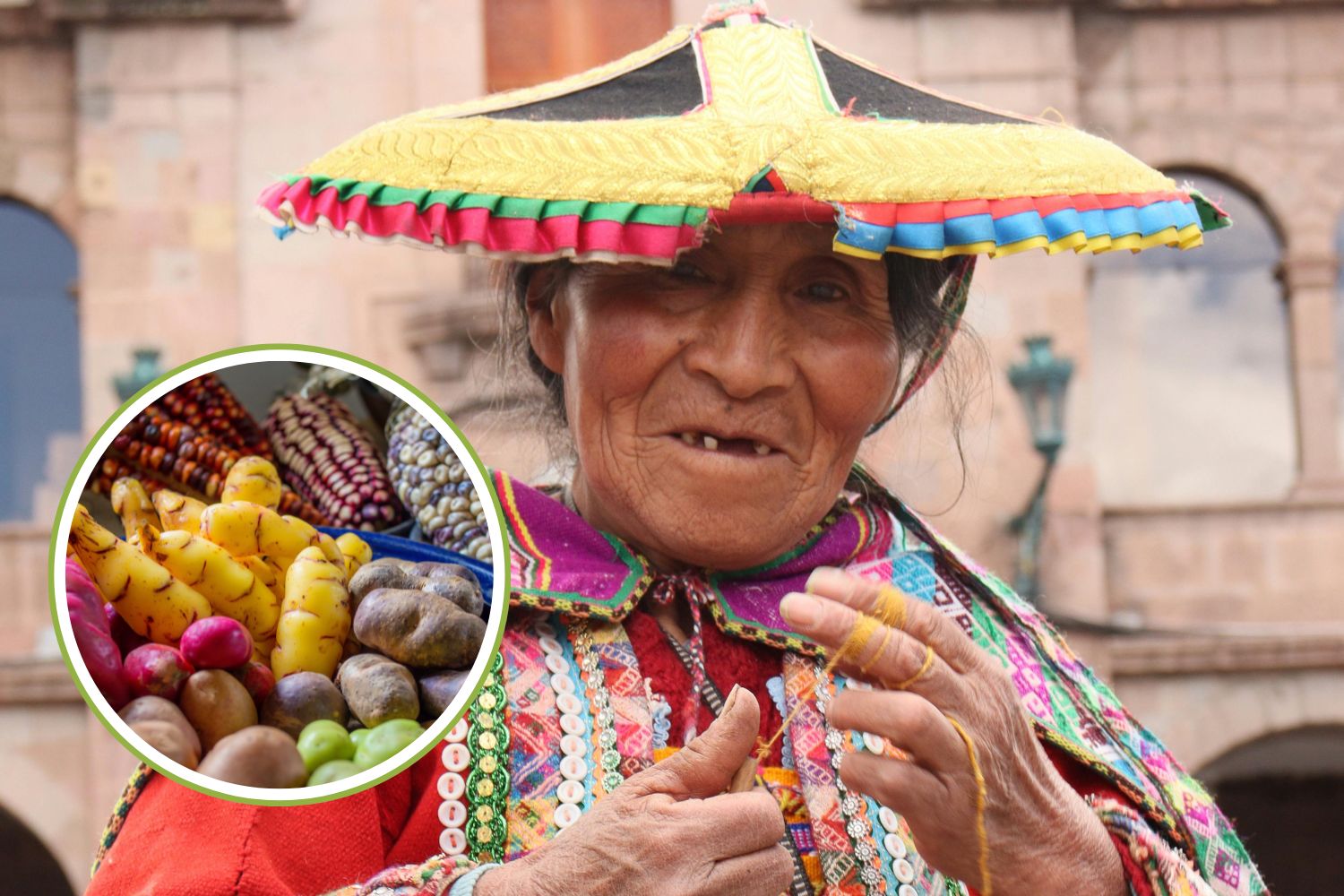
Before becoming a baked side dish, mashed potatoes, gnocchi, chips and evening salvation when the fridge is crying, the potato it was a matter of survival. In the Andes, between hard plateaus, cold, high-altitude fields and crops to be protected, this tuber has nourished entire populations for thousands of years. In America it was already known in ancient times and in Andean societies, then also in the Inca diet, it occupied a central place. From Peru the Spanish conquistadors brought it to Europe, also changing the cuisines of the Old Continent. An agricultural story, of course. Now also a story written in the body.
A new study published in Nature Communications analyzed the number of copies of the gene AMY1 in 3,723 people belonging to 85 different populations and found an out-of-scale figure in the indigenous Peruvian Andes: they possess the highest number of copies of this gene observed globally. AMY1 is linked to the production of salivary amylasethe enzyme that begins to break down starch even as we chew. Simply put, the digestion of starchy foods starts in the mouth, before the food even reaches the stomach.
The data is striking because the Andean populations studied have on average approximately 10 copies of AMY1while the global median observed in the study is around 7. In some comparisons there are two, three or four copies more than many other populations analyzed. About 60% of the Peruvian Andean sample carries at least 10 copies of the gene, a very high frequency for a trait linked to starch digestion.
Here the word “superpower” makes you smile, but it gives you an idea. For those who lived at altitude and had a stable source of calories in their tubers, digesting starch better could mean getting more energy from what they ate. The potato, domesticated in the Andean area in a window estimated between about 6,000 and 10,000 years ago, provided a resistant food, suitable for an environment where cultivation required practical intelligence even before agricultural romanticism.
The interesting thing is the mechanism. The potato created new genes out of nothing. It acted like a filter. Some people already had genetic variants with multiple copies of AMY1; in a context where starch was so present in the diet, those people may have had a small concrete advantage. More ability to process tubers, more energy available, perhaps better health, more likely to reach reproductive age and leave descendants.
A tiny push
The study estimates a selection coefficient equal to 0.0124i.e. approximately 1.24%. It looks like a crumb. Over a single lifetime it almost disappears. Over hundreds of generations, however, that crumb can become a beaten path. If a trait helps even a little, and continues to help for millennia in the same food environment, its frequency increases. Thus the genetic profile linked to AMY1 spread among Andean populations to become one of the strongest signals of local dietary adaptation observed in the study.
The researchers also clarified an important step: the high copies of AMY1 appear to derive in part from variants already present in ancestral populations, then favored by natural selection. Subsequently, new variations may have been added, through recombination mechanisms typical of this complex region of the genome. The result, seen today, is a genetic signature consistent with a very starchy diet and a long history of potato consumption.
A useful comparison comes from Europe and milk. Lactose tolerance in adults has spread where breeding and consumption of milk have made it advantageous to continue digesting it after childhood. Something biologically similar happened in the Andes, with a different food and another geography: the cultivation of potatoes favored those who were able to exploit the starch better. Food, when it remains long enough within a culture, can stop being just a habit and become evolutionary pressure.
Metabolism keeps memory
The delicate point concerns simplifications. More copies of AMY1 generally means more salivary amylase and faster starch digestion, but the effects on the whole organism remain complex. The authors of the study point out that the metabolic consequences depend on diet, environment, microbiome and genetic history. A variant useful in an ancient context, made up of tubers, physical work and different food availability, can have less linear effects within modern diets.
The research also cites another element: in Andean populations, selection signals have already been observed in other genes involved in carbohydrate metabolism, such as MGAMlinked to the digestion of sugars derived from starch. This reinforces the idea of a broader adaptation, focused on the ability to transform starchy foods into energy. In short, the potato may have worked together with other pieces of the Andean diet, leaving traces in multiple points of the digestive path.
