
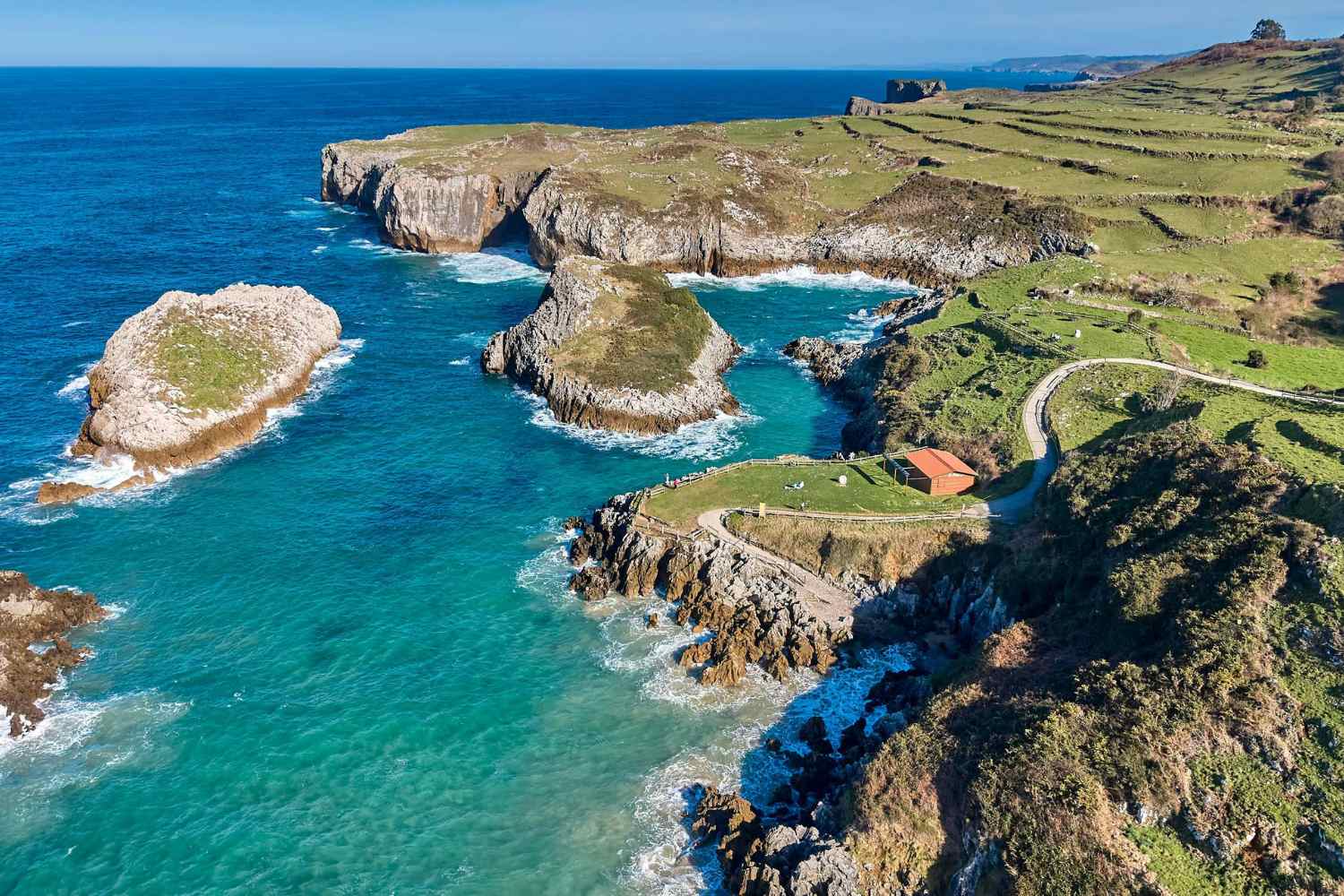
There’s a whole swath of the Iberian Peninsula that most tourists haven’t seen yet. It’s the one in the north, which in 2026 is becoming the favorite destination for those who have decided that summer doesn’t necessarily have to make you sweat.
The numbers tell the story: Italian bookings to Spain grew by +18.4% in the first quarter of the year. But the direction has changed. TurEspaña, the Spanish Tourism Board, knows this well and yesterday met the Civitatis team in Rome to discuss together what Italian travelers are looking for this summer. Not crowded beaches, not all-inclusive packages. Fresh, silence, contact with the territory.
What is coolcationing and why it’s not just a made up word
The phenomenon even has a name, coolcationing, which sounds like a publicity stunt but describes something real: the conscious choice to go where the temperatures are still livable, where the landscapes have not yet been consumed by mass tourism, where you return home with the feeling of having seen something real.
From the Basque Country to the Pyrenees: the Green Spain that no one has told you about yet
In Spain that place is called Green Spain. You enter from San Sebastián or Bilbao, two cities that have built their identity on food, culture and architecture, and which have nothing to envy of any European capital. Then we move towards Cantabria, where the noble palaces of Santander overlook a still largely intact Atlantic coast and the mountains reach almost to the sea. For those who want to go further, the Aragonese Pyrenees offer medieval villages, canyons and paths where the only noise is that of the wind. Mass tourism has not yet arrived in these parts. Let’s hope it stays that way.
Minorca
The same logic applies to islands. Menorca is perhaps the most successful example in the Mediterranean of how tourism can be done without destroying oneself: coves that can only be reached on foot, a local economy that resists, a landscape that has not been transformed into a scenography.
Civitatis and TurEspaña
Civitatis is a platform born in Spain which today is the main point of reference for those looking for tours, excursions and guided travel experiences in Italian and Spanish. Not a generic aggregator, but a catalog built on local guides who describe their territories directly, without the filter of English as the lingua franca of global tourism.
It is on this idea that the collaboration with TurEspaña was built: two subjects who share the same belief, that is, that the quality of a trip is measured by the depth of contact with the place you visit. When a guide tells you about a place in your language, you are able to go beyond the surface, to understand something about who lives there, about what that area is really like. It’s a detail that changes everything, especially in places like these, where history and local identity are exactly what you came looking for.
In the end, choosing where to go on holiday is also a small declaration of intent. Those who choose Green Spain, the Azores or Menorca are saying something about how they want to move in the world: more slowly, more curiously, less noise. Civitatis and TurEspaña are simply making it easier to do so.
