
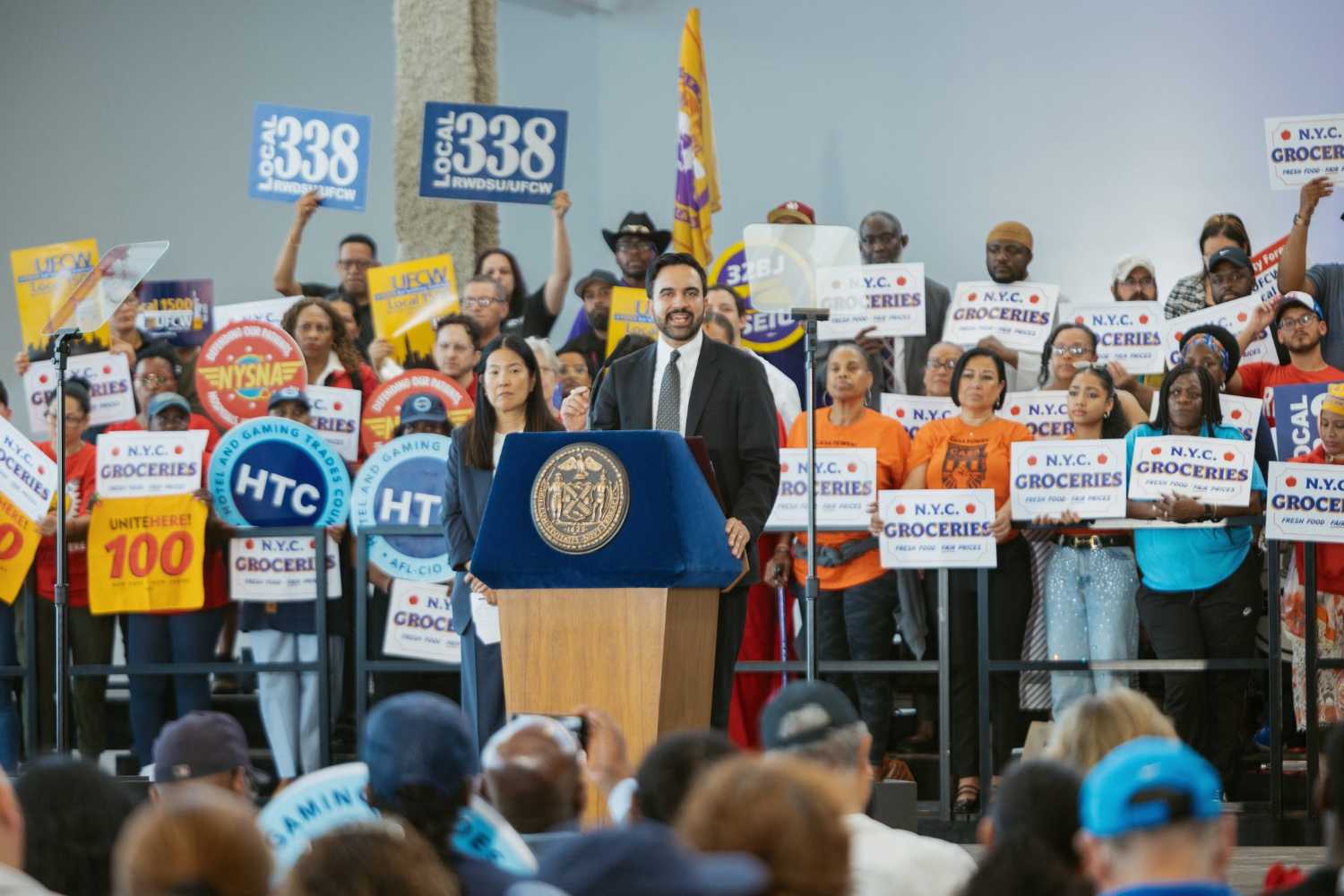
A project takes shape in New York that aims to intervene directly on the most sensitive issue in daily life: the cost of food. Mayor Zohran Mamdani has announced the creation of a network of municipal supermarkets at controlled prices, designed to guarantee access to shopping even for citizens in greater economic difficulty.
The first point of sale will be the “Peninsula” project, expected in 2027 in Hunts Point, in the Bronx, one of the areas with among the highest levels of poverty in the city, where approximately 36% of the population lives below the poverty line, compared to a city average of 18%.
The project: public shops, public housing and services
The plan is not limited to food distribution. Each municipal supermarket will be integrated with affordable housing and public spaces, in an urban strategy that aims to mend the social fabric of the most fragile neighborhoods. After the first experiment already started in East Harlem, the declared objective is to extend the model to all boroughs by 2029: Bronx, Queens, Brooklyn and Staten Island. The idea is to build a stable network of public outlets capable of reducing the impact of large private chains on food prices.
The political message and the cultural clash
During the presentation, Zohran Mamdani relaunched a highly social vision of the role of institutions. His position is clear, especially in comparison with the economic policies of the past, symbolically represented by Ronald Reagan. The mayor stated:
In the richest city of the richest country in the history of the world, no one should go hungry. That’s why we’re opening five city-owned grocery stores, one in each borough, starting with the Bronx. Lower prices. Good food. Publicly owned.
A message that directly contrasts the rhetoric of minimal government, overturning Reagan’s famous statement on the role of the state. Mamdani instead argued that the real problem is not public intervention, but the growing difficulty of families in covering essential costs.
In the richest city in the richest country in the history of the world, nobody should be going hungry.
That’s why we’re opening five city-owned grocery stores, one in each borough, starting with The Bronx.
Lower Prices. Good food. Publicly owned.
Hunts Point next year. Every… pic.twitter.com/d6XsYjC6JN
— Mayor Zohran Kwame Mamdani (@NYCMayor) May 18, 2026
A broader strategy between taxes, homes and services
The supermarket project is part of a broader administrative agenda. Among the measures already launched include a tax on luxury second homes above 5 million dollars, the blocking of hidden commissions in services and an investment plan of over 250 million dollars for public housing. Added to this are 122 million earmarked for the hiring of new teachers and a trial for free childcare. No less important is the plan for the construction of 12 thousand new accessible homes, also obtained thanks to a federal agreement.
A model that causes discussion
The reactions were immediate and polarised. A part of the population, especially in the peripheral neighborhoods, welcomed the initiative, seeing it as a concrete response to the increase in the cost of living. On the contrary, conservative sectors and part of the business world have criticized the project, calling it an experiment in “urban socialist economy”.
Meanwhile, the administration also claims results on an infrastructural level, with over 100 thousand road potholes repaired in the first months of government. A signal that strengthens the image of a city in transformation, where the debate does not only concern the present, but the urban welfare model itself.
You might also be interested in:
