
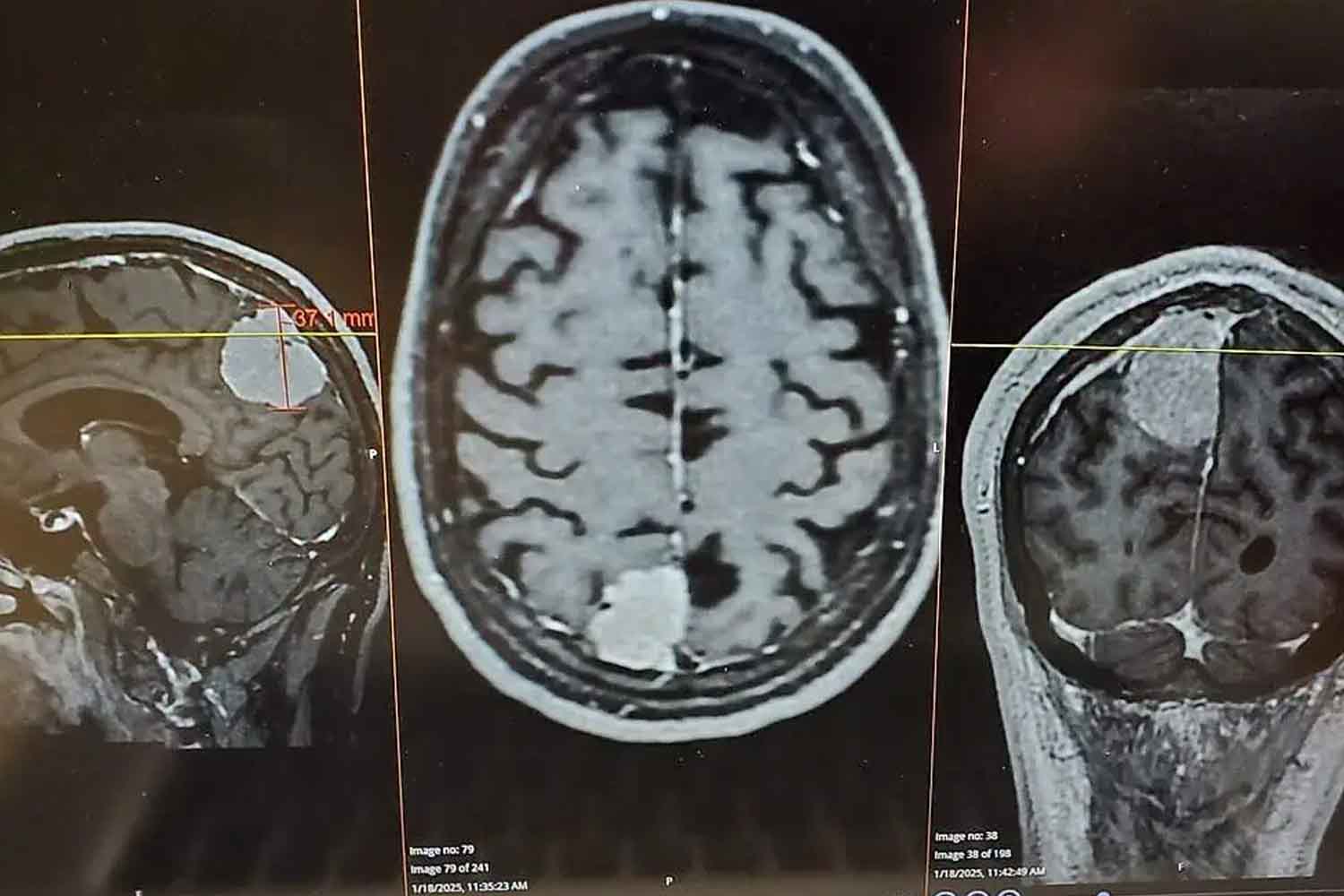
A team of researchers from the University of Cambridge has identified a new possible approach to fight glioblastoma, the most aggressive and common form of brain tumor. Instead of trying to directly kill cancer cells, researchers have developed a method to freeze them in place, preventing them from spreading into healthy tissue. The key to this innovative strategy lies in the alteration of the extracellular environment in which the tumor develops, and not in the direct destruction of the cells.
At the center of the discovery is hyaluronic acid (HA), a sugar polymer naturally present in the brain, which plays a fundamental structural role. The results of the study, published in the journal Royal Society Open Sciencepave the way for a new type of non-toxic and less invasive therapy for a disease with a five-year survival rate that is still sadly low: only 15%.
Unlike traditional treatments that aim to destroy or poison tumor cells, the research group led by chemist Melinda Duer decided to intervene on the brain microenvironment, modifying the extracellular matrix that surrounds the cells. This gelatinous network, rich in hyaluronic acid, acts like a scaffold that supports brain tissue and regulates cell movement.
Under normal conditions, HA is flexible and takes on shapes that activate specific receptors on the surface of tumor cells, such as CD44, signaling them to move. Using nuclear magnetic resonance (NMR) spectroscopy, the researchers observed that at low concentrations, HA becomes even more flexible, managing to adapt perfectly to the CD44 receptor and activating invasion mechanisms.
But when hyaluronic acid is chemically stiffened through a cross-linking technique that blocks its movement, cancer cells stop. They don’t die, but they stop invading surrounding tissues, as explained by Duer:
We didn’t have to kill the tumor cells, we just needed to change the environment in which they were found. They simply stopped trying to escape.
An answer to why glioblastoma often returns after surgery
To test the theory, the team grew glioblastoma cells inside gels with different concentrations of hyaluronic acid. In more dilute gels, where the HA was more flexible, the cells activated quickly, extending extensions called invadopodia, which allow them to infiltrate the tissue. In contrast, in denser, stiffer gels, the cells remained immobile. They were alive, but in a state of quiescence.
This behavior could also explain the frequent return of tumors at sites where surgical removal occurred. After surgery, postoperative edema often occurs, which dilutes the extracellular matrix making the HA more flexible. This could reactivate previously dormant tumor cells, making it easier for them to recover.
The breakthrough came with the introduction of a modified form of HA, called oxidized hyaluronic acid (oxHA). Even in dilute environments, this rigid version of the acid prevented cells from moving, simulating a dormant state regardless of concentration. According to the authors, it is not so much the molecular weight of HA that matters, but its flexibility in binding to the CD44 receptor.
A possible new therapy
This technique represents a radical paradigm shift compared to conventional treatments. Instead of trying to target every single tumor cell with drugs or radiation, we act on the external molecular context, blocking the signals that allow the cells to expand.
No one before has attempted to change the course of cancer by modifying the extracellular matrix around the tumor. It is the first example of therapy in which the tumor is ‘reprogrammed’ by acting on its environment.
Although the study is still in a preliminary stage and human studies are a long way off, researchers see this approach as a promising alternative for treating solid tumors, particularly those like glioblastoma where conventional drugs have little effect.
The great advantage of this strategy is that it does not require the drug to penetrate all the tumor cells, a feat that is often impossible in solid tumors.
The team is currently planning tests to see whether stiffening the HA can actually prevent recurrence after surgery. Research is also underway to understand whether other types of tumors may respond positively to similar changes to their extracellular matrix.
There is no shortage of challenges: it will be necessary to find safe and effective methods to administer HA modifiers into the brain, avoiding side effects and ensuring stability over time.
However, this discovery opens a new and fascinating avenue in the fight against brain cancer, suggesting that sometimes just “tuning” the right molecular environment to turn off the engine of the disease.
Cancer cells behave based on their surroundings. Changing their environment can mean changing their destiny.
Don’t want to miss our news?
You might also be interested in:
