
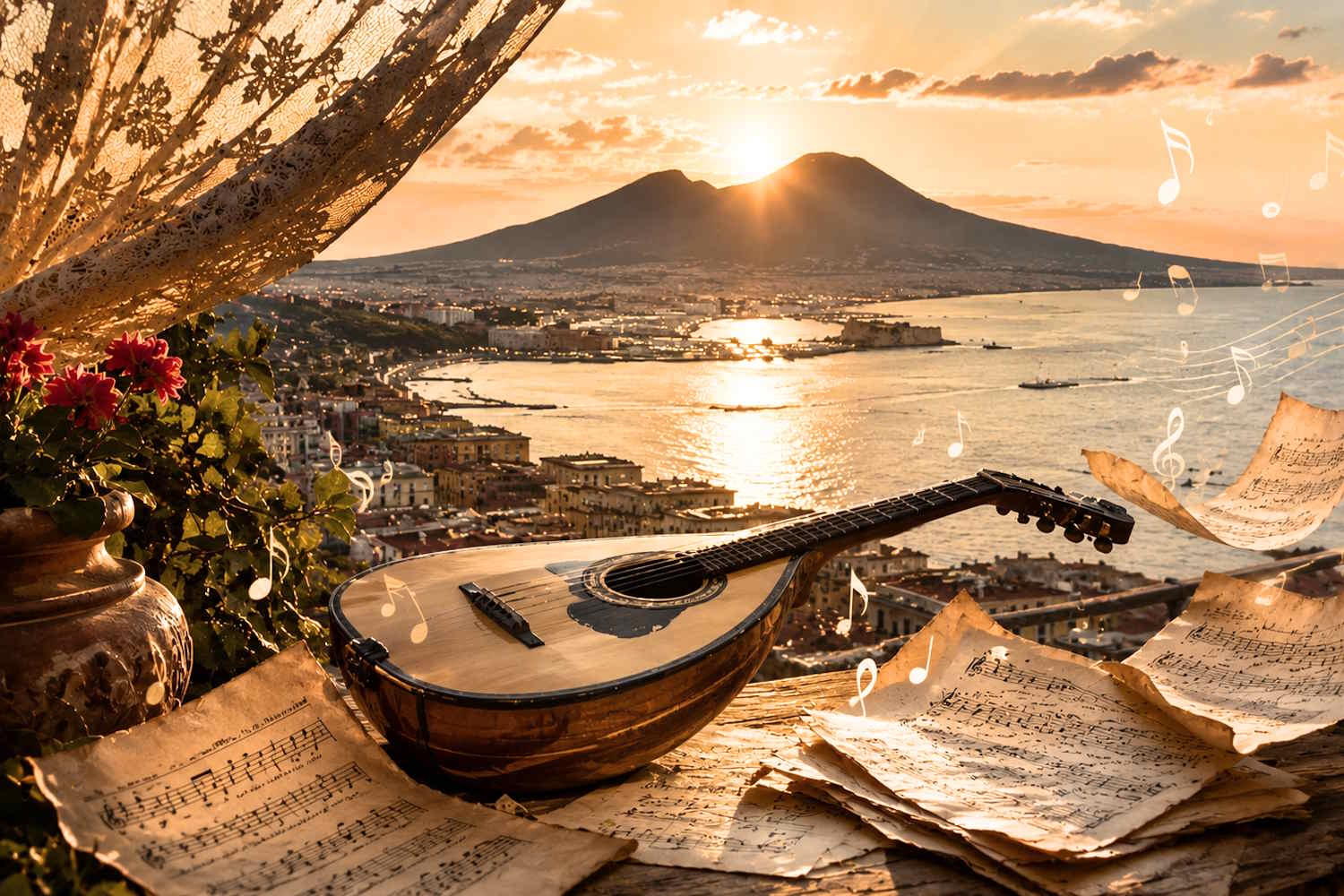
There is a piece of Italy that has crossed borders, oceans and generations for over a century. A music that tells of love, departures, nostalgia, hope and which continues to be sung all over the world. Now the classic Neapolitan song officially aims to become a UNESCO intangible cultural heritage of humanity.
The race has just begun, but the goal is to obtain the prestigious recognition by 2028. Leading the working group responsible for preparing the dossier will be Renzo Arbore, who has always been one of the greatest ambassadors of Neapolitan musical culture.
The candidacy will be officially launched this evening from the Arena of Verona during the event “World Champions – Italy loves Unesco“, broadcast on Rai 1. In front of one hundred UNESCO delegates, some of the most beloved Italian artists will interpret the great classics of the Neapolitan tradition accompanied by the orchestra, choir and ballet company of the Arena.
Because the Neapolitan song
Because it represents a form of collective narration that preserves language, memory, popular traditions and cultural identity.
Born between the nineteenth and twentieth centuries, it transformed everyday stories and universal feelings into melodies capable of speaking to people of all backgrounds. From Funiculì Funiculà to Return to Surrientofrom Reginella to ‘O My Sunthese compositions contributed to building the image of Italy in the world long before the advent of TV.
It is no coincidence that they have been interpreted by the greatest international artists and continue to be performed today in theatres, squares and conservatories on every continent. Any recognition would enrich the already vast list of Italian intangible heritage recognized by UNESCO, which includes traditions, cultural practices and knowledge handed down from generation to generation.
A heritage that does not concern monuments or landscapes, but what makes a community alive: its memory, its creativity and its ability to transmit knowledge and identity.
