
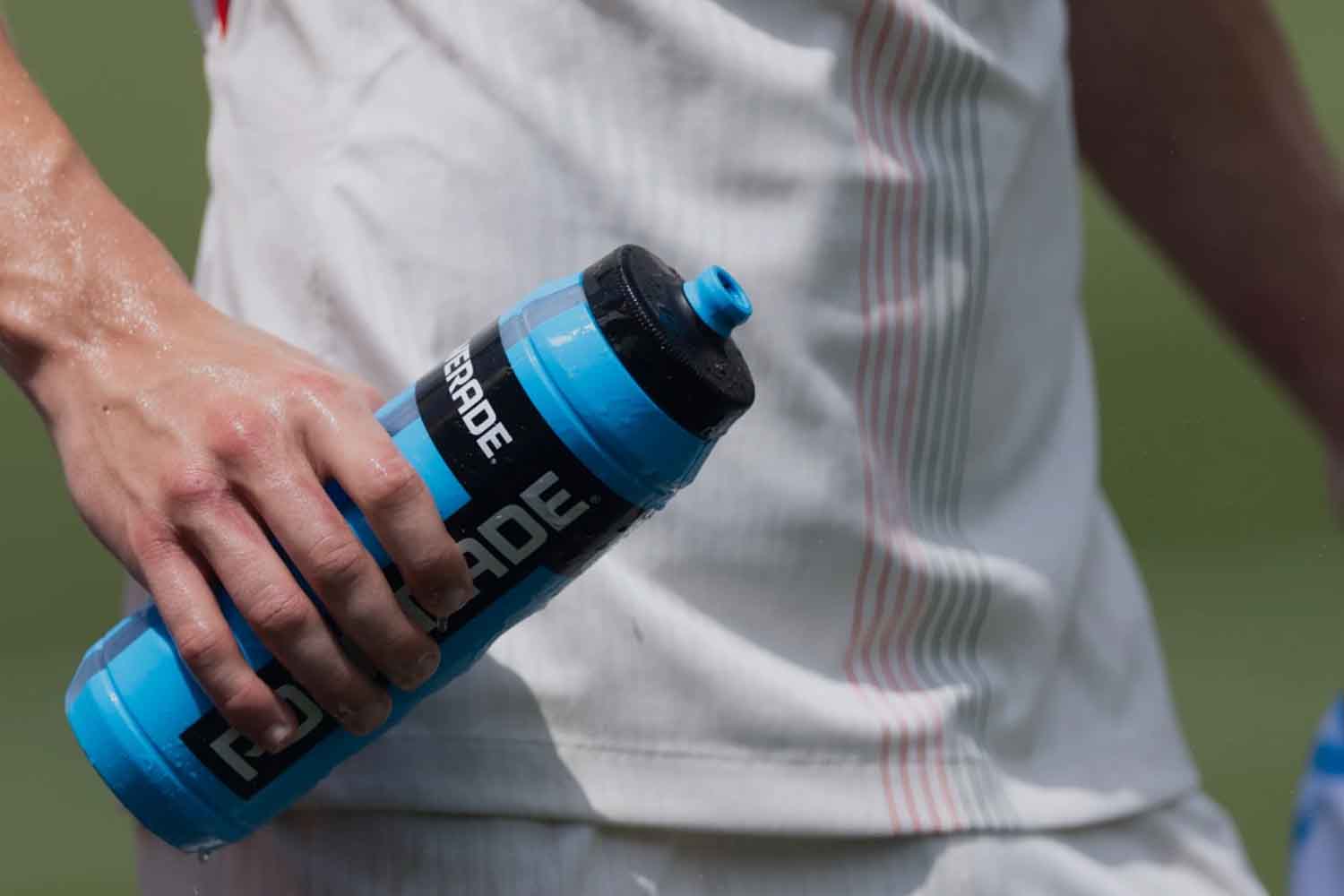
An empty, transparent, one-litre water bottle could enter the stadium until a few weeks ago. Now it stops at the gates. FIFA has backtracked and changed the rules for the 2026 World Cup by banning fans from bringing reusable water bottles into facilities, even when they are empty and designed only to be filled from a fountain.
The change of direction weighs because it comes on the eve of a huge tournament, the first with 48 teams and 104 matches, hosted between the United States, Canada and Mexico from 11 June to 19 July. Translated into the practical life of those who go to the stadium: queues, checks, long journeys, facilities that are often open, North American summer temperatures and water to be bought inside, under the conditions set by the organizers and the individual stadiums.
The rule changed
In the updated Stadium Code of Conduct, the formula is very dry: reusable water bottles are left out. The prohibited containers entry includes bottles, glasses, jars, cans and closed or capped containers that can be thrown or cause injury. Within that same clause also appears the clarification on water bottles at the 2026 World Cup: reusable ones can be blocked at the entrance, without distinction between full and empty.
The previous version of just 3 weeks ago had opened a different window. Fans were advised that empty, transparent and reusable plastic bottles, up to one litre, would be allowed. Then emails arrived to ticket holders with the opposite warning: reusable water bottles were prohibited. The support page for fans links to the updated code and specifies that FIFA, stadium authorities and government authorities can ultimately decide which items are prohibited.
The official motivation revolves around safety: a bottle can become an object thrown from the stands. It is a logic that many stadiums already apply in various ways, especially in the United States, where access controls to sporting events are often very strict. The clutch comes from the simplest detail: an empty water bottle allows you to drink without buying more plastic and without depending on internal sales points. With the new ban, even those who enter with a dry and harmless container will have to leave it outside.
The exceptions remain few and very limited. The code allows baby milk and sterilized water in containers of up to one liter per child, as well as medically necessary liquids up to 500 milliliters, with a medical certificate in English, French or Spanish and in the presence of the person for whom they are intended. For everyone else, the personal bottle remains a safety problem even before becoming a normal hydration gesture.
The heat stays there
The choice comes as several studies indicate the heat as one of the most delicate variables of the tournament. An analysis by World Weather Attribution estimates that 26 out of 104 matches could be played with a WBGT rating of 26°C or higher. The WBGT, Wet Bulb Globe Temperature, measures heat stress by combining temperature, humidity, solar radiation and air movement. In sports it matters more than the temperature read on the phone, because it better describes the body’s effort to cool down.
According to the guidelines cited in the same report, at 26°C WBGT the risk of heat stress becomes real and cooling breaks are needed. At 28 °C WBGT the conditions are considered such as to suggest postponement of the match. For the 2026 World Cup, the analysis indicates five races potentially beyond that threshold. Some air-conditioned systems reduce the risk inside the stadium, while in external spaces, waiting areas, entrance routes and fan events, protection depends much more on the local organisation.
FIFA has already provided mandatory hydration breaks for players: three minutes in the middle of each half, in all matches, regardless of the weather, the host country and the presence of coverage or air conditioning. A clear fit for the field. In the stands, however, the message arrives more distortedly: for players, referees and benches, water enters the protection device; for fans it becomes something to manage through internal sales, distributors, hydration stations and temporary structures.
FIFA has indicated the possibility of using nebulizers, fans, refrigerated tents, water points and other measures agreed with host cities and local authorities around the stadiums. Various cities, meanwhile, have already planned interventions to protect fans from the heat outside the stadiums. Inside the stadium, however, the rules are established by the organization of the tournament. And that’s where the empty water bottle disappears.
Water to buy
The ban sparked protests from fan associations. The harshest criticism concerns the idea of treating water as a product to be purchased when the tournament is played in the height of summer and in cities where heat and humidity can become a serious problem. In the facilities of last summer’s Club World Cup, in some venues bottled water was sold between 4 and 6 dollars, that is, around 3.5-5.5 euros with variable exchange rates. For the 2026 World Cup, the final prices will depend on the stadiums, but FIFA has indicated that the water will remain aligned with the prices charged in other events hosted by the same facilities.
The commercial issue remains in the background, visible enough to cause discussion. Coca-Cola is a historic partner of FIFA, with a formal relationship that began in the 1970s and official sponsorship of the World Cup since 1978. In major sporting events this means drinks, points of sale, brands displayed, contracts and commercial rights. Nothing new, of course. Only this time the decision falls on the most basic thing: drinking water while it’s hot outside.
Local politics also began to move. In Toronto, city councilor Josh Matlow publicly criticized the choice, arguing that access to water should be treated as a health and safety issue, especially in a host city. The point, for many administrations, is uncomfortable: outside the stadiums they prepare plans against the heat, inside they have to deal with a global policy decided by FIFA.
Among the most observed plants are those without roofs or without complete protection, in the areas of Kansas City, Boston, Miami, Philadelphia, San Francisco and New York/New Jersey. They are places where the heat can weigh on players and spectators in a different but concrete way. The fan sitting in the stands, standing still for hours, perhaps after a long queue and moving around the city, has fewer tools to protect himself than an athlete followed by medical staff, scheduled breaks and dedicated areas. The empty water bottle seems like a tiny detail as long as it remains on the kitchen table. In front of the turnstiles of a stadium, with the sun on you and the water entrusted to the internal price, the weight changes. It becomes a small, practical, annoying ban. And much less neutral than it seems.
You might also be interested in:
