
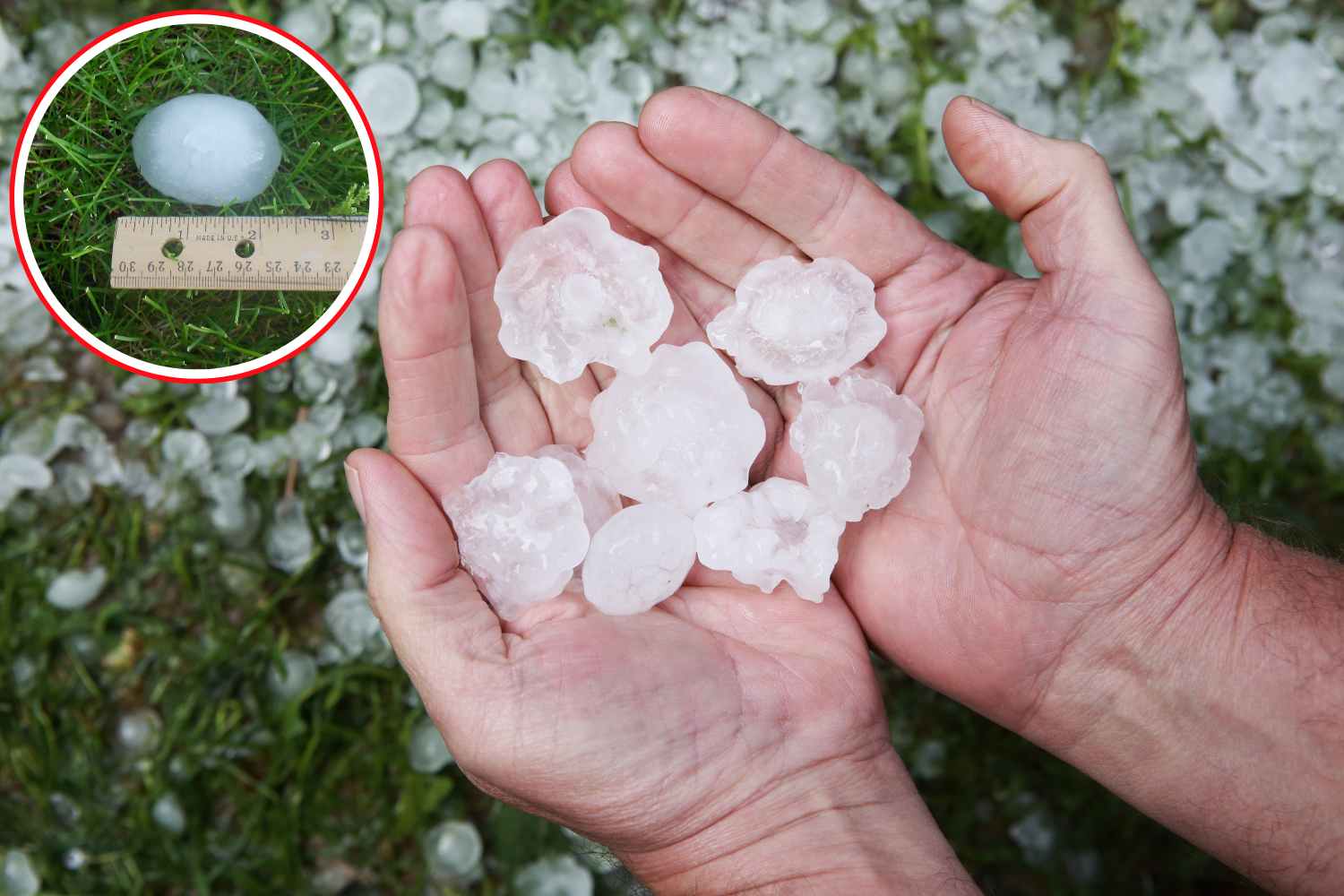
Many of us have engraved in our memories the memory of a sudden hailstorm, the metallic noise of the hailstones on the bodywork of the car or the frantic rush to find shelter. Meteorological episodes that we once considered exceptions and which today, however, are changing before our eyes. Until now, climate models had great difficulty predicting the behavior of individual storms. Two new international studies finally break through this fog, explaining to us that warmer air is modifying the very anatomy of thunderstorms, making them perhaps less frequent events in some seasons, but decidedly more violent.
The new storm engine
To understand what is happening above our heads we need to closely observe the functioning of the ascending currents, the pushes of air that go up from below. The current atmosphere, overheated by human activities, retains much more moisture than in the past. This vapor is not just simple evaporated water, but represents the fuel that powers the clouds. When warm air rises forcefully, it carries this moist mass to high altitude, where it condenses and freezes. The more vigorous the push, the longer the grain floats in the cloud, continuing to accumulate layer upon layer of ice before falling.
At the same time, however, the layer of air that the hail must pass through to reach the ground has become thicker and hotter, and this accelerates melting during its descent. This creates an apparently contradictory mechanism: the small fragments dissolve completely before contact with the ground, transforming into common rain, while the grains that manage to overcome the hot barrier arrive on the ground with enormous dimensions.
The numbers of the transition
The first research, authored by Timothy H. Raupach and Steven Sherwood of UNSW Sydney and published in Nature Climate Change, highlights how the affected areas are moving towards the poles, with a partial transfer of hailstorms from summer to winter. This seasonal shift will directly affect agriculture: summer crops such as corn may suffer less damage, while winter crops such as wheat will become more vulnerable.
The second study, led by Shiyi Zhang of Peking University and published in Nature, tells us that by the end of the century, the potential for global damage caused by hailstorms will grow between 36.5% and 42.1%, confirming that surface heat and specific humidity are driving this transition. Going into detail, the frequency of grains with a diameter equal to or greater than 3 centimeters will undergo a surge of between 37.9% and 51.8%, while smaller pieces will decrease by 4-12%.
What Italy risks
The new ice geography will not affect everyone in the same way. The tropical areas will see the risk decrease precisely due to the complete melting of the hail in the warm air, while the mid-latitudes will pay the highest price. Canada, northern Europe and south-eastern Australia (where in 2025 damage reached a record 1.9 billion Australian dollars) will see extreme phenomena multiply.
In Europe the situation is split in half. If the Iberian Peninsula and the Balkan area show a tendency towards a decrease in the phenomena, Italy and Northern European countries find themselves in the direct trajectory of a net increase in the energy accumulated by storms. A trend that translates into a strong threat to the roofs of our homes, to cars and to the photovoltaic systems themselves. Understanding this metamorphosis is the first step in rethinking the protection of our cities and countryside, reminding us that the only real prevention involves drastically cutting greenhouse gas emissions.
