
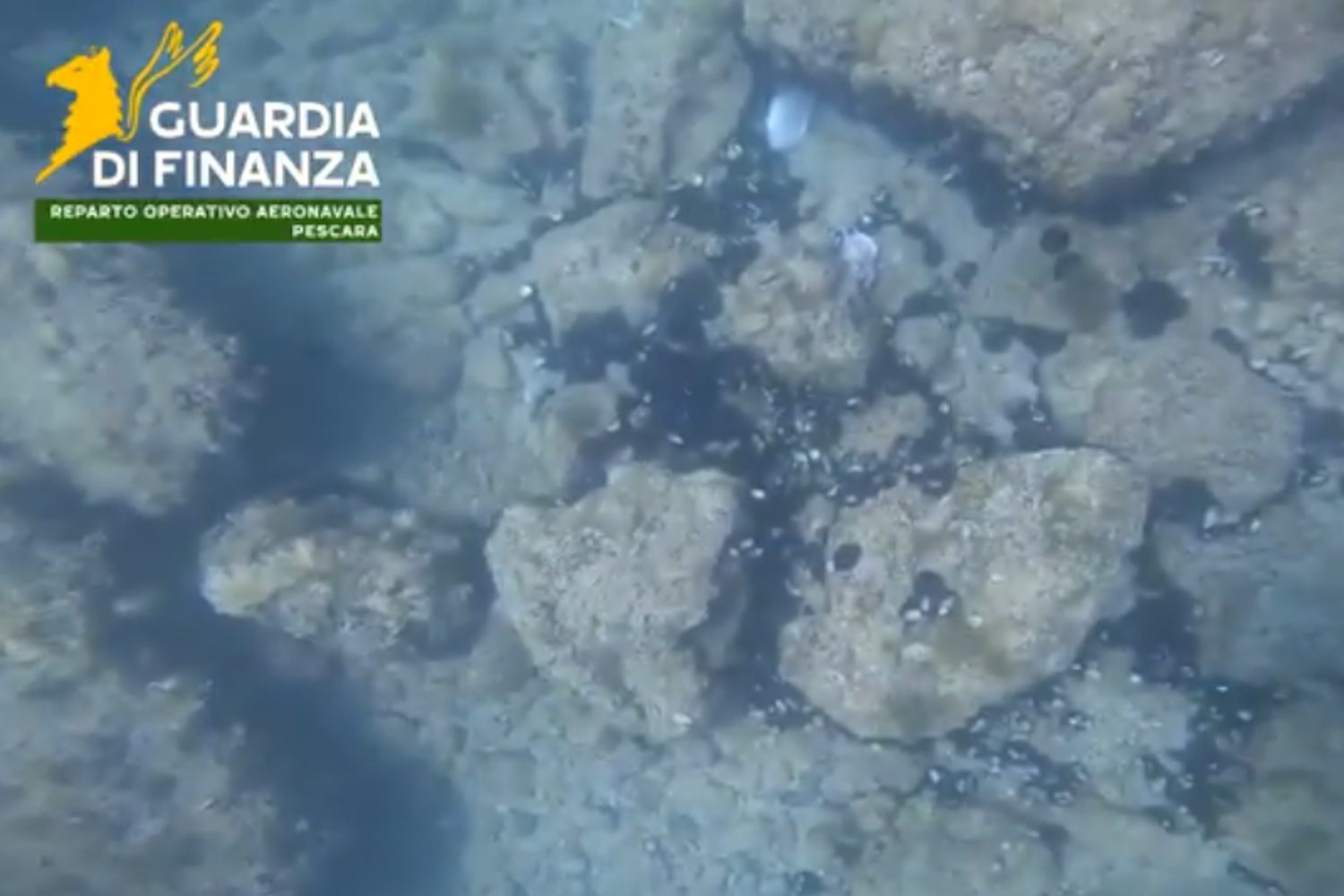
Well over 5,000 sea urchins plucked from the black market and returned to their natural habitat. This is the outcome of two operations conducted along the Abruzzo coast by the Pescara Financial Police against poaching, a phenomenon that continues to threaten the already fragile balance of marine ecosystems.
With the arrival of summer, in fact, pressure increases on the most sought after and profitable species, including sea urchins, organisms that are fundamental for the health of the seabed but are increasingly victims of poaching.
The operations began after some reports received on the public utility number 117. In a first intervention, on the coast of Casalbordino, in the Chieti area, the financiers surprised an illegal fisherman who had just come out of the water with the equipment used for the illegal collection of sea urchins.
A second check was carried out in San Vito Chietino, where a lookout from the Naval Station of Pescara identified, thanks to a night camera, a boat and two divers engaged in illegal fishing activities. The coordinated action between patrols at sea and on land also made it possible to identify other subjects involved.
Overall fines of around 6 thousand euros were imposed for the three fishermen, while the equipment used was seized and will be subject to confiscation. The 5 thousand urchins recovered alive, however, were immediately thrown back into the sea by the operators.
@GdF
Why sea urchins are so important
These small invertebrates play a fundamental role in the balance of coastal ecosystems because they feed on algae and contribute to keeping seabeds and seagrass beds healthy. When they are taken in excessive quantities, the entire ecosystem can suffer: imbalances between species increase, food chains are altered and the ability of habitats to regenerate decreases.
It is no coincidence that in recent years several Italian regions have taken action. In Sardinia, for example, the harvesting of sea urchins was suspended for three years starting from 2022 to allow the recovery of natural populations, put to the test by decades of intensive harvesting. Restrictive measures and increasingly severe limits have also been introduced in other areas of the Mediterranean, where scholars report a progressive impoverishment of the seabed.
This is why the recovery of the approximately 5 thousand hedgehogs seized in Abruzzo takes on a significance that goes far beyond simple intervention against poaching. Returning these animals to the sea means giving an extra chance to an ecosystem already under pressure due to illegal fishing, pollution and the climate crisis.
