
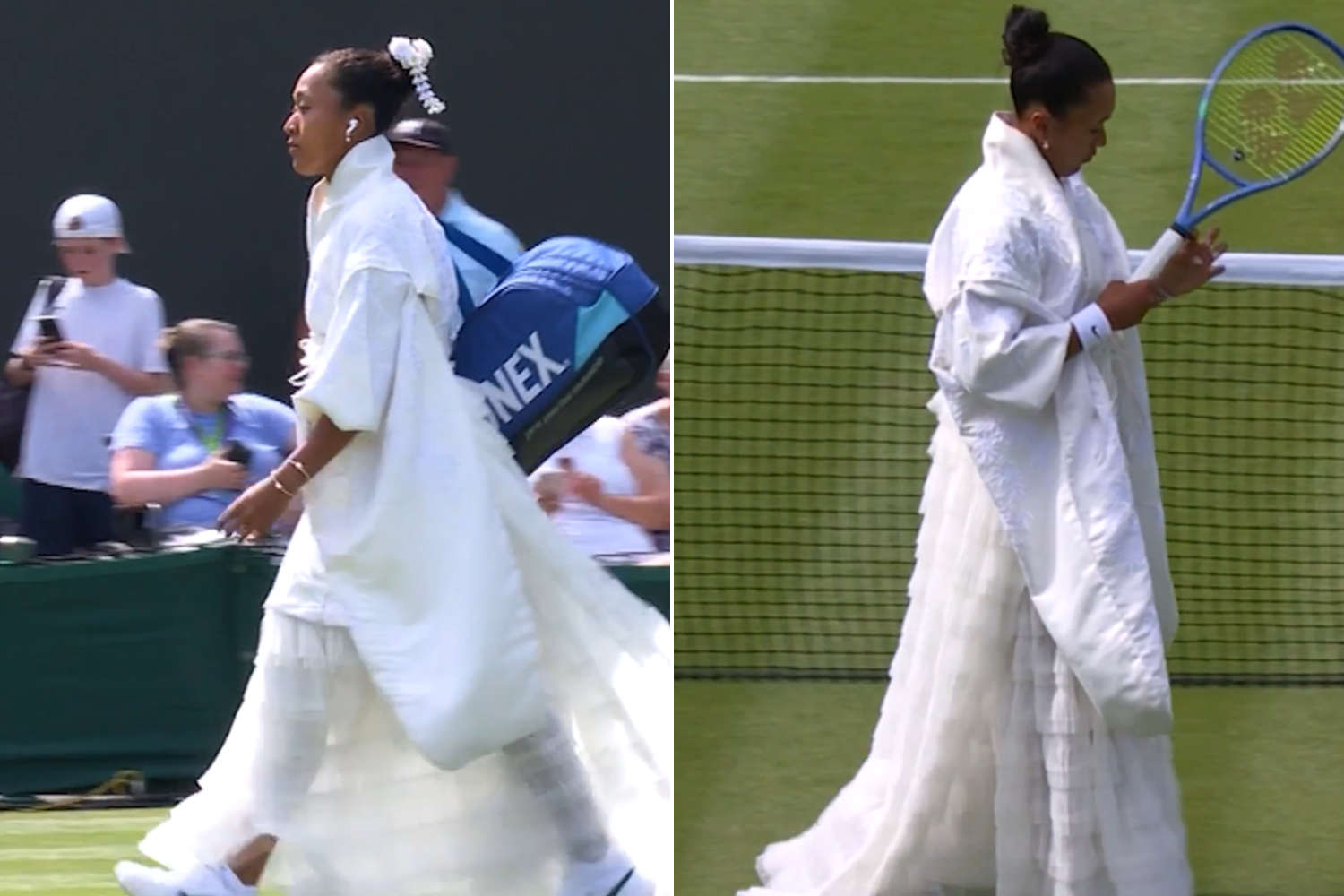
The green rectangle of the All England Lawn Tennis and Croquet Club is historically the custodian of the rigor and most uncompromising tradition of the world circuit. Yet, during the debut at Wimbledon 2026, the strict rules of the London ritual which strictly impose white shoes and suits were shaped by the creativity of Naomi Osaka. The Japanese champion, already winner of four Grand Slam titles and the first Asian in history to climb to the top of the WTA rankings, transformed her entry onto the playing field into a true high fashion show.
View this post on Instagram
Before overcoming the French Elsa Jacquemot by two sets to zero, the athlete captured the attention of the public by showing off a sumptuous and long white kimono layered with flounces. A complex structure conceived by Tokyo stylist Hana Yagi, capable of merging the suggestions of the ceremonial vestments of the Rising Sun with the cinematic imagery of Kill Bill. To embellish the look, enriched by careful embroidery of cherry blossoms and cranes, a kanzashi stood out, the traditional ornament inserted in the hair as a symbol of identity.
View this post on Instagram
View this post on Instagram
High fashion as an ecological and avant-garde manifesto
The stylistic audacity shown in London represents only the latest piece of a permanent creative mosaic that sees Naomi Osaka collaborating steadily with her team of emerging designers and with her technical partner Nike. Every official appearance becomes an opportunity to convey precise messages, taking inspiration from the sacred monsters of the past such as Venus and Serena Williams.
Only a month earlier, on the red clay of Roland Garros in Paris, the tennis player had appeared in a dress of silver and gold sequins that reproduced the nocturnal reflections of the Eiffel Tower, created by the French designer Kevin Germanier using exclusively recycled materials to combat the culture of fast fashion.
View this post on Instagram
A philosophy also applied at the Australian Open, where she wore a green and turquoise dress designed together with the London designer Robert Wun and inspired by the elegance of jellyfish, or at Indian Wells, where she showed off a bold leopard-print suit combined with facial jewels designed by Chris Habana.
Beyond the playing field: the human and political substance
However, reducing the figure of the player born in 1997 to a purely aesthetic phenomenon would mean neglecting her extraordinary human caliber and profound civil commitment. Naomi Osaka has been able to undermine the stereotype of the one-dimensional athlete, tackling complex dynamics such as the Black Lives Matter movement head-on. His decisions to use masks with the names of victims of racial violence such as George Floyd and Breonna Taylor during the 2020 US Open remain historic.
The same can be said about his stance on the protection of mental health in sport, a topic on which he broke the veil by deciding not to participate in the press conferences during the French Open, explaining that he suffers from anxiety and depression.
And faced with the attempts at social delegitimization suffered on digital platforms by those who called for a total political disengagement on the part of athletes, the tennis player responded firmly on Twitter by claiming her rights:
I can’t stand it when people say that athletes shouldn’t talk about politics but just play.
A concept reiterated with lucid irony to dismantle the arguments of the detractors:
First: let’s talk about human rights. Second: why would you have more right to talk about me? According to your logic, if someone works at Ikea they can only talk about Gronlid.
Naomi Osaka therefore embodies the figure of the contemporary sportswoman who refuses to be confined within the limits of a single narrative. Over the years he has demonstrated how a tennis court can transform itself simultaneously into an avant-garde catwalk and a political platform, where respect for one’s Japanese roots merges with the firm demand for human rights. In a world that often wants athletes to focus solely on scoring, the Japanese champion demonstrates that true greatness lies in the ability to use one’s voice – and one’s style – to shake consciences, reminding us that sport, in its noblest sense, is never separated from real life.
I hate when random people say athletes shouldn’t get involved with politics and just entertain. Firstly, this is a human rights issue. Secondly, what gives you more right to speak than me? By that logic if you work at IKEA you are only allowed to talk about the “GRÖNLID” ?
— NaomiOsaka大坂なおみ (@naomiosaka) June 4, 2020
You might also be interested in:
