
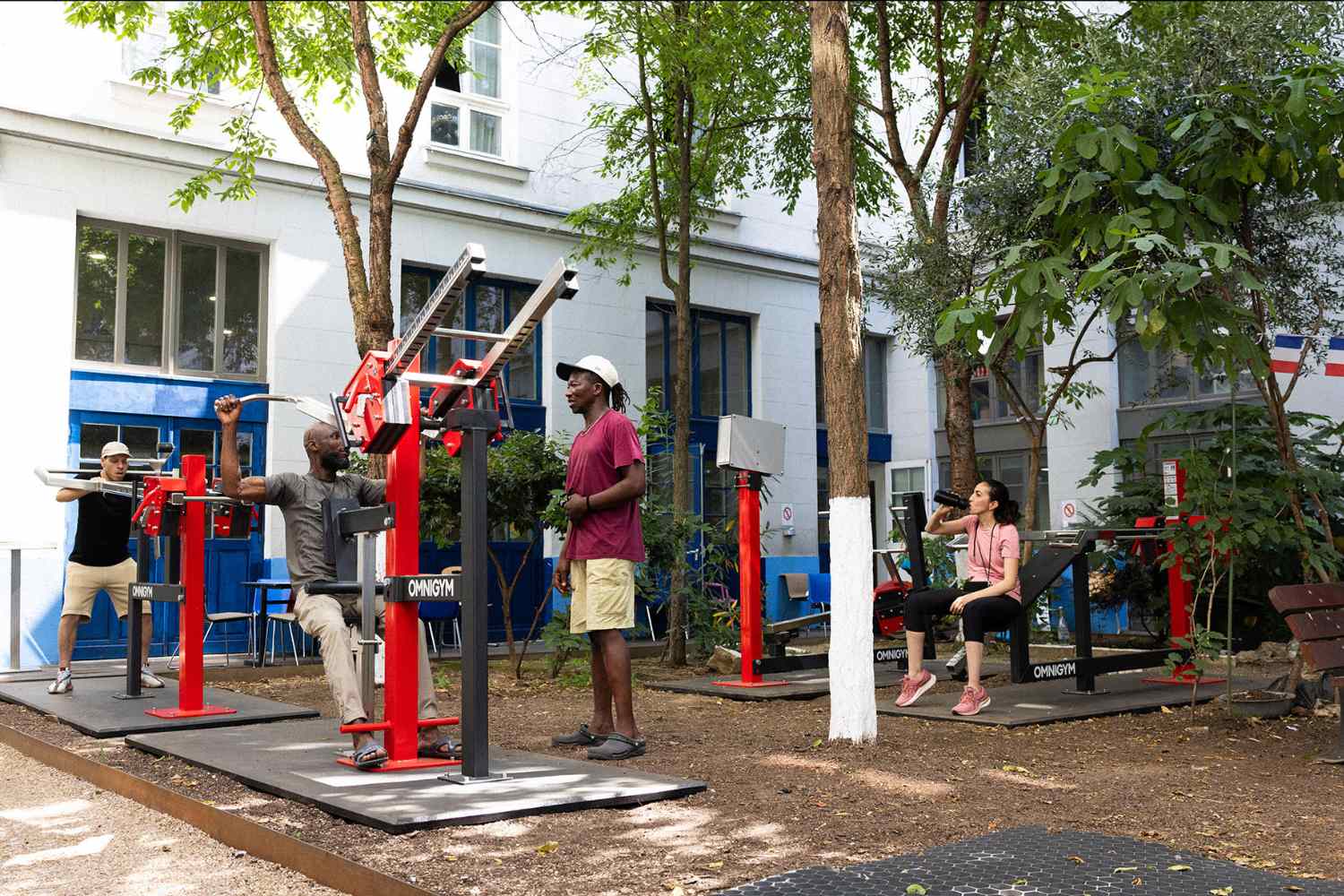
Exercising shouldn’t be a privilege. Yet, for millions of people in Europe, access to sport remains limited by economic, social and logistical obstacles. From this awareness a new project was born in Paris, where an outdoor gym was installed inside a reception center for homeless people, with the aim of making physical exercise accessible even to those who live in highly vulnerable conditions.
The initiative is the result of the collaboration between the French association Emmaüs Solidarité and the Finnish company Omnigym, specialized in the creation of sports equipment for public spaces. In the Parisian reception center, located on Boulevard Pereire, four outdoor fitness machines have been installed for the use of the facility’s 209 guests, men and women.
Sport as a right, not as a luxury
According to a recent Eurobarometer cited by the project’s promoters, 45% of Europeans never practice physical activity or sport. A fact that becomes even more worrying among disadvantaged social groups. The World Health Organization also underlines how a sedentary lifestyle is particularly widespread among people living in conditions of economic and social exclusion.
For this reason the project aims to break down an often overlooked barrier: that of access to physical exercise.
“Access to physical activity should not depend on income or personal circumstances. We want to democratize training and make it accessible to all. This initiative responds to a need that is too often ignored,” said Kirsti Laasio, CEO of Omnigym.
Paris laboratory of urban inclusion
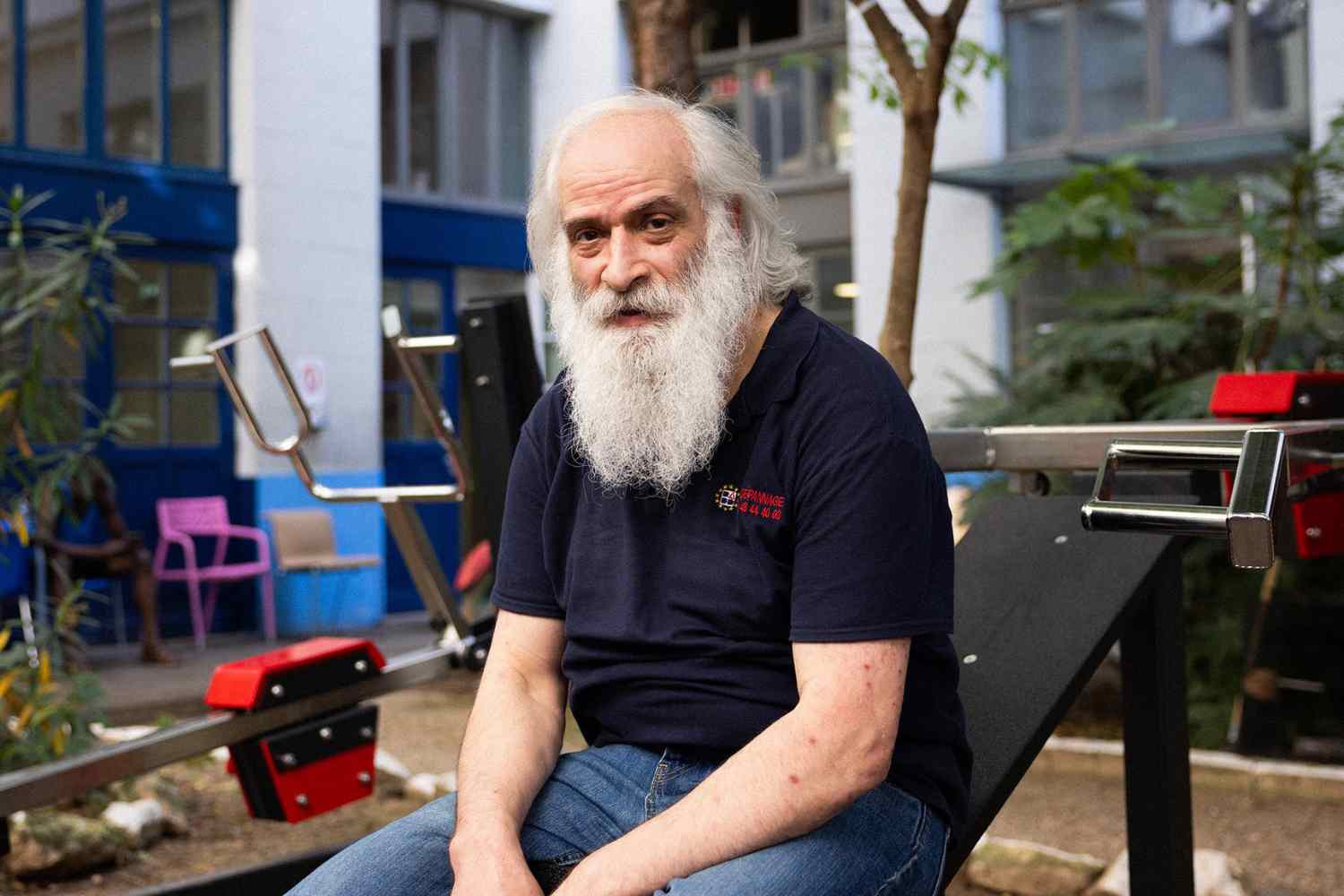
The choice of Paris is not random. In recent years the French capital has become a point of reference for urban policies oriented towards quality of life, public health and social inclusion. Just think of the “15 minute city” model, which aims to guarantee citizens access to essential services within a short distance from home.
In this context, bringing free sports facilities into a center for homeless people represents a further step towards a more inclusive city, in which physical well-being is recognized as an integral part of the right to health.
Physical well-being and dignity
The initiative goes beyond simple training. For those who live in a marginal condition, practicing sport can help improve not only physical health, but also self-esteem, socialization and mental well-being. Fundamental elements in social reintegration paths.
The Paris project could become a model that can also be replicated in other European cities, demonstrating how relatively simple interventions can generate a concrete impact on the quality of life of the most vulnerable people. In a historical moment in which we increasingly talk about inclusion and the right to the city, an outdoor gym can transform into something much bigger: a space of dignity, health and opportunity for all.
