
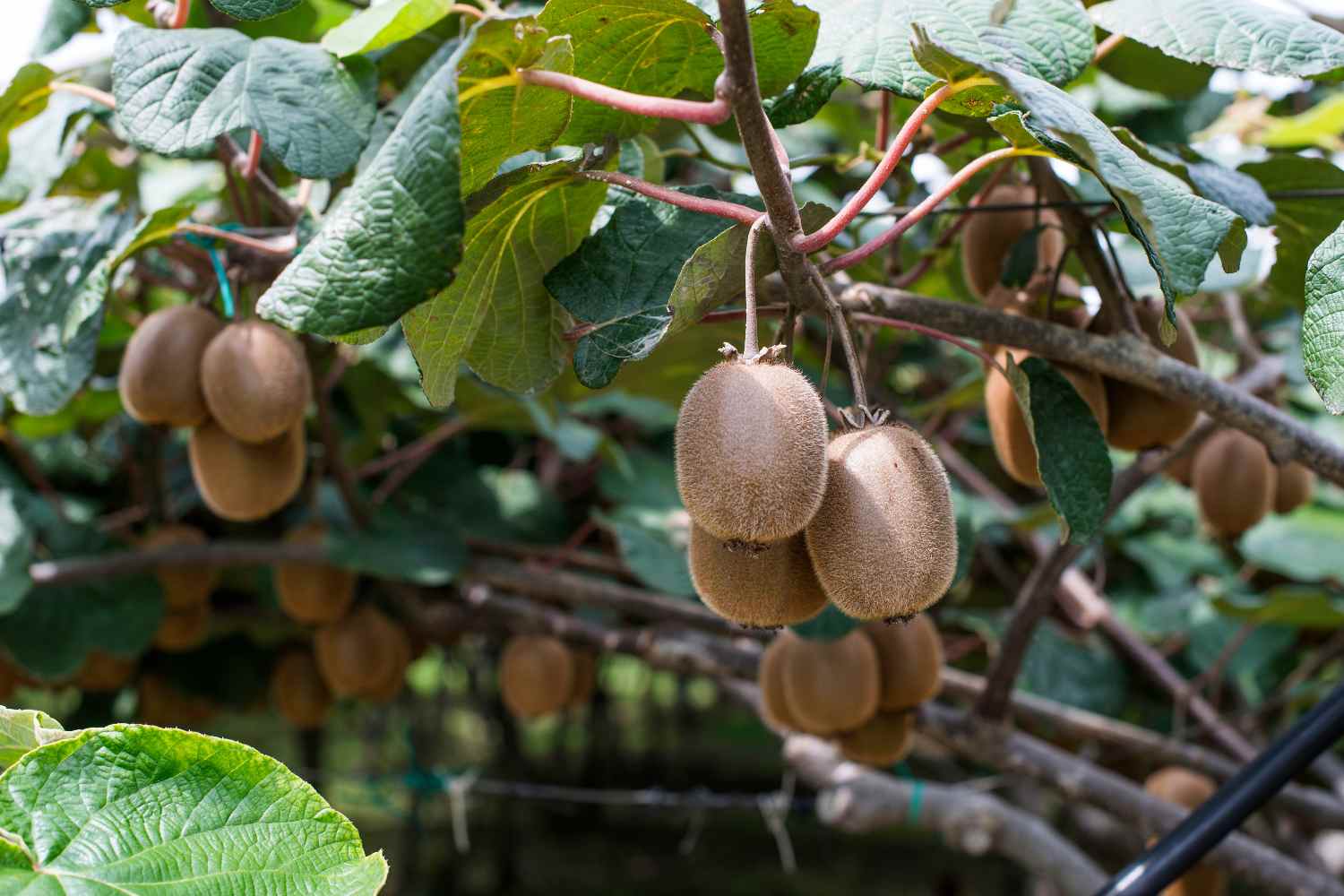
Kiwis are fruits of oriental origin but their cultivation is now very common in Italy. Even in the Central-North regions you can grow kiwi plants in your garden. You just need to know all the secrets of kiwi cultivation to have the fruits available when they are in season.
It is important to remember that the kiwi is a climbing plant and therefore needs very solid support structures to develop. The support structures must last over time and must be able to support the branches loaded with fruit.
The cultivation of kiwis produces very strong and lush plants. They can bear fruit for many years if grown properly. The kiwi loves shaded exposures. So choose a place in your garden that is not in full sun to place your plants. Bear in mind that with kiwi plants you can equip yourself to form a pergola.
How many varieties of kiwis exist
Among the approximately sixty species available, the Hayward green kiwi stands out as the most renowned and medium-late variety. Featuring a brown, hairy skin and soft, green flesh with a distinctive flavor that combines sweetness and acidity, this fruit is as nutritious as it is delicious. The Hayward kiwi harvest typically takes place between October 15th and 30th, the ideal period to enjoy its delicacy.
There are also varieties with yellow flesh, such as Actinidia Chinensis, marketed under the name Jintao. Another option is Actinidia Arguta, with smaller fruits with smooth green skin and aromatic green pulp, harvested early between 1 and 15 September. Native to East Asia, this variety shows vegetative behavior similar to Hayward, but with lower vigor and greater adaptability to various climates and soil types. It is particularly resistant to harsh winter cold, although storage is less prolonged than the Hayward. Nutritionally, it offers a higher content of vitamin C and antioxidants.
When purchasing kiwi plants, it is crucial to consider that kiwi is a dioecious plant, meaning there are plants with male flowers (pollinators) and plants with female flowers (fruit-bearing). Therefore, it is necessary to plant at least one male plant for every 5-6 female plants to ensure fertilization and fruit production. This aspect is essential when planning kiwi cultivation to ensure optimal yield and the formation of the desired fruits.
How to grow kiwi
You can plant kiwi outside the frost period, preferably in late winter or early spring. Choose a sunny location sheltered from cold winds. Make sure the soil is not calcareous and that it remains cool around the roots during the summer by watering and using mulch. Although kiwi can withstand temperatures down to -15°C, shoots can freeze at temperatures between -4°C and -5°C.
Prepare a hole slightly larger than the root ball of the purchased plant. It is advisable to prepare the hole a few weeks before planting. Mix a specific fruit fertilizer into the soil you turned, possibly enriching it with homemade compost, then fill the hole with this prepared soil. If you are planting more than one tree, be sure to leave between three and five meters of distance between each one.
Kiwis are often grown along walls, so it may be necessary to install a trellis for the branches to grow and develop. If you choose to plant them on a pergola, make sure the structure is sturdy enough to support the weight of the branches and fruit.
If you decide to grow kiwis in pots, remember that it is not their preferred natural environment. Choose a very large pot and preferably less vigorous varieties such as ‘Bruno’ or ‘Solo’, or dwarf varieties, to better manage the space and development of the plant.
Grow kiwis in partial shade
The partial shade position represents the ideal solution for growing kiwi plants. Also choose a spot sheltered from the wind. Kiwis don’t like drought very much and prefer rainy places.
What is the most suitable soil for the kiwi plant
As regards the type of cultivation soil, prefer a clod with neutral soil or a slightly acidic pH. Kiwis do not like alkaline soils and those with limestone. A natural method to acidify the soil is fertilizing with coffee grounds, the same trick used to grow roses. Furthermore, you can enrich the soil with domestic compost obtained from vegetable waste which will serve as a natural fertilizer.
You will be able to find kiwi seedlings to grow in your trusted nursery. Choose cool, well-drained soil for transplanting and water the plants immediately. Later you will notice that kiwi plants are satisfied with rain to survive but still water the soil when you see it dry on the surface, especially if you are going through a period of drought.
Keep in mind that kiwi plants suffer from heat, drought and dry weather. They prefer a cool and breezy climate.
To grow kiwis you will need to select both male and female plants. Among the female kiwi plants in your garden there must be at least one male plant if you want the kiwis to produce fruit.
When to transplant the kiwi plant
Take care of transplanting kiwi plants into your garden in spring. Leave a space of about 2 meters between one plant and another. Normally the ripening season for kiwis is autumn. You can enjoy them between October and November, taking into account that initially the plant will not bear fruit for a few years.
Diseases and parasites of the kiwi plant
Kiwi is a very resistant plant. It knows how to defend itself against parasites. Therefore it will be easy to grow ‘organic’ kiwis without resorting to pesticides and insecticides. However, if aphids or scale insects still appear on kiwi plants, turn to natural remedies as soon as possible to protect the plants.
Finally, when the time comes to harvest the kiwis, remember that you just need to rotate them slightly to detach them from the plant and therefore scissors are not needed. After harvesting you can lightly prune the branches to prepare the plants for the following season.
Kiwi bacteriosis and death
Although kiwi is considered a rather resistant plant, in recent years growers have had to deal with some important problems. Among these is kiwi bacteriosis (PSA), a disease caused by a bacterium that can cause drying of the branches, loss of production and, in the most serious cases, the death of the plant. To reduce the risk of infections it is advisable to carry out pruning on dry days, disinfect cutting tools and promptly remove the affected parts.
Be careful of water stagnation
Another increasingly widespread problem is the so-called kiwi die-off, a phenomenon that affects the root system and which can be favored by water stagnation, poorly draining soil and extreme climatic conditions. For this reason it is essential to grow kiwis in deep, fertile and well-drained soil, avoiding excess irrigation and stagnation which can compromise the health of the roots.
Irrigation and climate change
The kiwi is a plant with high water needs and particularly suffers from periods of drought. With increasingly hotter and longer summers, irrigation has become a fundamental aspect of cultivation, especially during the fruit growth phase. Keeping the soil constantly fresh, including through the use of mulch, helps limit water stress and obtain more abundant and better quality crops.
