
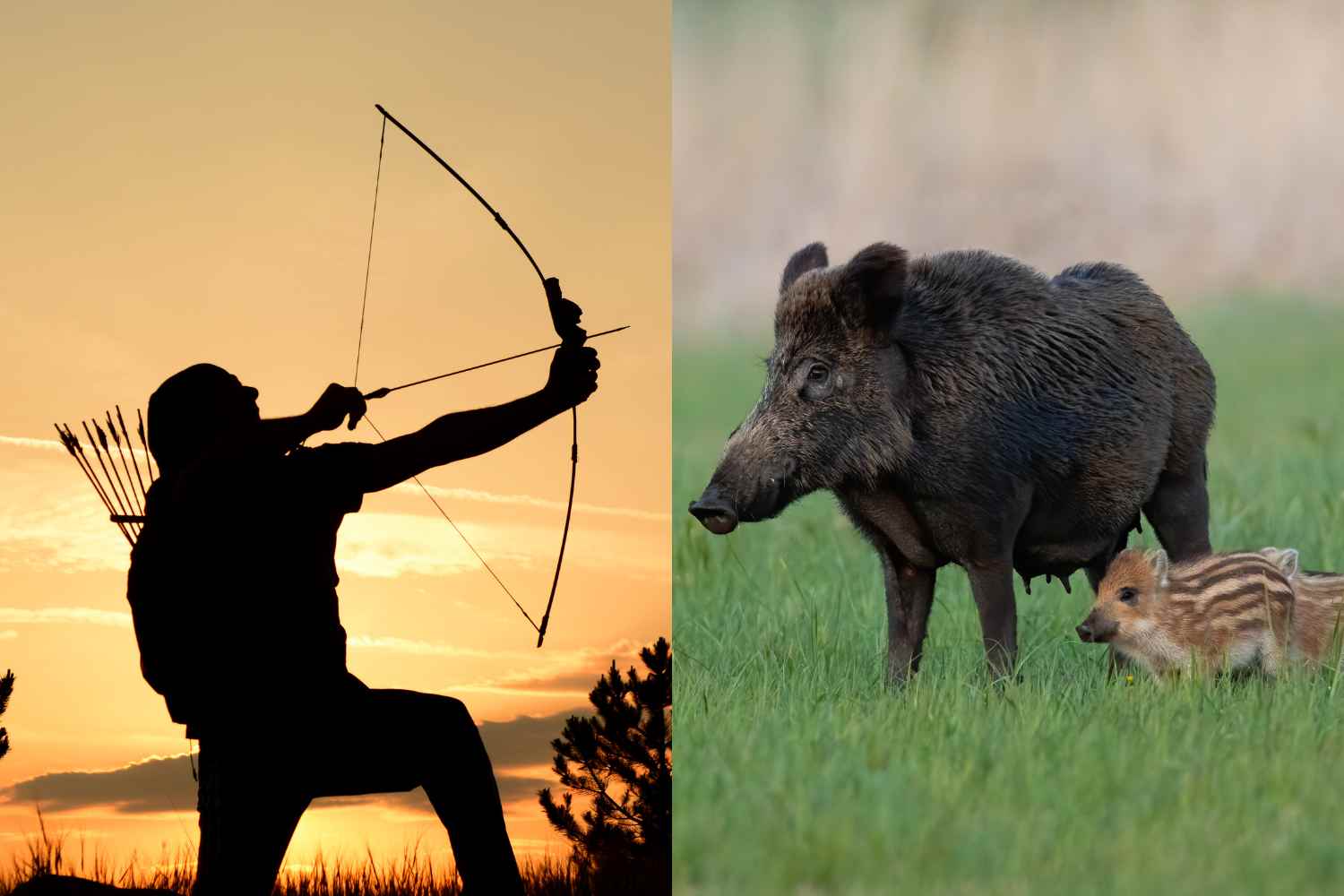
If the hunting bill just approved by the Senate wasn’t enough, the Autonomous Province of Trento has taken care of it, where the management of wildlife slips into a spiral of anachronistic barbarism that erases centuries of civil evolution. The council led by Maurizio Fugatti has formalized the approval of a resolution which introduces, starting from 2027, an experimental program for the culling of wild boars based on the use of professional bows and arrows.
The measure, which even extends hunting hours, was strongly supported by Roberto Failoni, provincial councilor for forestry, hunting and fishing, who justified the bloody change by flaunting the favorable opinion obtained from ISPRA (Higher Institute for Environmental Protection and Research). According to the institutional version, this silent methodology would reduce the acoustic impact on other animal species during the breeding season and would offer an additional weapon to stem the economic damage to agriculture and the epidemiological specter of African swine fever.
Field operations will be entrusted to a small group of hunters who have achieved the technical qualification of “wild boar controller”, under the supervision of the Forestry Corps in the areas considered to be zero density. However, the rhetoric of targeted control is unable to hide the harsh reality: the use of an instrument that kills by bleeding is legitimized, transforming the Trentino woods into the set of an open-air horror film.
Oipa’s harsh condemnation: an attack on civilization and security
The reaction of the protectionist world was immediate and without discounts in the face of what was immediately renamed, with grotesque irony, the “Robin Hood” law. The associations denounce the hypocrisy of an administration that introduces legalized torture, highlighting how an arrow that does not hit a vital organ condemns the animal to hours or days of atrocious agony, forcing it to wander with its viscera pierced until it dies. This would increase the risk of dispersion of blood and infected carcasses, worsening the spread of the very swine fever that we would like to fight.
Leading the trench of dissent is Alessandro Piacenza, head of wildlife protection at Oipa Italia, who issued a statement of absolute condemnation:
Another extreme and dangerous measure to the detriment of wildlife and public safety: no longer just culling as a containment method, but also through a practice that increases the risk of injury and long agony for the animals. It is disconcerting that, in 2026, we can even hypothesize about legitimizing such a proposal, which is contrary to every principle of civilization. We ask that it be withdrawn without hesitation and that the institutions stop pursuing the interests of a minority dedicated to hunting, instead of adopting truly effective, ethical and scientific evidence-based solutions.
View this post on Instagram
The danger of silent weapons
The political opposition and the local sections of the Enpa (National Animal Protection Agency), in particular the Rovereto branch, have also raised enormous doubts on the public safety front. The use of a lethal but completely silent weapon in the woods poses an invisible danger to hikers, residents and tourists who may unknowingly find themselves in the path of an archer. For this reason, the formal intervention of the Government Commissioner was requested to block the ordinance.
The provincial councilor of Onda, Filippo De Gasperi, added to the matter by recalling a fundamental historical detail that unmasks the hypocrisy of local wildlife management: the massive presence of wild boars in Trentino is not a natural event, but the result of illegal imports carried out in the past by the hunters themselves for pure personal enjoyment. Financing and authorizing a medieval hunt today to remedy the damage created by the same shotguns is certainly not the solution.
You might also be interested in:
