
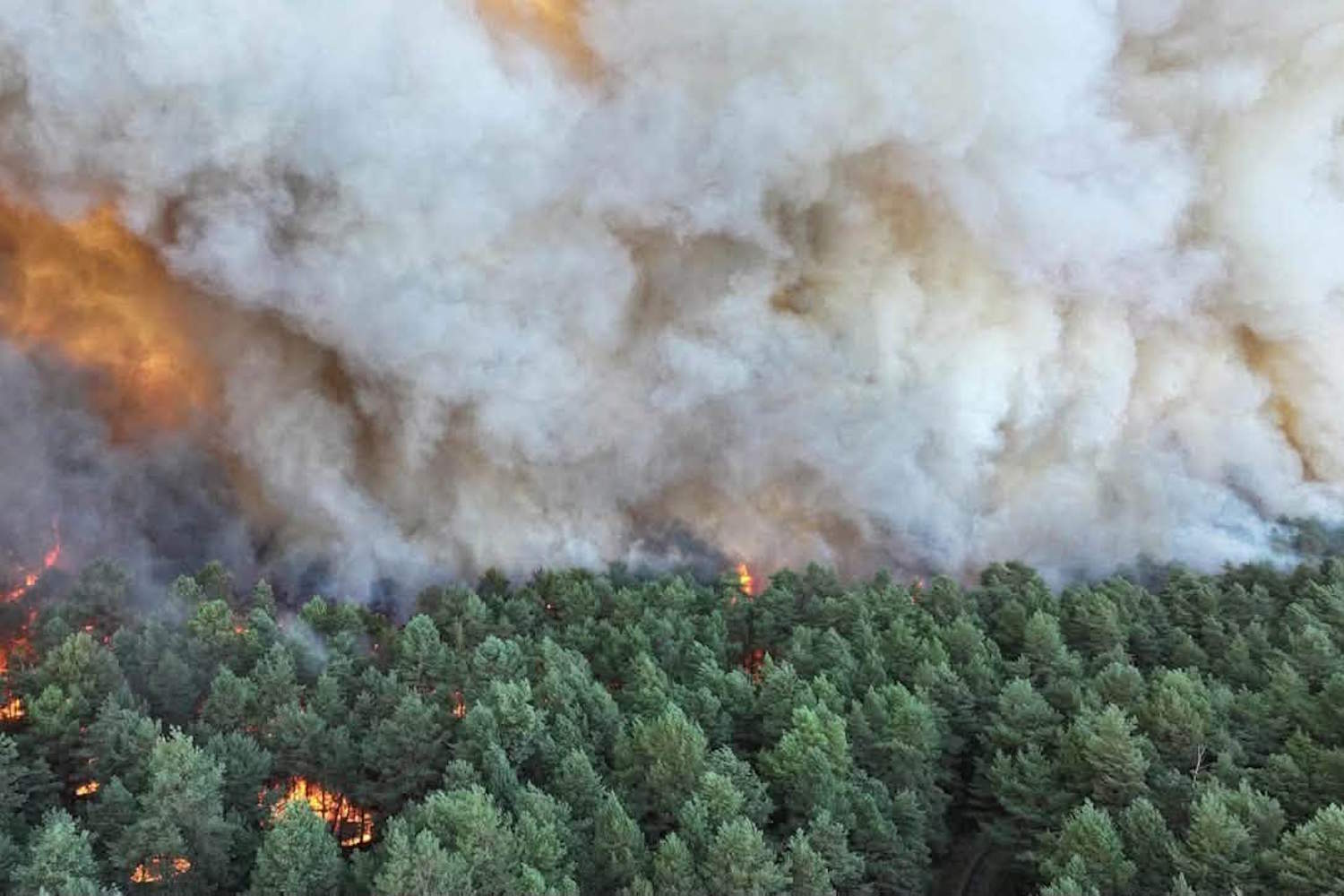
France is once again dealing with forest fires and, this time, one of its most famous natural heritages is burning. For several hours a large fire has been affecting the forest of Fontainebleau, in the Île-de-France, about 60 kilometers south-east of Paris, where the flames continue to advance driven by high temperatures and wind.
According to the latest updates, the fire has already devastated around 800 hectares of forest – the equivalent of 8 square kilometers – and, as of today’s morning, it was not yet completely under control. Over 400 firefighters are at the scene, with reinforcements arriving later in the day.
To fight the fire, firefighting aircraft normally used in the south of France, where summer fires are much more frequent, were sent. After the initial use of Dash aircraft to drop retardant liquid, two Canadairs also went into action, a first for the Île-de-France region.
The fire caused the evacuation of some homes in the municipality of Vaudoué, while other places in the area remain under close surveillance. The flames also caused the partial closure of the A6 motorway, one of the country’s main arteries, and severe disruption to rail traffic, with delays on the high-speed line between Paris and Lyon, which then gradually eased.
Extreme heat and wind favor the fire front
The causes of the fire have not yet been ascertained, but the weather conditions certainly contributed to its rapid spread.
France is in fact affected by the third heat wave of the year, after the exceptional one recorded between the end of June and the beginning of July. High temperatures, extremely dry vegetation and wind created ideal conditions for the flames to expand rapidly.
Large fires are historically more frequent in the French Mediterranean regions, while they are much rarer in the Paris area. Precisely for this reason the Fontainebleau fire of “exceptional scale” represents a new alarm bell on the growing exposure of northern regions to extreme events favored by climate change.
In recent years, in fact, increasingly intense heat waves and prolonged periods of drought are increasing the risk of fires even in territories that until recently were considered relatively safe.
