
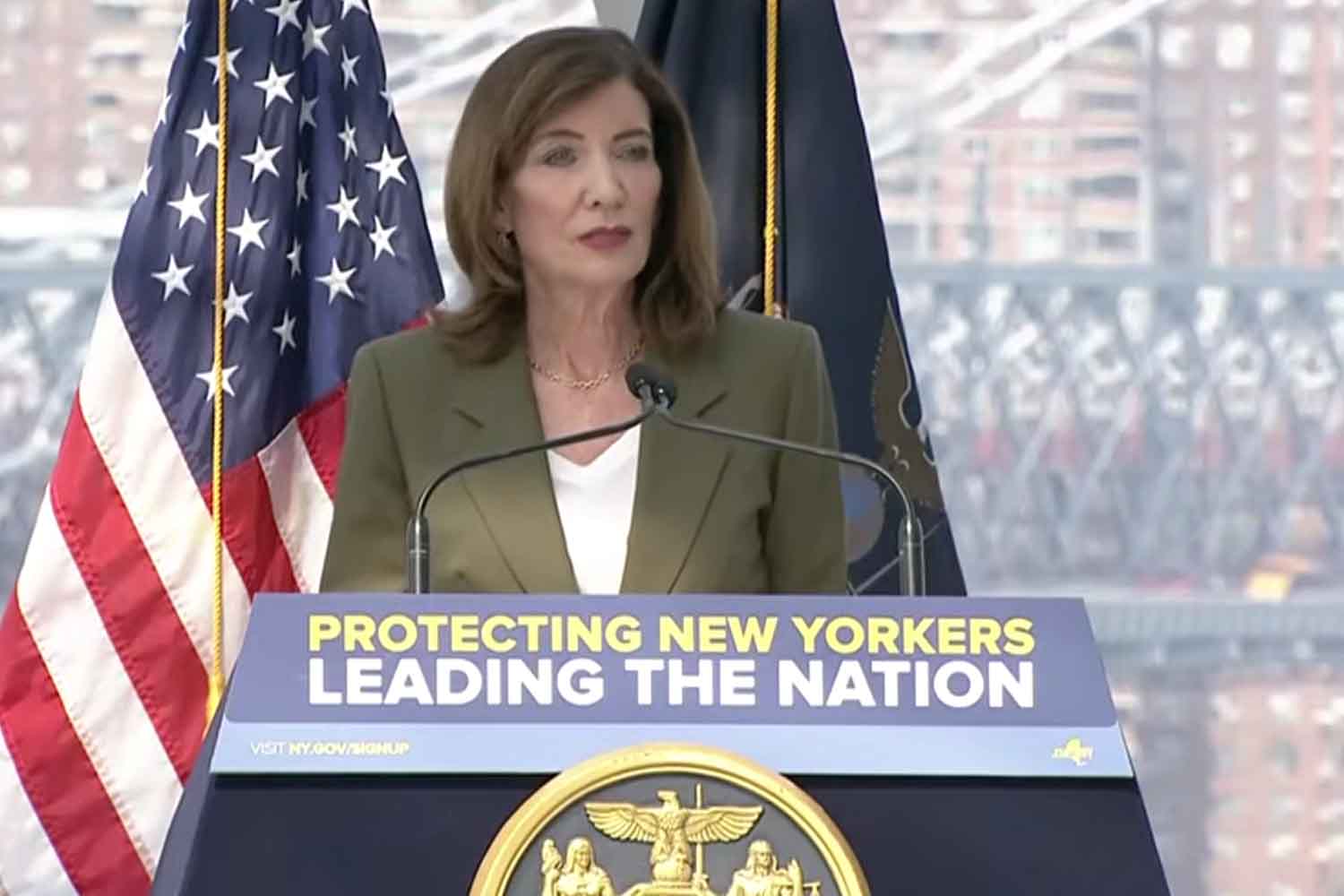
The American state of New York did something almost inappropriate, in the midst of the race for artificial intelligence: it asked to see the bill before setting up the electricity grid. On July 14, 2026, Governor Kathy Hochul signed Executive Order Number 62, freezing for up to one year new state environmental permits for data centers capable of absorbing at least 50 megawatts.
It is the first moratorium adopted by an American state. The reasons are illustrated by Hochul in the announcement of the measure:
The development of data centers threatens to increase utility costs, deplete our natural resources and create uncertainty.
The moratorium has side doors
Put like that, it looks like a shutter lowered in front of the Big Tech warehouses. The text is narrower.
The New York Department of Environmental Conservation will have to suspend applications for state permits, licenses and approvals for the construction or expansion of data centers that were still incomplete on July 14. Practices already declared complete can move forward. The same applies to local authorizations and plants already in operation.
Facilities used primarily for manufacturing, scientific research, education and healthcare are also excluded, including academic centers dedicated to quantum or biomedical computing and the public Empire AI consortium. The threshold is set at 50 megawatts. A plant running at full load for twenty-four hours would consume 1.2 gigawatt hours in one day. A shed with a notable appetite, in short.
Twelve gigawatts are knocking on the grid
The number that changed tune in Albany is 12,000 megawatts. According to the executive order and report Power Trends 2026in May connection requests for almost 12 gigawatts related to data centers had entered the queue of the New York electric operator. Over 8 gigawatts had appeared in 2025 alone.
These are projects still on paper and some could be reduced, postponed or disappear. The network, however, should be strengthened before knowing which questions will really become construction sites. The order openly cites the risk of spending on lines and facilities to serve loads that may never materialize again.
To understand the proportions, in summer 2025 the projected peak demand for the entire state was 31,471 megawatts. The tail of the data centers is therefore worth, at least on paper, about 38% of that peak.
The phenomenon affects the entire United States. The 2024 United States Data Center Energy Usage Reportprepared by Lawrence Berkeley National Laboratory for the Department of Energy, estimates that data centers consumed 176 terawatt-hours in 2023, 4.4% of the nation’s electricity. By 2028 they could reach 325-580 terawatt hours, between 6.7% and 12% of US consumption.
In the same year they directly used approximately 66 billion liters of water, mostly for cooling. The cloud has cables, pumps and cooling towers. The name alone suggests lightness.
Anyone who uses the network will have to pay for it
During the pause, the Department of Public Services will need to prepare a comprehensive environmental assessment dedicated to data centers, with public consultation and hearing. Electricity demand, water consumption and quality, air emissions, noise and consequences on communities already exposed to greater environmental pressures will be examined.
Within twelve months the Department of Environmental Conservation will also have to review whether the water withdrawal rules are suitable for facilities that operate day and night and may require huge quantities of water to cool servers.
Hochul then asked to evaluate a New York Grid Acceleration Fund. Operators could be forced to pay advance contributions to upgrade the grid, finance new clean production and storage systems, reduce consumption at critical moments and provide a sort of insurance against canceled projects. For now the fund is on paper. Other actions will be needed to turn it into real money.
A Community Investment Framework will also arrive by mid-September, designed to help Municipalities negotiate funds for utility bills, schools, childcare services, water networks, purifiers and other local infrastructure. The governor ultimately promised to cancel sales tax exemptions granted to larger data centers. Here too a law will be needed.
The strictest law awaits Hochul
The New York Legislature had already approved the Responsible Data Center Development Act on June 4, still awaiting the governor’s action. The proposal starts from a much lower threshold: 20 megawatts.
It calls for an annual moratorium, hearings in affected communities, specific rates for water and electricity, workplace mandates and a goal of 90% renewable energy by 2040. The executive order chose 50 megawatts instead. The range between 20 and 49.9 megawatts therefore escapes the new pause.
Political pressure, meanwhile, has grown along with consumption. In an Ipsos poll of 1,271 U.S. adults conducted in May, 55% said they opposed building a data center within about 10 miles of their home; just 10% were in favor. Yet, 62% consider these facilities necessary to keep the United States competitive in artificial intelligence.
I like the services. The warehouses, ducts and power plants that keep them turned on are decidedly less so. New York bought itself up to a year to decide. When the pause ends, water and networks will need rules, not another statement. And the bill, above all, must have the right name.
