
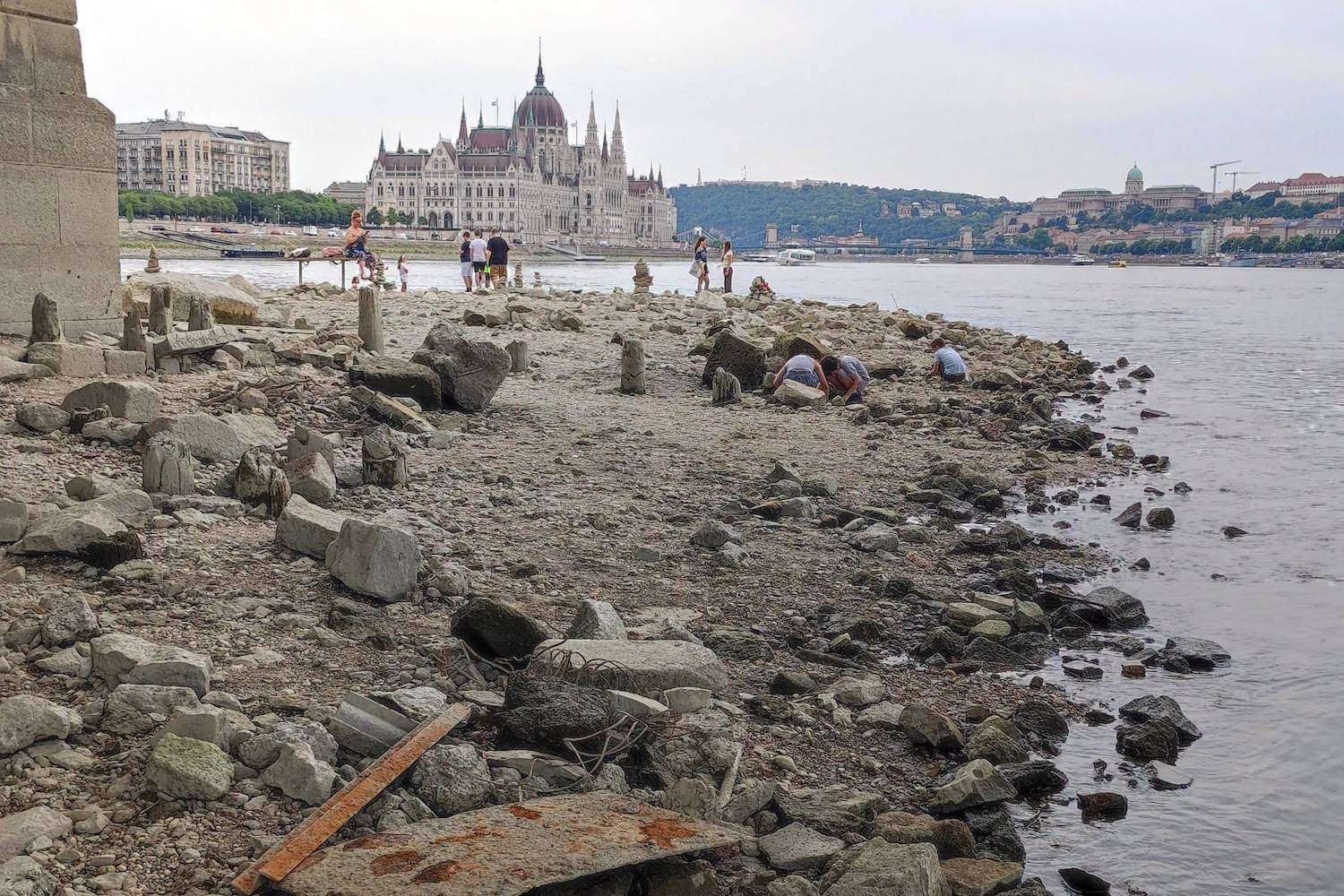
Complicated days also for the Danube: in Budapest, the water level of the second longest river in Europe fell to just 8 centimeters from the historic low recorded in 2018, forcing several cruise ships to stop and bringing an important part of river tourism to its knees.
The images of large boats stuck along the river tell a reality that is now repeated more and more often: summers marked by extreme heat, drought and waterways that struggle to maintain sufficient levels for navigation.
According to data from the Hungarian Water Authority, the level of the Danube in the capital has fallen to the limits of navigability. If the forecasts are confirmed, the situation should improve as early as next week but the emergency of recent days still leaves its mark.
Tourism is especially affected. The Hungarian company MAHART-PassShipwhich operates numerous connections on the river, explained that several international cruise ships remained stranded in ports because they were unable to continue their journey. Excursions to cities north of Budapest have been suspended and, in July alone, bookings fell by 18% due to cancellations.
Every year around 600 thousand passengers choose a cruise on the Danube in Hungary, a sector which in recent years has become one of the pillars of the country’s tourism economy. For this reason, the blocking of navigation does not only represent an inconvenience for travellers, but has repercussions on hotels, restaurants, tourist guides and local businesses. Even the company Avalon Waterways announced the cancellation of some scheduled sailings on both the Danube and the Rhine, which is also struggling with unusually low water levels.
For sector operators, these are no longer isolated incidents. The progressive lowering of the levels of the great European rivers is now considered a trend that shipping companies and ports are forced to deal with, adapting routes and services to increasingly unpredictable conditions.
And perhaps this is the point: the Danube news is not just news that concerns tourism. It is yet another reminder of how much the climate crisis is changing the face of Europe even far from glaciers and coasts. When a large river like the Danube touches its historic lows and interrupts one of its oldest functions, that of connecting people, cities and economies, it means that we are not faced with a simple seasonal inconvenience, but that the effects of global warming are becoming part of everyday life, impacting work, transport and even the way we travel.
