
There are questions that seem harmless and are asked lightly. Almost out of habit, sometimes. Many others for claims of superiority. Yet those questions could touch very deep chords, reopen invisible wounds or, simply, bring to the surface an idea that is difficult to undermine. Like the idea that a woman, sooner or later, must necessarily become a mother.
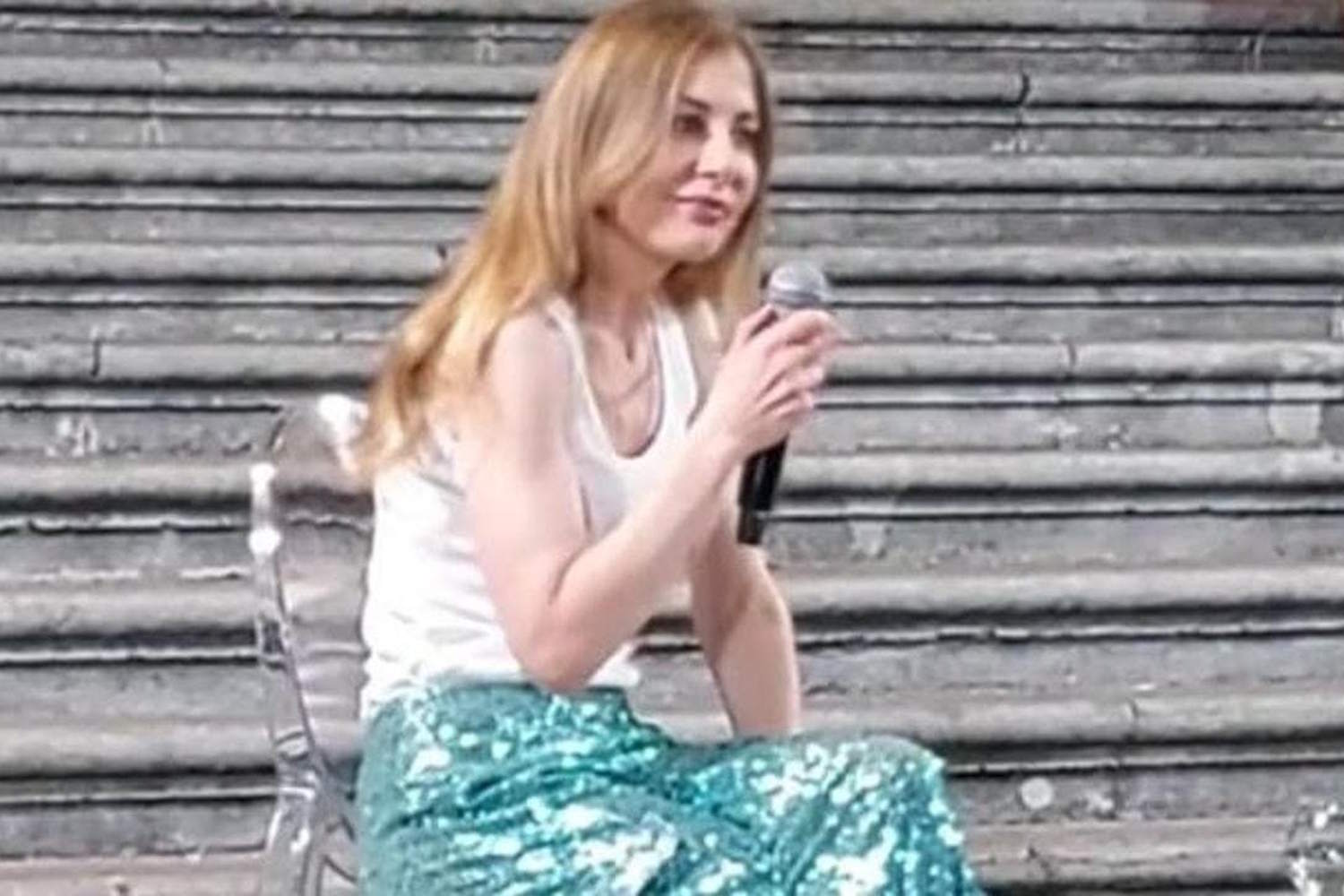
This is what happened in the last few hours during a public meeting in Minori, on the Amalfi Coast, where Francesca Fagnani and Gigi Marzullo gave life to a question and answer that went far beyond a simple interview. At the centre, once again, motherhood. And, above all, the right to choose whether to live it or not.
“Asking a question about maternity in 2026 is inappropriate”
During the review Summer appointments 2026Marzullo asks Fagnani if she misses not having had a child.
Fagnani responds without shying away:
I’m answering you to make you happy but not because I consider it a topic to use in my interviews. Am I missing a child? I have no proof to the contrary, not having children I didn’t have that experience. Am I missing something that I don’t know? I do not know. Is it an immense joy that I haven’t experienced? Surely.
Then he adds a reflection:
I think that motherhood unfolds in a thousand different ways: with friends, with family, with dogs…
Marzullo tries to justify the question by explaining that he wants to be “a little bit pungentBut the journalist’s response is clear:
You are not prickly, you ask a question that in 2026 it is not right to ask, underlining the difference between freedom to ask and opportunity to do so.
It’s not the problem of an indiscreet question. It can be appropriate or inappropriate.
And perhaps this is where we should stop.
Why do we keep asking women if they want to become mothers?
The question asked to Francesca Fagnani is a question that many women know all too well.
Questions that are often asked with such lightness and superficiality that they sound bad as well as out of place. But they start from something they take for granted: motherhood still seems to be the natural end point of a woman’s life.
Yet this is not the case.
There are women who want to become mothers, others who don’t want it at all. Women who cannot have children. Women who have faced spontaneous abortions, medically assisted procreation paths, perinatal bereavements or difficult choices that belong exclusively to their history. So, every time that question is asked, we cannot know what wound, what pain or what belief we are touching.
For centuries the value of a woman has been told through very specific roles: wife, mother, guardian of the family. Today, we more or less know that there is not just one way of being a woman, just as there is not just one way of taking care of others. There are those who choose motherhood and live it as the most important experience of their lives and there are those who find their fulfillment in work, art, social commitment, relationships, affections or in a thousand other forms of care. That’s all.
One is not worth more than the other and arguing that motherhood is not an obligation does not mean belittling those who are mothers, but actually recognizing that no woman should feel judged, incomplete or – worse – selfish because she made a different choice.
The problem is what the question implies
Marzullo claimed the right to ask any questions. And it’s true: journalism also thrives on uncomfortable questions. But we know well that a question is never neutral, capable as it is of bringing with it an immense wealth of imagery, a system of values, a very specific expectation.
Asking a woman if she is missing a child still means implicitly assuming that that lack must exist and perhaps this is precisely the cultural change evoked by Fagnani: not censoring the questions, but learning to recognize those that arise from stereotypes that we have internalized for years, since motherhood is a beautiful possibility for those who want it but it remains a choice.
And a choice, to be truly free, must also include the right to say no. Without having to explain it. Without feeling at fault. Without being called, every time, to justify one’s happiness.
