
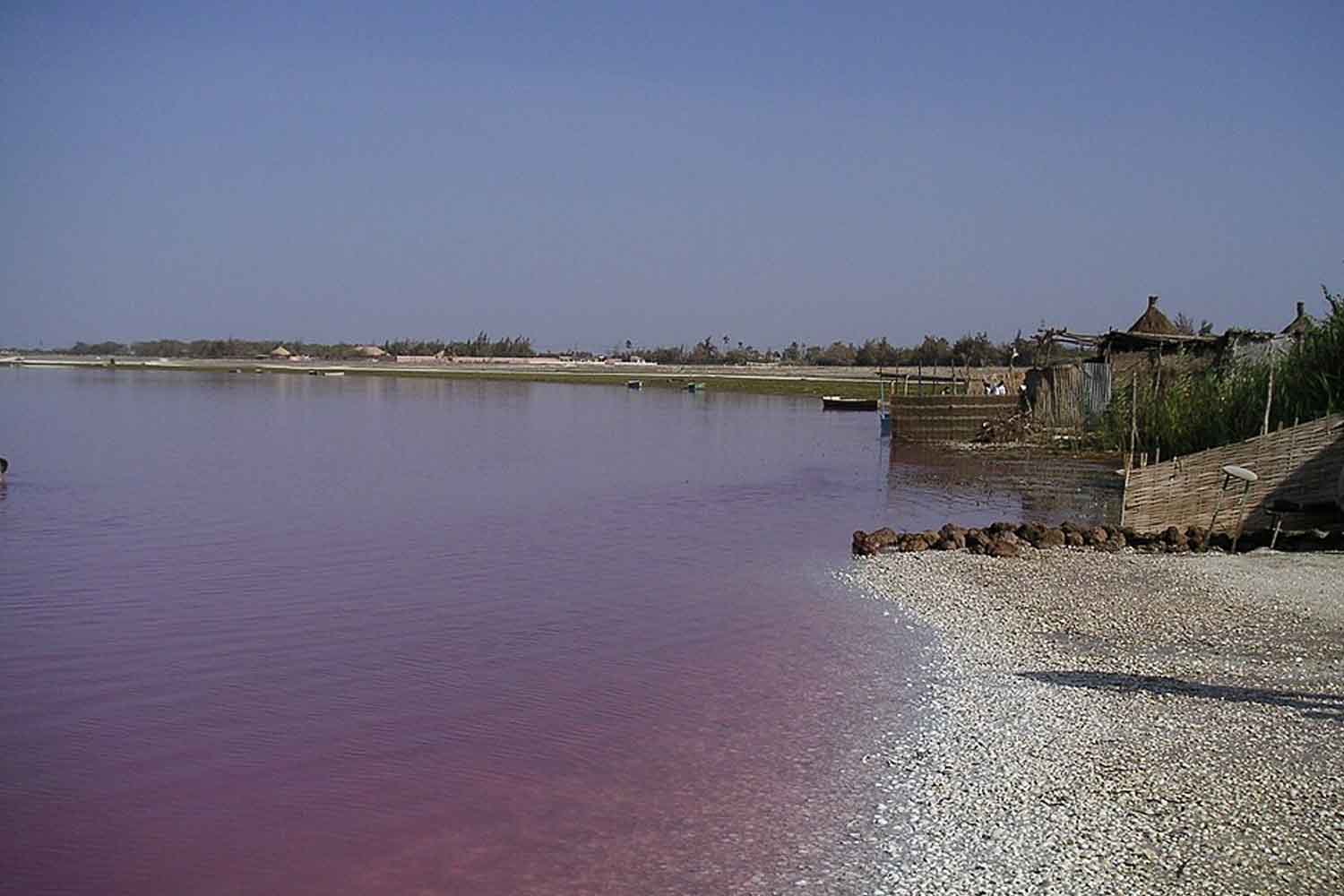
One hundred volunteers assembled about 600 meters of pipes, operated the pumps and monitored the system that removed excess water from Senegal’s Pink Lake. In July 2026, Lac Retba, about thirty kilometers north-east of Dakar, was officially reopened to salt extraction. The pink hue has reappeared on the surface; below, workers have returned to scraping the seabed with shovels and buckets.
Four years earlier the lake had changed its face in the space of a season. During the severe floods of August 2022, the authorities had channeled part of the rainwater that was submerging the surrounding neighborhoods into the basin. An understandable emergency choice, with a very serious consequence: the fresh water had diluted the salinity, blocked the formation of salt and almost completely erased the pink color that had made the place famous throughout the world. Hotels, shops and collection activities had stopped along with the pink.
One hundred volunteers and 35 thousand euros raised
@林戈亮 – Own work,/Wikimedia
The recovery began by the salt producers’ associations, tourist operators, artisans and traders in the area. Together they raised 23 million CFA francs, around 35 thousand euros, used to rent the pumps, buy fuel and build a pipeline capable of taking the water towards the sea.
Then the volunteers arrived. About one hundred people helped install, operate and monitor the plant, according to Ibrahima Mbaye, president of a local association involved in protecting the lake. The authorities later provided a more powerful pump and the electricity needed to power it. Pipes, surveillance shifts and fuel cans: decidedly less photogenic than pink, much more useful.
The rebirth of Pink Lake bears multiple signatures. The Municipal Development Agency of Senegal, through the public project PROGEP 2, has reversed the pumping system, diverting the water towards the Mbao basin, and obtained the closure of the open accesses in 2023. The Directorate for Flood Prevention and Management and the Military Engineers have also created several containment basins upstream of the lake. A World Bank report attributed the partial return of color to improved water management and the diversion of rain flows as early as 2025.
Pink is back along with salinity
The color of Lac Retba depends above all on the presence of Dunaliella salinaa microalgae capable of living in extremely salty environments. When salinity and temperatures rise, its reddish pigments can tinge the water pink, with varying intensities depending on the season, sun and reservoir conditions.
After the entry of huge amounts of fresh water in 2022, the balance was broken. The gradual elimination of excess water allowed the salt concentration to rise and the microalgae to proliferate again. The Cheikh Anta Diop University of Dakar had confirmed the return of the hue as early as September 2025, linking it to typical dry season conditions. The 2026 reopening adds the step that was missing: salt can be collected and sold again.
The difference is especially noticeable away from photographs. According to estimates collected by Ibrahima Mbaye, around 3 thousand salt collectors normally worked around the lake, while another 2 thousand people depended indirectly on transport, trade, crafts and tourism. After the floods, many had lost their source of income overnight. The hotels had seen most of the visitors disappear and on the banks there were piles of unusable rooms, idle equipment and empty shops.
The pumps helped repair the damage; Lasting protection depends on what happens in the surrounding basin. The area continues to urbanize and remains exposed to intense rainfall and a still fragile drainage system. In the National Pact for Water Security 2026-2030, Senegal includes Pink Lake among the first priority sites for flood management plans and reports the first risk prevention plan here. It will help prevent the basin from becoming the quickest solution for rainwater and the longest problem for those who live there.
