
From 3 August 2026 a new building application can leave the Municipality with a mandatory renewable energy quota attached to the project. It happens for new buildings, major renovations and real renovations of the heating system. Pellet stoves and biomass boilers remain among the technologies eligible for incentives, provided they pass much stricter environmental requirements than in the past.
The confusion arises from two different innovations that ended up in the same pot: the new obligations on renewables in buildings and the clampdown on generators eligible for incentives. Legislative decree 5/2026, which transposes the European RED III directive, came into force on 4 February 2026. The date of 3 August derives from the 180 days granted before the application of the new thresholds to building permit requests.
Under the label boiler bonus 2026, moreover, different tools coexist: Ecobonus, Home Bonus and Thermal Account 3.0. Rates, requirements, reimbursement times and permitted interventions change. Treating them as a single button to press makes everything easier, especially until the moment in which the case needs to be submitted.
What really changes from August 3rd
The new rules concern building permit applications submitted from 3 August for new buildings, major renovations and heating system renovations. For new buildings, renewable sources must cover at least 60% of the domestic hot water requirement and 60% of the sum of the expected consumption for hot water, heating and cooling. In major first-level renovations the two shares drop to 40%.
For major second level renovations and for renovations of the heating system, the threshold is instead equal to 15% of the expected consumption for heating and cooling. Domestic hot water, in these two cases, does not enter into the calculation. In public buildings the percentages increase by five points.
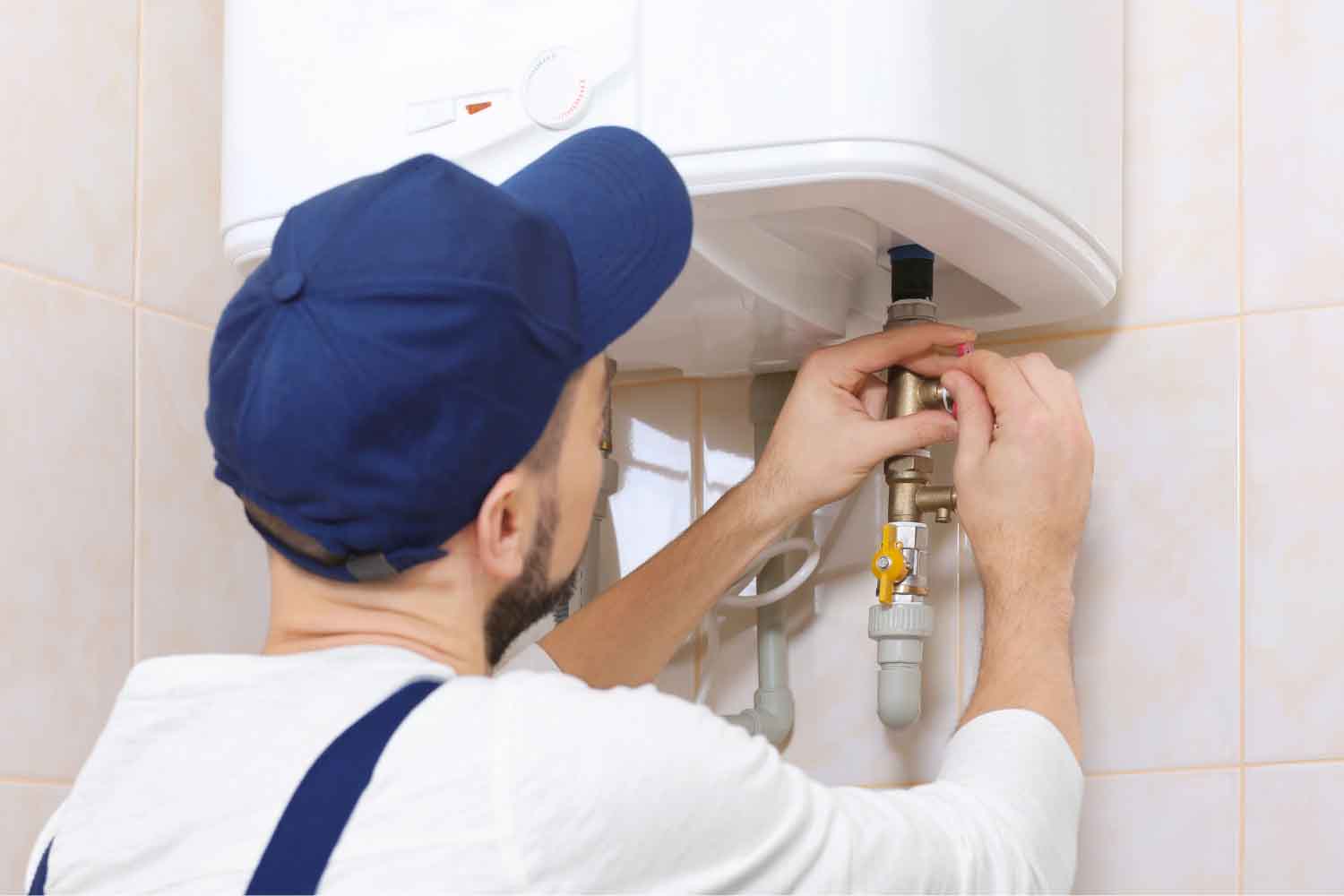
This step does not transform any boiler replacement into a renovation of the heating system. The definition concerns works that substantially modify both the production and distribution and/or emission systems of heat. Changing only the generator can therefore fall into a different category: the technician will have to correctly qualify the intervention, possibly before the estimate turns into domestic archaeology.
The alleged ban on gas boilers must also be scaled down. For projects subject to the new obligations, the minimum quotas of renewable energy must be reached, but the law does not absolutely prohibit the presence of a condensing boiler. It can be part of a system that still respects the thresholds, for example through a hybrid system or other renewable sources.
An exemption is also provided for when the designer demonstrates technical impossibility or lack of economic convenience, after having examined the different solutions available. It is therefore not enough to write that the heat pump “does not come in”: the report must explain why the alternatives are impracticable or disproportionate.
Biomass stoves and boilers remain incentivized
The decree does not cancel national incentives for pellets, wood and other biomass. Article 30 of Legislative Decree 5/2026 expressly says that biomass generators are allowed, starting from five-star or higher environmental certification.
Typically, the new appliance must replace a generator powered by biomass, coal, fuel oil or diesel. The replacement of a natural gas or LPG system can access the incentives only when the installed biomass generator guarantees primary particulate emissions not exceeding 1 milligram per normal cubic meter. The Regions retain the possibility of introducing more severe constraints, especially in areas with air quality problems.
For the entire duration of the incentive, at least maintenance is required every two years, also extended to the flue, with the obligation to keep the certificates. For boilers up to 500 kilowatts the efficiency threshold is calculated with the formula 87% + logarithm of the nominal power; An adequately sized thermal storage is also provided. It is therefore not a fixed return of 87%, as it is often summarized.
The fuel requirement is also more complex than the simple obligation to purchase ENplus A1 pellets. The pellets must comply with the UNI EN ISO 17225-2 standard and belong to the class for which the generator was certified, or to a better class. The tax documentation must indicate the quality class and the identification code of the certified manufacturer or distributor.
In fact, ENEA’s Ecobonus 2026 table continues to include biomass boilers among the eligible interventions. The deduction is 50% for the owner or holder of a real right affecting the main residence and 36% in other cases. The same rates apply to heat pumps, solar thermal and hybrid systems.
The national decree does not even cancel all regional, provincial or municipal tenders. Each local measure maintains its own rules and availability, while the Regions can restrict access to biomass appliances to protect air quality. An incentive valid in one area could therefore be excluded a few kilometers further on. Unfortunately, the particulate matter does not stop at the Municipality sign.
Heat pumps, hybrid systems and gas boilers
Electric heat pumps, solar thermal collectors and hybrid systems remain among the solutions supported by the Ecobonus. By hybrid system we mean an appliance in which the heat pump and condensing boiler are integrated and designed by the manufacturer to work together. Assembling two machines chosen separately is not enough to automatically obtain the same treatment.
The condensing boiler powered exclusively by fossil fuels has instead lost the Ecobonus for expenses incurred from 2025. The restriction, therefore, did not start on 3 August 2026: it had already been operational for over a year. The Home Bonus also excludes the replacement of the system with a single boiler powered by fossil fuels from 1 January 2025.
Then there remains the Conto Termico 3.0, managed by the GSE, which has 900 million euros available each year and recognizes a direct contribution of up to a maximum of 65% of eligible expenses. The actual percentage depends on the technology, performance, power and expected ceilings: that 65% is a ceiling, not a promise printed on the bank transfer.
The interventions permitted by the Thermal Account continue to include heat pumps, hybrid systems, solar thermal and biomass systems compliant with the new requirements. The squeeze exists and is significant, especially for stoves and boilers that emit more particulates. The total stop, however, does not appear in the decree.
Whoever needs to replace the home heating will therefore have to check three things before signing: the building category of the intervention, the incentive chosen and any regional limits. Biomass has not left the catalogue: to remain there it must undergo a less lenient selection.
