
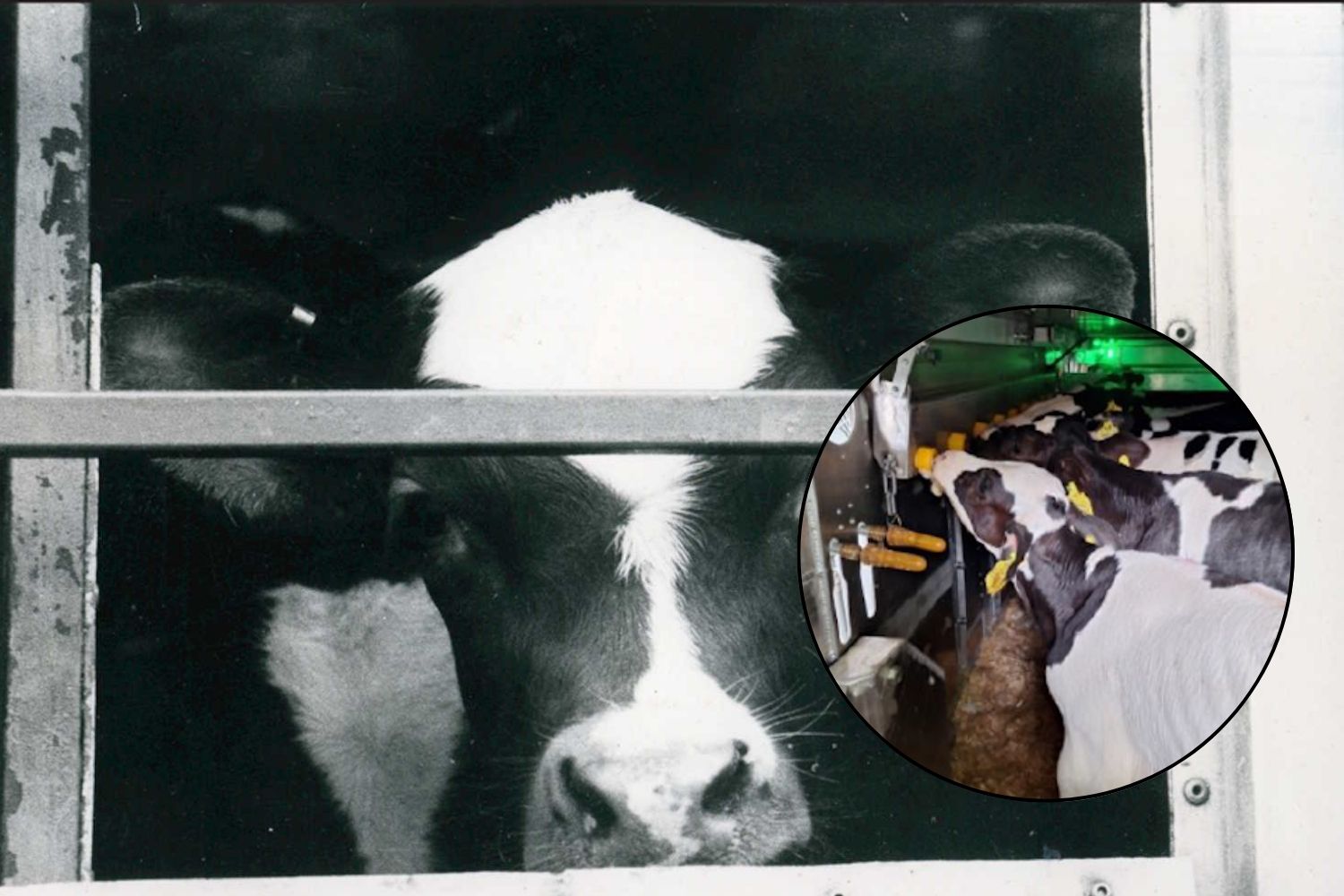
Brittany Ferries will stop carrying live animals on its ships by September. After months of protests, petitions and international mobilisations, the French shipping company finally announces that it will no longer transport animals, including unweaned calves, along the route between Ireland and France.
A decision that puts an end to a practice strongly contested by animal protection associations, which have long denounced the difficult conditions faced by these puppies during travel.
For many calves, in fact, transport did not just represent a journey, but a long experience of stress, fear and deprivation.
Hours at sea without eating: the journey of unweaned calves
Unweaned calves are very young animals, often separated from their mothers shortly after birth and destined to be moved to other countries for breeding or fattening.
Before they even arrive at their destination, they have to face long and complex journeys. In the case of the Ireland-France route, many of them spent over 18 hours at sea without being able to be fed. And for many, the journey didn’t end in France: after disembarking, some animals were transferred further to countries such as the Netherlands, Spain and Poland, adding more hours of transport to an already stressful situation.
Such a young calf still needs care, protection and stability. Instead, for the international live animal trade system, it becomes a commodity to be moved from one country to another.
Brittany Ferries’ decision comes after strong public pressure and an international campaign led by several organisations, including Compassion in World Farming, Ethical Farming Ireland, WELFARM, FOUR PAWS, L214, Eyes on Animals and Eurogroup for Animals.
In March 2025 the company announced the resumption of the transport of live animals after a 30-year hiatus, sparking numerous protests. The response from civil society was immediate: over 100,000 emails sent to the company, two petitions which overall exceeded 100,000 signatures and demonstrations organized in Ireland, France and the United Kingdom.
A mobilization that also led to several meetings between the company and associations, during which an end to the transport of unweaned calves and other live animals was requested.
Brittany Ferries began transporting unweaned calves from Ireland last year, despite knowing they would not be able to be fed on the 18-hour ferry journey to France – a practice not only cruel, but also in breach of European legislation, said Caroline Rowley, Executive Director of Ethical Farming Ireland. After more than a year of campaigning, we are happy that the CEO has finally made the right decision to end all involvement in this trade. Irish Ferries is now the only ferry company profiting from animal cruelty and suffering.
Brittany Ferries’ decision represents a step forward, but the problem of transporting live animals still remains open.
According to a survey reported by CIWF and published in January, 90% of Italian citizens expressed concern about the conditions of the animals during these transfers. In the United Kingdom, precisely due to the critical issues related to animal welfare, the export of live animals intended for fattening and slaughter was banned in 2024.
With the exit of Brittany Ferries from this sector, pressure is now increasing on Irish Ferries, which remains the only carrier to continue transporting unweaned calves on the Ireland-France route, following the withdrawal of Stena Line.
Each animal transported is not just a number on a travel document. It is a living being that can experience stress, fear and discomfort. The choice of Brittany Ferries demonstrates that pressure from citizens and associations can change corporate decisions and open new paths.
