
This seems to be, more than usual, the summer of sunscreen. Those that every year return to occupy a permanent place in our beach bags, holiday suitcases and on supermarket shelves, but which this time have ended up at the center of a much broader and more controversial discussion. Because if on the one hand they continue to be considered one of the fundamental tools for protecting the skin during exposure to the sun, on the other hand a debate has opened on social media about those who consider them – on the contrary – very dangerous.
The controversy was sparked by a video published by Dr. Debora Rasio, which quickly went viral and was relaunched thousands of times on social media. In the film, the doctor supported highly controversial theses on the relationship between sun exposure, vitamin D, melanoma and the use of sun creams, going so far as to state that greater exposure to the sun could have a protective effect against melanoma and that sun filters could on the contrary increase the risk of skin cancer.
Statements that provoked a very harsh reaction from various members of the scientific community and dermatological societies, who contested the interpretation of some studies cited by the doctor and invited us not to extrapolate individual data from their context to arrive at conclusions that are not supported by the overall available scientific evidence.
The issue, however, did not stop at the debate between experts. Because now another intervention has arrived that has reignited the discussion, once again on social media. The protagonist in this case is the rapper Salmo.
What Psalm said
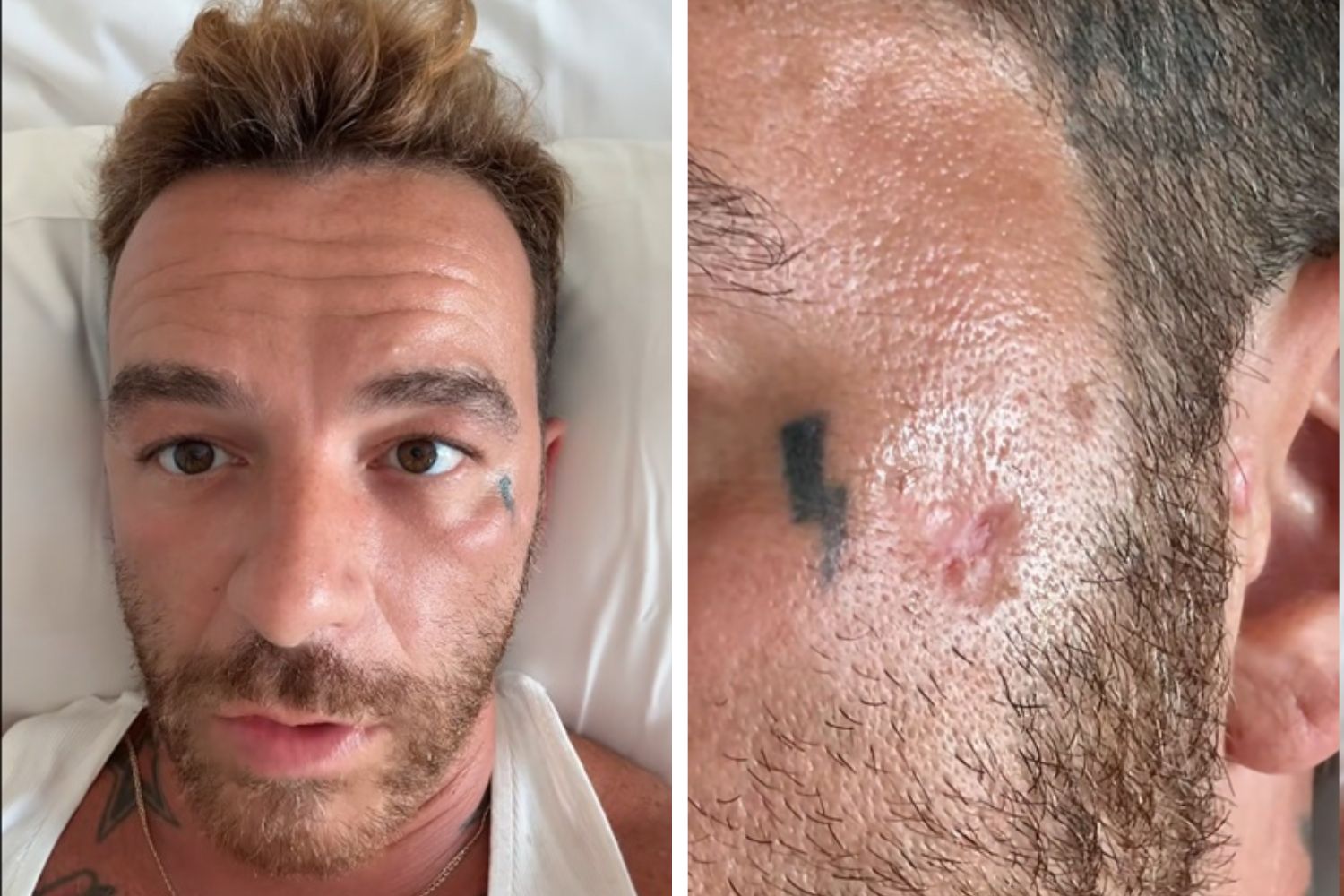
The rapper published a rather strong video on Tiktok in which he told a personal and delicate story. What does sunscreen have to do with anything? Salmo explains that he saw videos on social media of a doctor, whom he does not quote directly, who discussed the effects of sunscreens and skin exposure to the sun. And it is precisely at this point that the sentence destined to cause discussion arrived:
Unfortunately I, like many, have worn sunscreen and the result is skin cancer. Basal cell carcinoma.
The rapper then showed the scar on his face, explaining that the carcinoma had been removed and adding that it was growing back. A personal experience that Salmo chose to share publicly just as the topic of sun protection is at the center of a heated debate on social media.
However, the video has attracted numerous criticisms. Many have disputed the connection suggested by the rapper between the use of sunscreen and the appearance of the tumor, underlining that a personal experience cannot demonstrate a cause-effect relationship. Furthermore, even among his own fans, there was no shortage of critical reactions and distancing from his words.
@lebonwski.official Skin cancer
♬ original audio – Salmo Official
What science says
Salmo’s position has reignited the debate (which in reality had never died down), but it does not change what we know about the relationship between sun and skin cancer. In fact, available scientific evidence indicates exposure to ultraviolet radiation as one of the main risk factors for skin cancer: intense and prolonged exposure, especially without adequate protection, increases the risk of developing various forms of skin cancer, including basal cell carcinoma.
In fact, the International Agency for Research on Cancer (IARC) indicates UV radiation as the main cause of skin cancers, including melanoma, basal cell carcinoma and squamous cell carcinoma.
This doesn’t mean that sunscreen makes you invulnerable or that you can spend an entire day in the sun without consequences. Protection must be part of a set of correct behaviors, which also include avoiding exposure during the most intense hours, seeking shade and using clothing, hats and other protective systems. In fact, the WHO recommends combining the use of broad-spectrum sunscreen with other forms of protection, stressing that the cream should not be used to prolong time spent in the sun.
But the fact that a person who used sunscreen could develop a tumor does not prove that the cream was the cause, nor does it call into question the widely documented role of ultraviolet radiation in the development of skin cancers.
What is basal cell carcinoma
Basal cell carcinoma is the most frequent malignant skin tumor and mainly affects the areas of the body most exposed to sunlight, such as the face, ears, neck and scalp. It generally grows slowly and only rarely metastasizes, but it can be locally invasive and, if neglected, damage surrounding tissues. It can also recur, as Salmo himself said in his case. When it is identified and treated early, however, the prognosis is generally very good and in the vast majority of cases recovery is achieved.
