
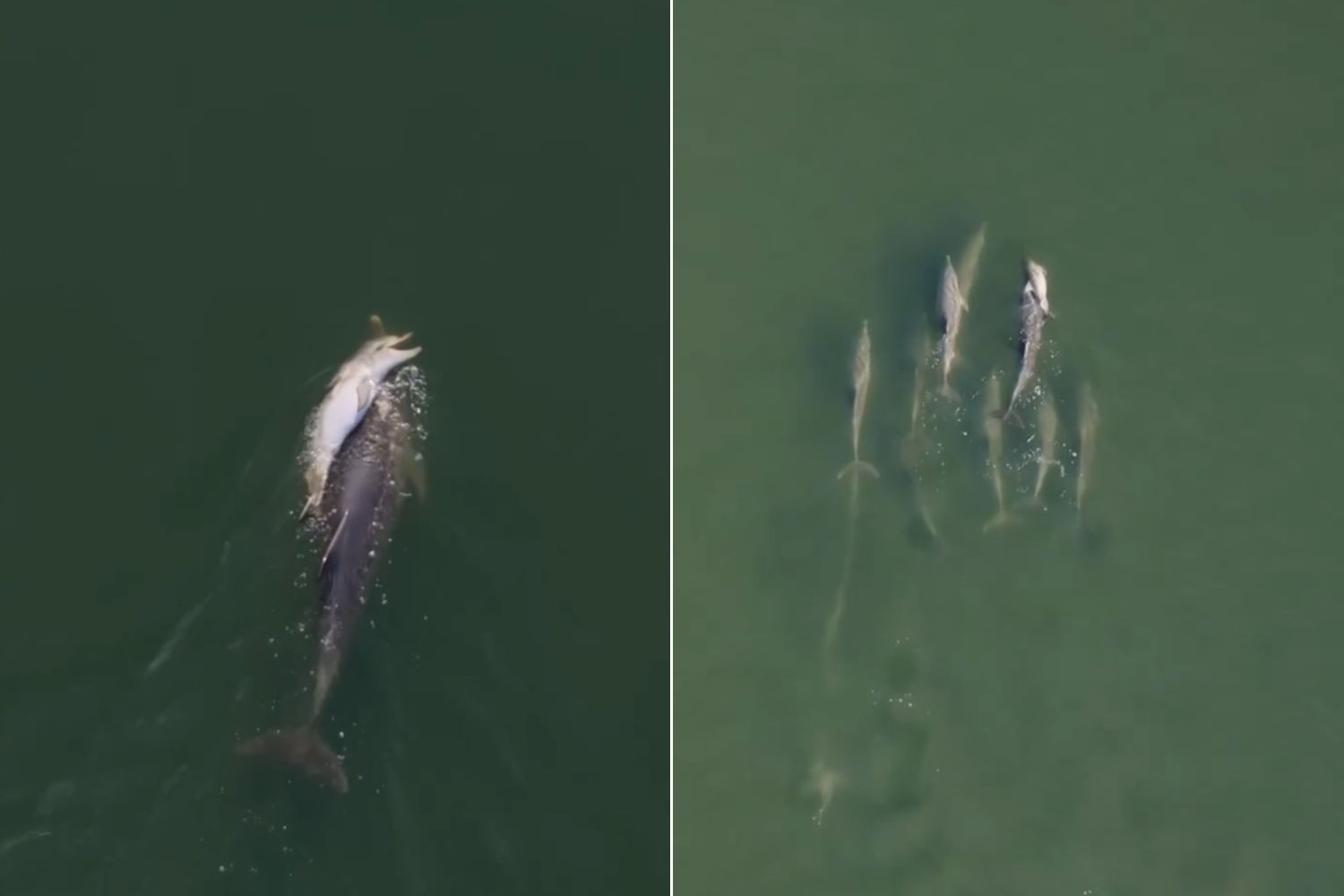
The images taken by the drones of the Australian conservation organization Geographe Marine Research have made the rounds on the web, documenting a heartbreaking loss. The mother dolphin Fraggle, renamed in homage to the characters of the show Fraggle Rockcarried the lifeless body of her little one, a two-week-old baby, on her back for six consecutive days.
For the specimen, this is the fourth neonatal loss suffered in recent years, a drama exacerbated by the harsh winter conditions in the region which frequently cause respiratory complications in the little ones. During the entire period of mourning, the entire group of 14 dolphins from the local community rallied around the mother, escorting her and swimming alongside her to provide protection and support while waiting for the animal to stop transport to start feeding again.
View this post on Instagram
Precedents among orcas: from J36 to Tahlequah
The manifestations of maternal grief and the inability to separate from deceased offspring represent a phenomenon already widely documented by the scientific community among cetaceans. A similar episode involved the orca J36 in the Rosario Strait, Argentina, caught nuzzling her stillborn female calf and still tied to the umbilical cord, before returning to Puget Sound to rejoin her social group.
View this post on Instagram
The most famous case, however, remains that of Tahlequah, the orca belonging to the critically endangered population of Southern Resident who in 2018 moved world public opinion by transporting the lifeless little boy for 17 days along a route of over 1,600 kilometres. Tahlequah itself then returned to give birth to baby J61, who joined her surviving children J47 and J57, in a habitat threatened by noise pollution and chemical contaminants isolated by the National Oceanic and Atmospheric Administration.
The social culture and emotional complexity of cetaceans
Studies conducted by bodies such as the Center for Whale Research, SR3, the SeaDoc Society and the Whale Museum confirm that these episodes are not mere biological automatisms, but rather the manifestation of a real social culture. Cetaceans develop complex family bonds, communicate through specific dialects, share hunting techniques and practice affiliative groupings. The participation of the pack in the pain of mothers like Fraggle or J36 demonstrates the existence of an advanced empathic structure, where mourning becomes a collective ritual shared by the entire group. Something that unites us deeply with them, more than we could imagine on the surface.
