
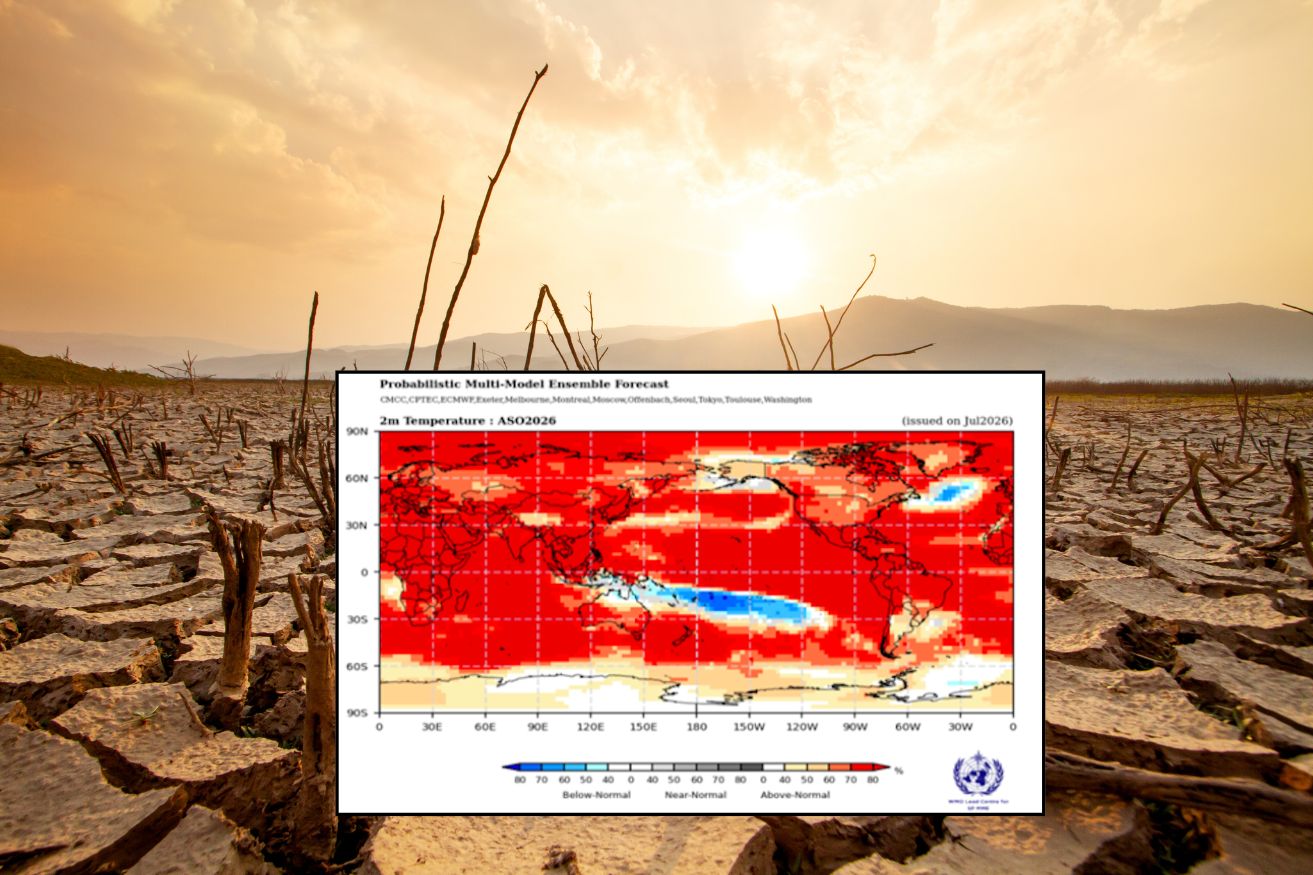
El Niño continues to intensify in the equatorial Pacific, influencing the global climate in the coming months. This is confirmed by the World Meteorological Organization (WMO), which predicts that this episode will reach its maximum intensity in the August-October quarter of 2026.
According to the last one Global Seasonal Climate Update of the WMO, El Niño will in fact continue to strengthen until it becomes a highly intense event.
Climate models from major global meteorological centers indicate that sea surface temperature anomalies in key monitoring areas of the equatorial Pacific could average more than 2.9°C between August and October.
@OMM
The Dipole, what is it
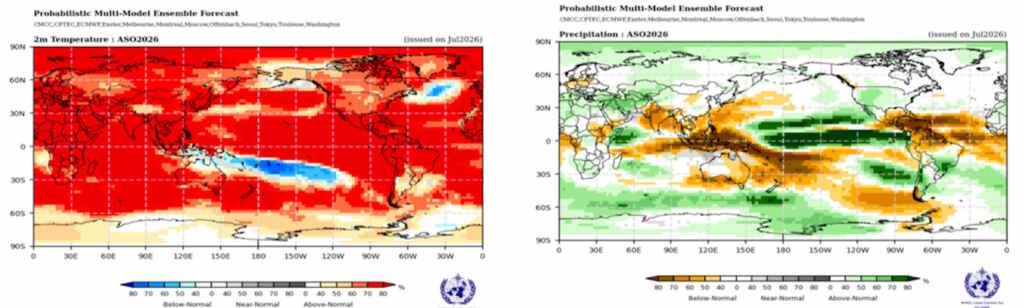
The forecasts also indicate the development of a positive Indian Ocean Dipole (IOD), which is a climatic phenomenon characterized by warmer than normal waters in the western part of the ocean and colder in the eastern part. And the combination of a strong El Niño and a positive Dipole could amplify the effects of climate change on many regions of the planet.
It goes without saying that among the consequences there is an increased risk of drought, extreme rainfall and floods, as well as a greater probability of forest fires, especially in countries bordering the Indian Ocean basin. Surface temperatures in the tropical Atlantic will also continue to remain above average, contributing to further influencing global climate balances.
El Niño is no longer just on our doorstep: it has already entered the house and is raising the temperature. And this is just the beginning – says the Secretary General of the United Nations, António Guterres. El Niño is strengthening, fueling a planet already on fire amid extreme heat waves, devastating fires and seas that have never been warmer. Fossil fuels are fueling this crisis. The expansion of coal, oil and gas must stop. More fossil fuels will mean an even more dangerous future. If we do not act now, to protect people and address the root causes of the crisis, the risks will become even more deadly.
@OMM
The general secretary of the WMO is also on the same line, Celestial Saulwho underlined how forecasts represent a fundamental tool, but not sufficient on their own to avoid disasters:
El Niño is one of the most monitored climate phenomena in the world. But predictions alone do not prevent dangers: it is people who act. This episode unfolds against a backdrop of unprecedented ocean heat and ever-rising global temperatures, offering governments and communities a window of opportunity to anticipate risks and intervene before impacts become apparent. The decisions we make today will determine the effects we experience tomorrow.
In a nutshell, even if El Niño is a natural phenomenon, its effects are manifesting themselves on a planet already profoundly altered by global warming caused by human activities and this explosive combination makes extreme weather events increasingly likely. Moral of the story? We should no longer wait to strengthen warning systems and climate adaptation strategies.
