
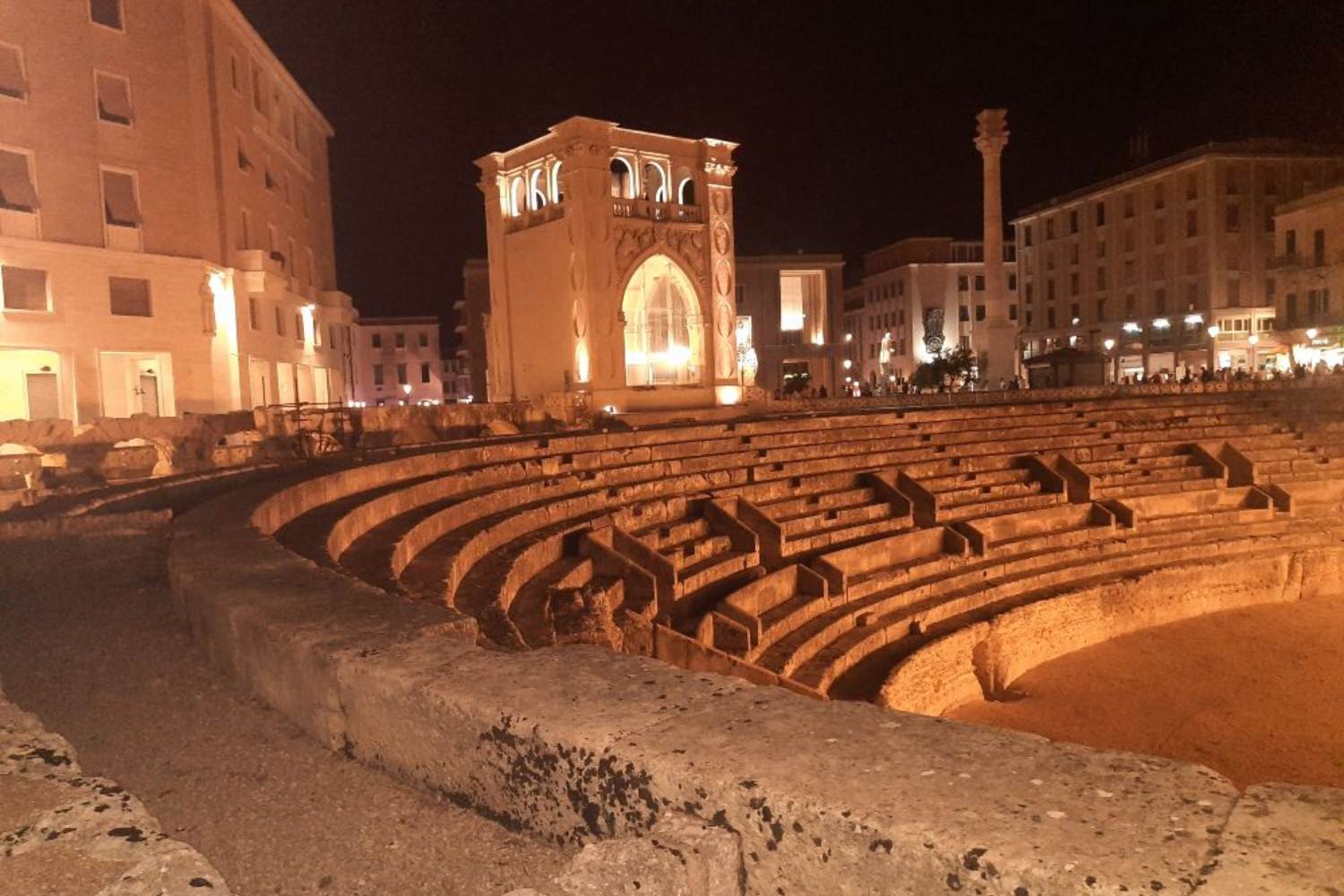
Our journey in the heart of Salento began when the evening shadows began to lengthen, lighting up the alleys of what is the capital of Baroque in Italy: Lecce. When the Lecce stone, that golden limestone known as leccisu, stops reflecting the blinding afternoon sun, Lecce transforms into an open-air theater. The nightlife awakens with laughter, outdoor tables and the rhythm of the pizzica that resonates in the air. We walked at a slow pace, letting ourselves be guided by the warmth of a city that offers a unique sensorial experience, capable of blending the great ancient history with its most intimate culinary traditions.
The historic fortifications and monumental entrances to the old city
Our exploration started from the northern quadrant, along the remaining five hundred meters of the imposing city walls. This defensive system, erected by Emperor Charles V of Habsburg against Ottoman incursions, offers a guard walkway that can be visited with expert guides. From here we moved towards the historic gateways.
The monumental Porta Napoli, with its triumphal arch dedicated to Charles V and the nearby illuminated obelisk for Ferdinand I of Bourbon, dialogues with Porta Rudiae, the oldest, surmounted by the busts of the mythical founders including King Idomeneo, near which stands a five hundred year old tree. Finally, we crossed Porta San Biagio, the 17 meter high southern access that introduces the evening nightlife between Via dei Pertoni and Via Federico d’Aragona.
@RebeccaManzi/GreenMe
The drawing room of Sant’Oronzo and the military secrets of the castle
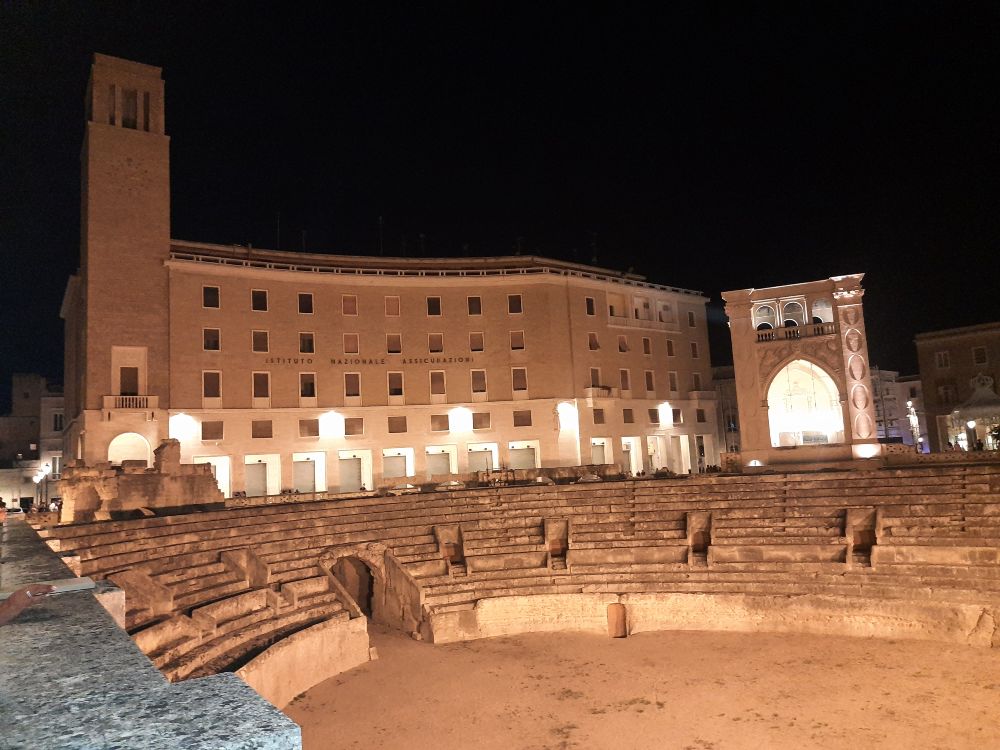
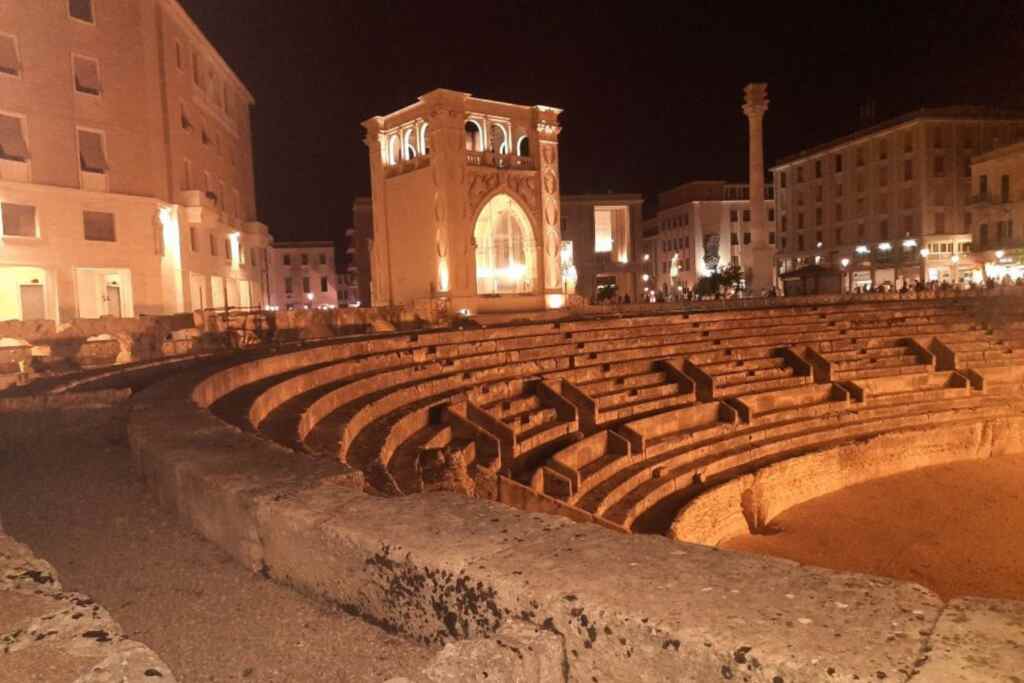
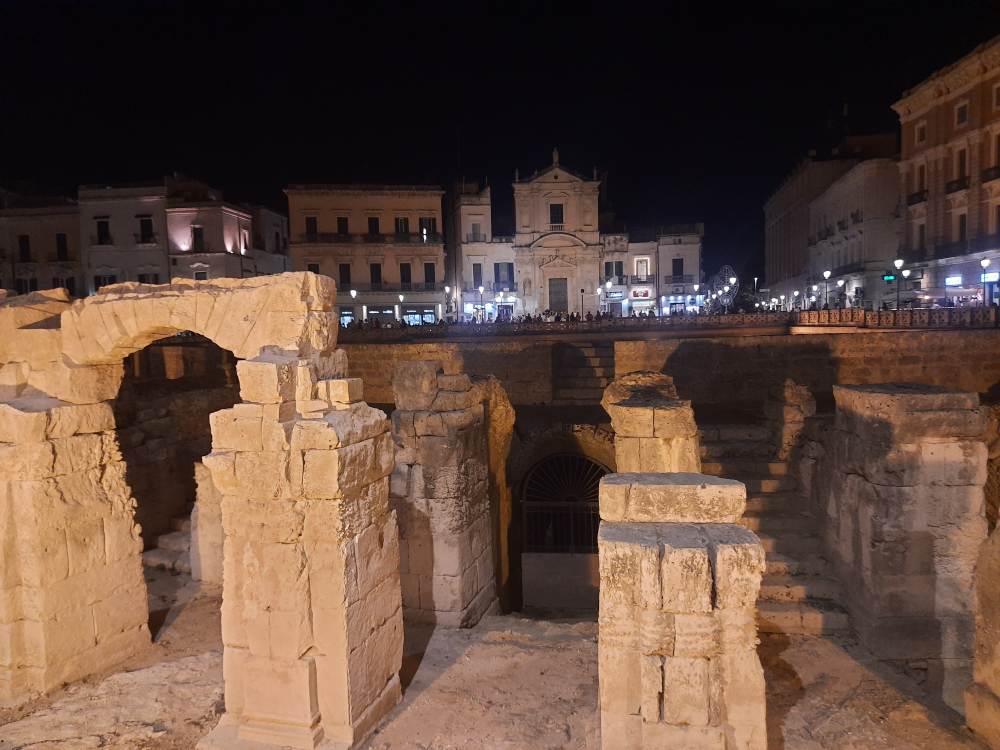
In a few minutes we found ourselves in the social hub of city life: Piazza Sant’Oronzo. In the center stands the 29 meter votive column erected for saving the city from the plague. The floor shows the mosaic of the Lecce coat of arms, but the remains of the Roman Amphitheater dominate the scene. Brought to light in 1901 under the Bank of Italy, this 2nd century AD basin hosted up to 25,000 spectators for the venationes.
@RebeccaManzi/GreenMe
@RebeccaManzi/GreenMe
Next to it stands the Sedile, an ancient Renaissance municipal pavilion, and the church of Santa Maria della Grazia. A short distance away stands the Castle of Charles V, fortified by the engineer Gian Giacomo dell’Acaja; its basements and the Duchess Hall now host events and the Papier-mâché Museum, a typical art of Salento.
@RebeccaManzi/GreenMe
The baroque stages of Piazza Duomo and Santa Croce
Under the light of the evening street lamps, the entrance to Via Giuseppe Libertini and Via Vittorio Emanuele II projected us into the spectacle of Piazza del Duomo. This monumental space, closed on three sides, takes your breath away: the Cathedral of Maria SS. Assunta shows a side façade finely sculpted by the masters Zimbalo, Cino and Manieri, flanked by a 72 meter bell tower, the Bishop’s Palace and the Ancient Seminary with the cloister and the Chapel of San Gregorio.
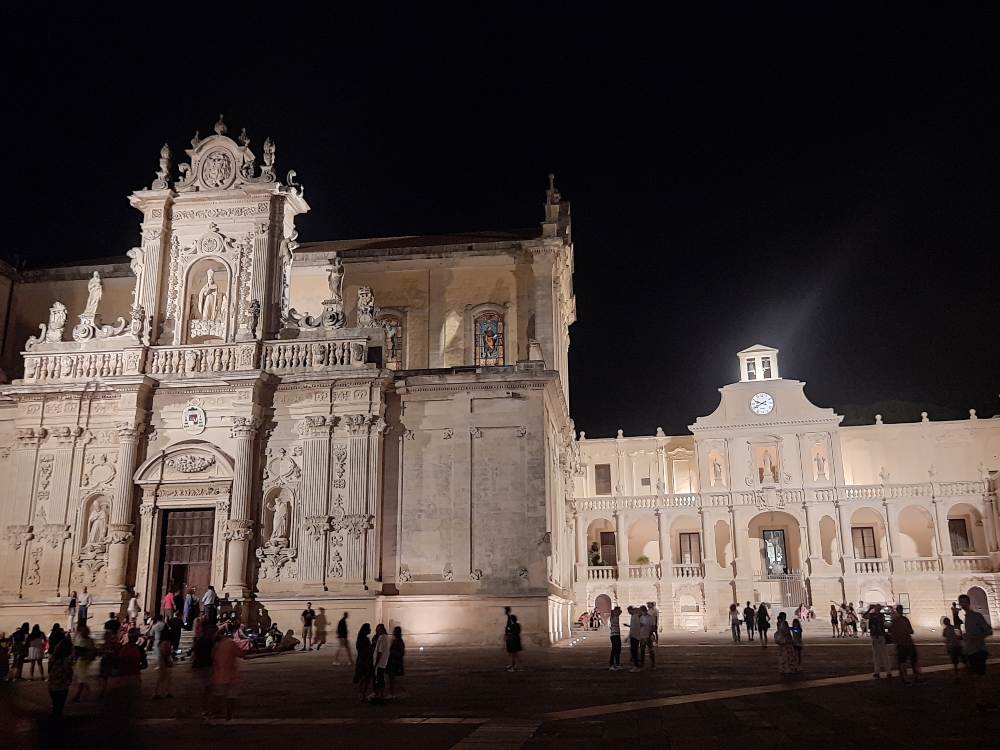
@RebeccaManzi/GreenMe
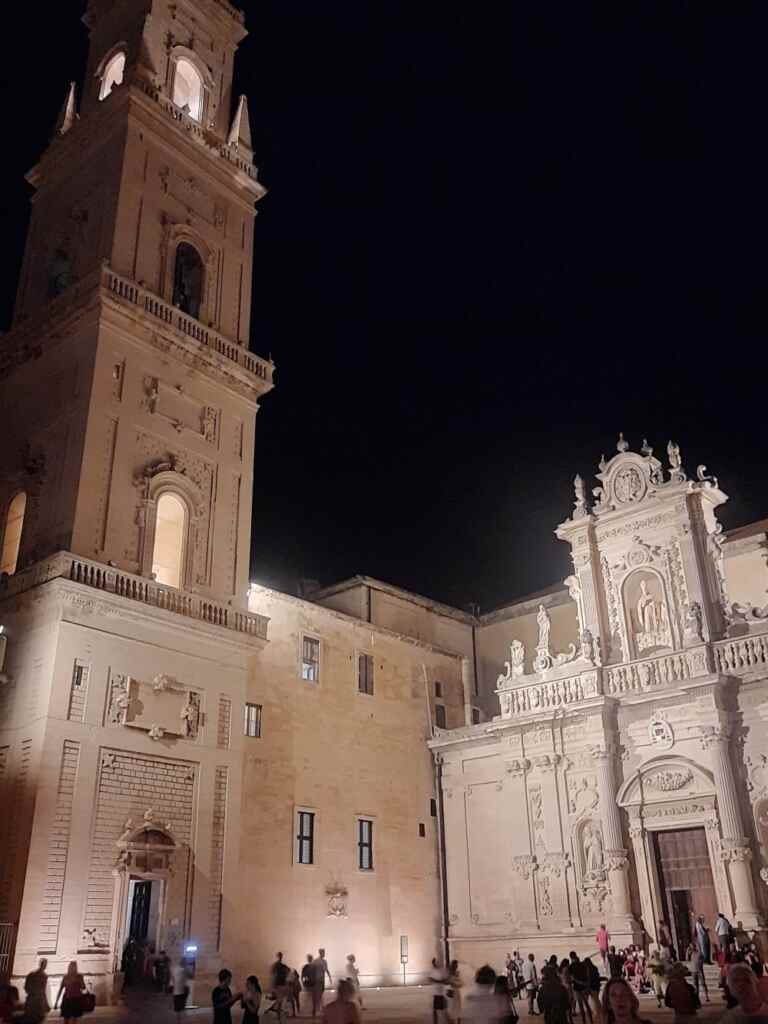
@RebeccaManzi/GreenMe
But we reached the pinnacle of virtuosity in front of the Basilica of Santa Croce. The façade is a prodigious embroidery in which the architect Cesare Penna inserted his own self-portrait in the central rose window. Inside, the altar of San Francesco da Paola signed by Giuseppe Zimbalo stands out, adjacent to the sumptuous Palazzo dei Celestini, now the seat of the Prefecture.
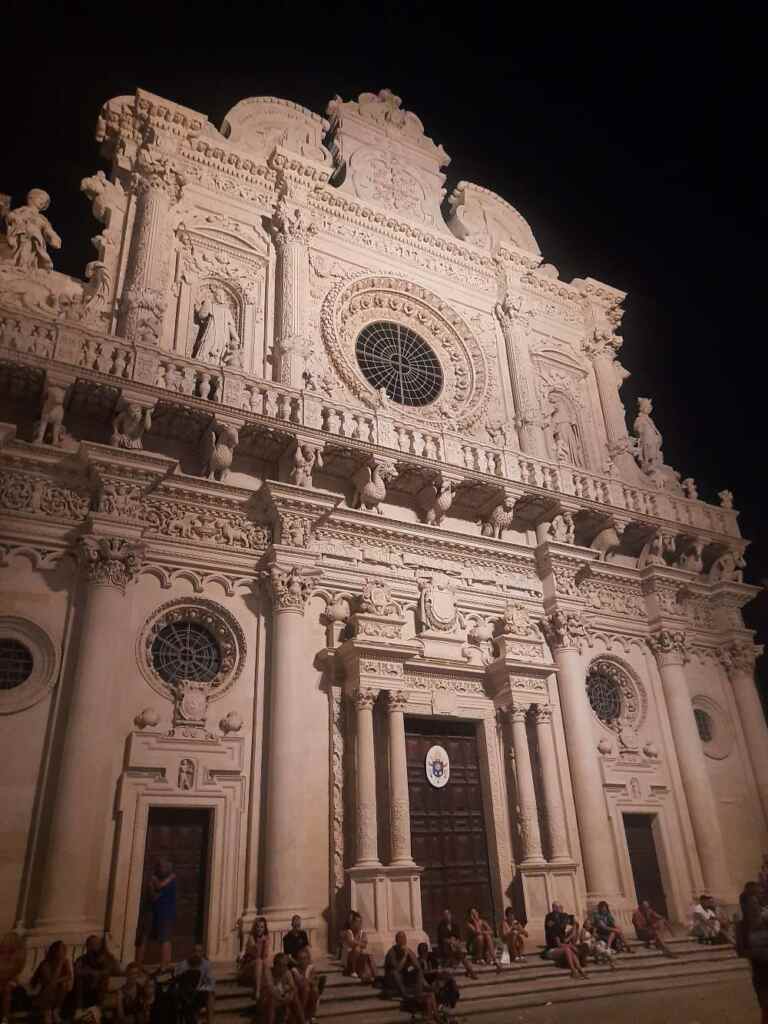
@RebeccaManzi/GreenMe
Archaeological enigmas and sacred architecture along the streets of taste
Our itinerary continued admiring the Church of San Matteo, famous for its Borrominian convex façade and the legend of the incomplete column due to the devil’s envy, and the Church of Santa Chiara, with a sumptuous papier-mâché ceiling and a surrounding square full of young people.
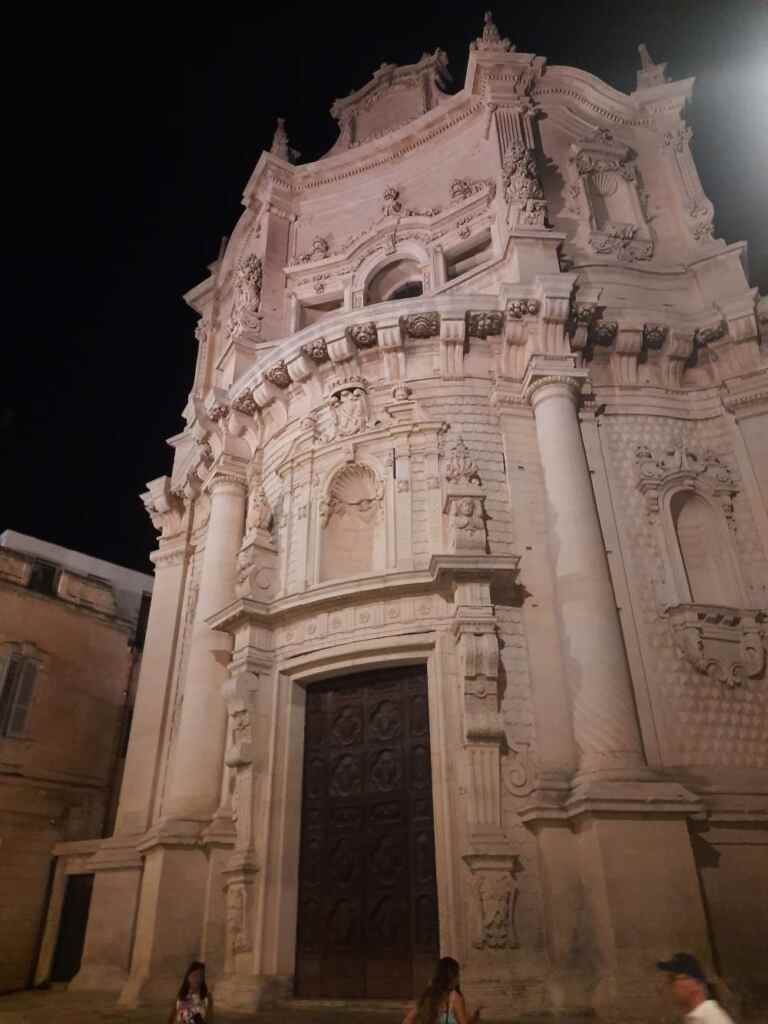
@RebeccaManzi/GreenMe
Behind it emerges the Roman Theatre, discovered in 1929 and nestled between the buildings with its 5,000-seat arena. We ended the night walking along Via Palmieri, Via Libertini and Via Vittorio Emanuele II, ideal axes for discovering the artisan shops and tasting street food such as pucce, pittule and orecchiette with sauce.
The timeless charm of a Salento night
Lecce is not simply a destination to visit: leaving the golden stone of the center behind means bringing with you the warmth of a welcoming and proud city, capable of transforming every alley into a story and every encounter into a lasting emotion. In the silence that precedes the morning, while the echo of the nightlife slowly fades, the certainty of having experienced an unforgettable sensorial journey remains, suspended between the eternal splendor of the baroque and the timeless magic of a Salento night.
