
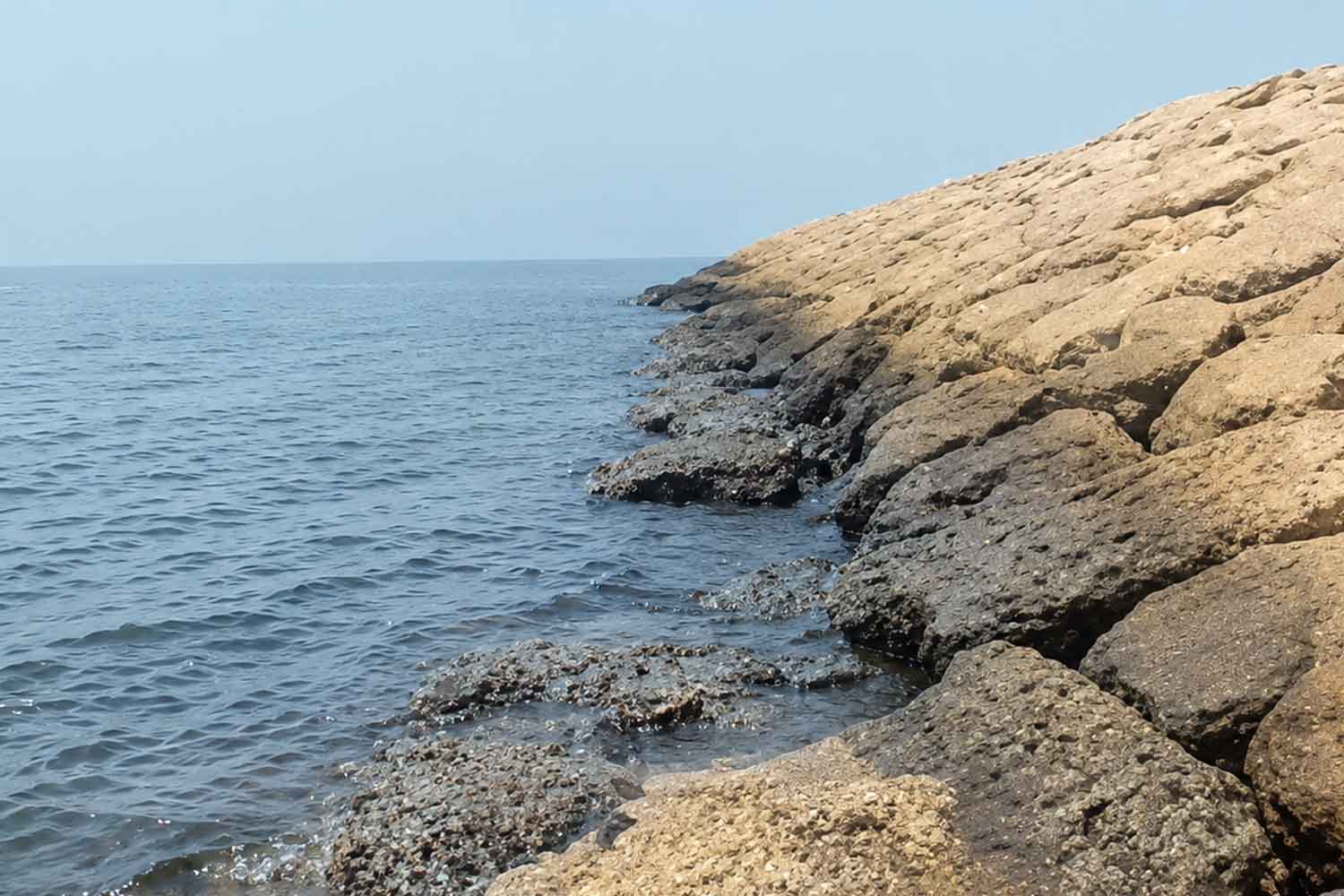
The oil arrived on the sand. After weeks of leaking into the Arabian Sea, crude oil leaked from the Caroline Bezengi has reached the beaches of Ras Madrakah on the coast of Oman, about 200 kilometers north of where the tanker ran aground. Omani authorities estimate that the contamination could affect up to 40 kilometers of coastline. Further north there is the island of Masirah: according to the forecasts of the Environment Authority, the oil could also reach the southern coasts.
Meanwhile the bush continues to grow. A new analysis of satellite images, made public on August 12, estimates an area greater than 2,000 square kilometers. Only a few days earlier the figures were much lower: on 10 August the Oman Environment Authority spoke of around 390 km², while on 4 August Greenpeace estimated around 600. They are photographs taken at different times of a leak that continues to move with wind and currents, in the midst of the monsoon season.
The tanker was carrying around 800,000 barrels of Russian crude
The Caroline Bezengi had loaded Russian oil in Novorossiysk, on the Black Sea, and was headed for Asia. An estimated 800,000 barrels of crude oil were on board. On June 8, the crew reported problems while the ship was off Yemen; Maritime security sources indicated a possible explosion, the origin of which was not clarified. No one claimed responsibility for an attack. On June 30, the tanker remained stranded near the island of Al Qibliyah, in the Hallaniyat archipelago.
‘This will be a massive environmental disaster if it’s not fully mitigated,’ explains senior correspondent Jonathan Saul, as the leaking crude oil from a tanker grounded off a nature reserve in Oman spreads 150 square miles pic.twitter.com/V8uXmXOl68
— Reuters (@Reuters) August 11, 2026
From there the oil began to expand. On July 26, Greenpeace identified a patch of approximately 45 km² through satellite images. On August 2 it had risen to around 150, two days later to around 600. Now the images analyzed by an oil spill specialist indicate more than 2,000 km². The scale has changed in a few weeks and the crude oil has now left the area immediately around the wreck to reach the mainland.
The ship, built in 2001, appears among the units associated with the so-called Russian shadow fleet: oil tankers used to continue moving Russian crude oil while circumventing or making it more difficult to enforce Western sanctions. The Caroline Bezengi, identified by the IMO number 9224439, was included on 24 February 2026 in the list of ships sanctioned by the United Kingdom and had already appeared in the European Union measures.
There is also a detail that tells well how opaque these routes can become. According to information gathered by Greenpeace, the tanker had lost its registration under the Cameroonian flag on May 29 and was then registered with an unknown flag at the International Maritime Organization. The organization also reports the absence of coverage from one of the large recognized P&I marine insurance clubs and reports previous insurance with a company in Kyrgyzstan, without being able to establish whether that coverage is still valid.
The crude ended up next to a marine reserve established a few months ago
The location of the wreck adds a wrinkle to the problem. Al Qibliyah is part of the Hallaniyat archipelago, surrounded by an area that Oman formally transformed into a reserve with Royal Decree 96/2025 of November 11th. The management rules for the marine protected area arrived in March 2026. A few months later, an oil tanker loaded with crude oil stopped right there.
The Hallaniyat are home to sea turtles, seabirds and cetaceans. Among these is the Arabian Sea humpback whale, a particularly small and isolated population. The International Whaling Commission reports an estimate of less than one hundred individuals in the waters of Oman and the classification as an endangered population. Socotra cormorants also live in the area, while Greenpeace reports seagrass meadows, coral reefs and beaches used by turtles for nesting.
Oil, meanwhile, is also heading towards Masirah. The Environment Authority has indicated a stretch of between 10 and 20 kilometers of the southern coast of the island as potentially affected. Specialized teams are giving priority to the areas considered most sensitive and the authorities have asked fishermen and beachgoers to avoid contact with the polluting material.
Operations to save the Caroline Bezengi have now begun
After weeks in which the leak continued to widen, British maritime safety firm Ambrey announced on August 13 that it was involved in the recovery operation. Some support vessels are on their way to the Caroline Bezengi and an international company specializing in oil spill response has also been commissioned.
It won’t be an easy job. The Khareefthe monsoon that affects Dhofar at this time of year, brings wind, rain, fog and difficult seas: the same conditions that are helping to disperse the crude oil complicate operations around the wreck. The priority is to secure the ship and the cargo still present before the hull, already partially submerged, suffers further damage.
The Caroline Bezengi had left with hundreds of thousands of barrels of Russian oil, a history of sanctions, changed flags and hard-to-reach property. Now a part of that journey can be read directly on the coasts of Oman. Crude oil is on sand; the rest is still inside an oil tanker stopped next to a marine reserve.
Why must addressing the environmental condition of the Strait of Hormuz and its surrounding waters form an integral part of any future administration of the Strait?
In recent days, videos have circulated showing oil pollution along the shores of Qeshm Island. This pollution… pic.twitter.com/UpSWlqePvd
— Esmaeil Baqaei (@IRIMFA_SPOX) August 12, 2026
