
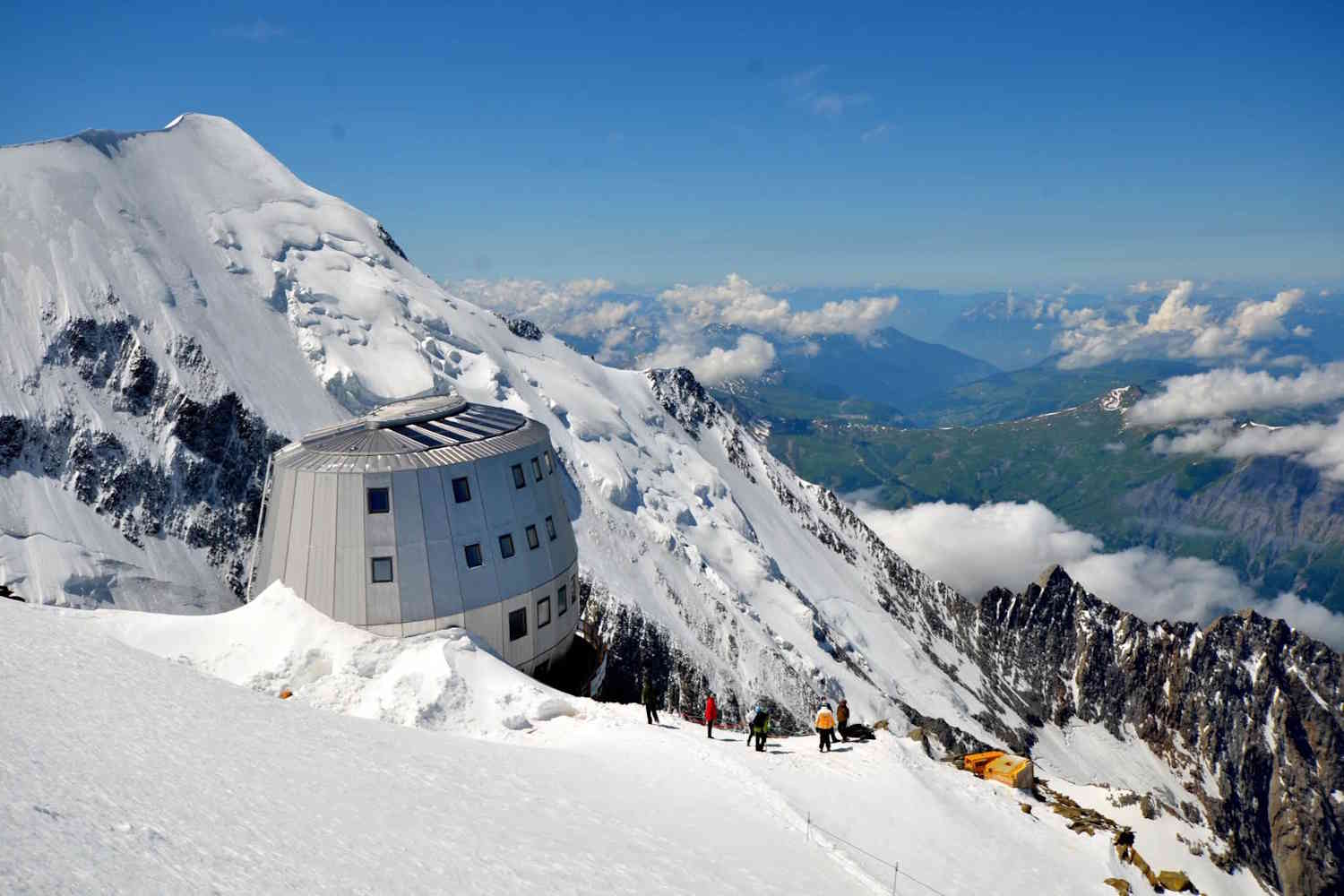
A municipal ordinance, two closed refuges and impressive images of the stone throws along one of the most delicate passages of the French normal route to Mont Blanc. Yet, all this was not enough: 32 climbers decided to reach the refuge anyway du Goûterdespite the closure ordered by the mayor of Saint-Gervais, Jean-Marc Peillexdue to the particularly dangerous conditions of the mountain.
After spending the night in the structure, the next morning they would ask the refuge manager to contact the authorities so that a civil protection or gendarmerie helicopter could take them back to the valley free of charge. A request that received a resounding no.
The decision to close the shelters Tête Rousse And Goûter it had arrived after a landslide and following the sharp increase in the danger of falling stones in the famous couloir du Goûter, a passage already known for its exposure. The drought conditions and repeated heat waves would have made the mountain even more unstable.
Peillex himself had explained that the situation required particular caution from mountaineers and that the guide companies of Saint-Gervais-Les Contamines and Chamonix had already chosen to temporarily suspend ascents of Mont Blanc.
The period of drought we are experiencing – wrote the mayor of the French municipality – means that the practice of mountaineering requires very particular vigilance. The various heat wave episodes, for the ascent of the Aiguille du Goûter and, in particular for the crossing of the “couloir”, in important stone falls. Faced with this situation, the guide companies of Saint-Gervais-Les Contamines and Chamonix have already decided to suspend the planned climbs of Mont Blanc as long as this situation persists. Faced with this situation, I made the decision, through a municipal ordinance, to close the TÊTE ROUSSE and GOÛTER shelters.
In short, the message could hardly have been clearer.
But, according to what the mayor reported, the climbers knowingly ignored the instructions of the guides of Saint-Gervais, Chamonix and Courmayeur and the warnings of the high mountain office, despite the risk having been widely reported also through images spread on social media.
The request for the free helicopter
The paradox arrives the following morning. The manager of the shelter, Antoine Rattin, contacted the mayor because he was requested by the group, who asked to be recovered free of charge by a public rescue helicopter. But in the meantime the conditions along the corridor had returned relatively calm and, after a discussion with the commander of the PGHM, the French high mountain rescue service, it emerged that there was no emergency situation that would justify the intervention of public transport.
Hence the decision not to offer any free recovery: those who wanted to avoid the descent on foot could have used a private helicopter, paying for it out of their own pocket. Thus, some of the climbers faced the descent independently, without consequences; others used a private CMBH flight to leave the refuge.
The mountains undoubtedly remain a space of freedom, but freedom does not mean being able to ignore a known risk. While scorching heat and drought make Alpine walls and glaciers increasingly unstable, that line between adventure and imprudence risks becoming thinner every summer.
