
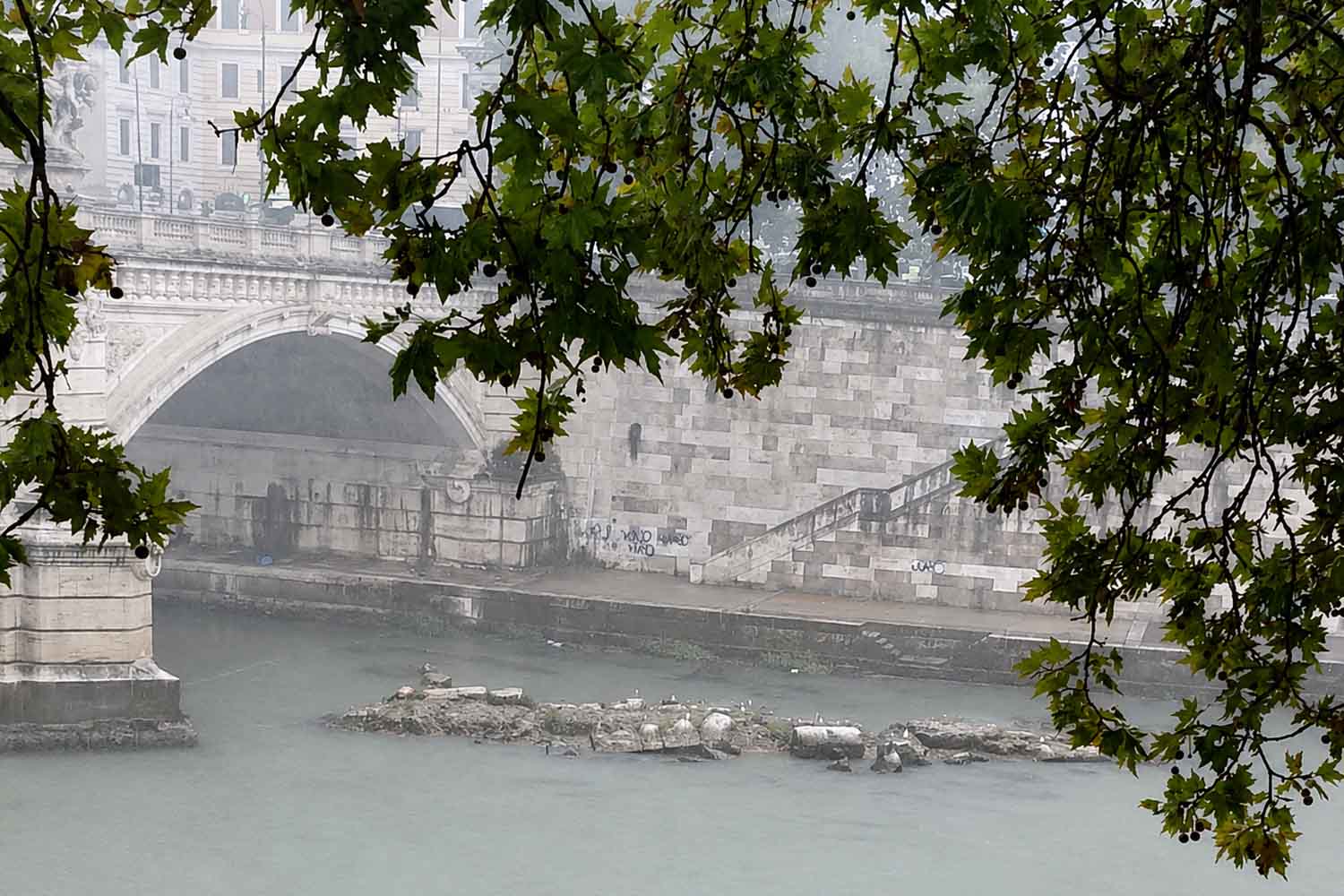
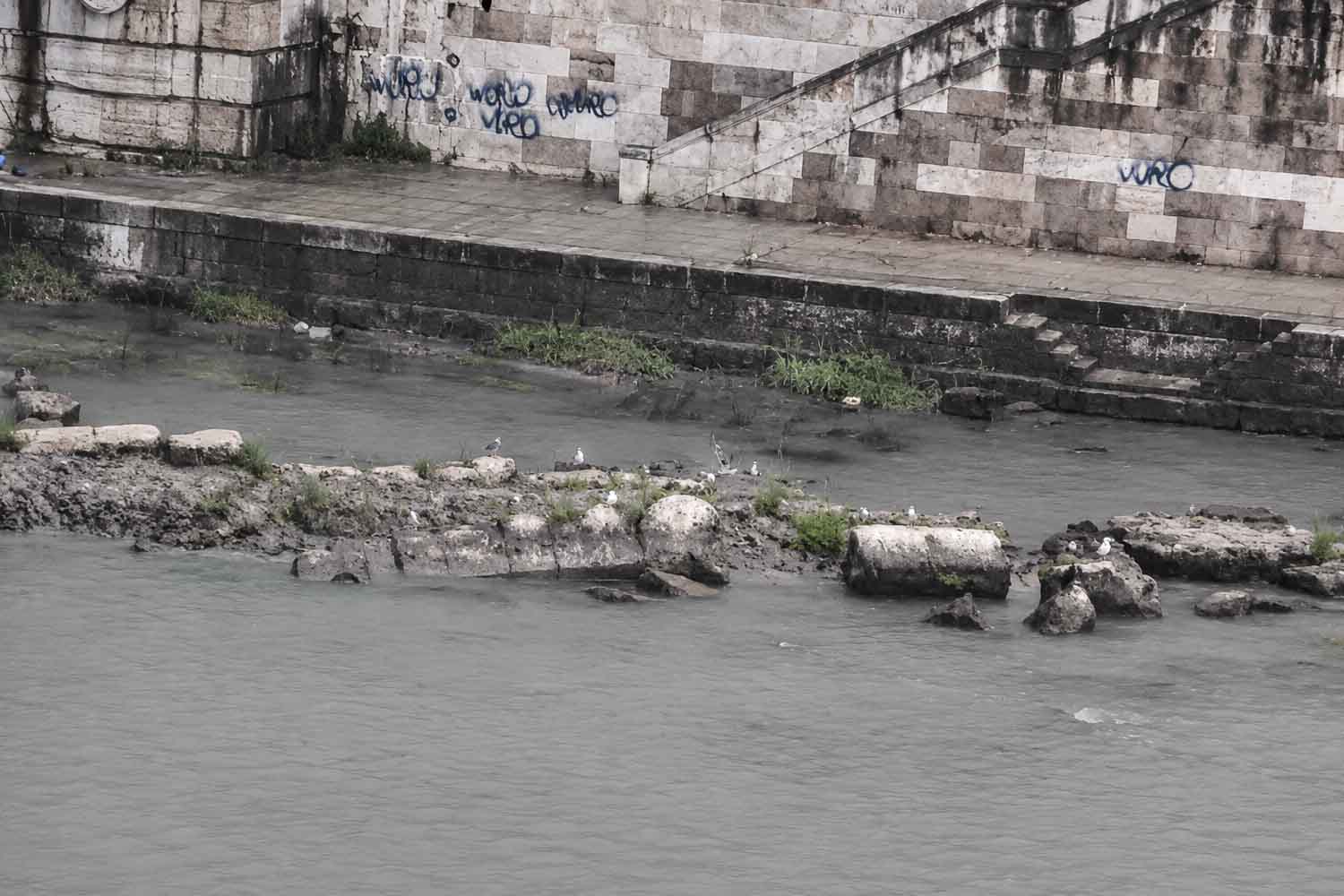
A piece of Rome emerges from the Tiber which normally remains below the surface of the water. It happens a few steps from Castel Sant’Angelo, near the current Ponte Vittorio Emanuele II, where the particularly low level of the river has made the remains of the Pons Neronianusthe Roman bridge traditionally associated with Emperor Nero.
The return to the surface comes while the Tiber is experiencing a exceptionally lean: according to the data ANBIat the beginning of August the river level in Rome has fallen to the lowest values in the last 15 yearsapproximately 15 centimeters below the monthly average for the period 2011-2020. Extreme heat and drought have thinned the river enough to reveal what normally remains submerged to view.
View this post on Instagram
A portion of masonry emerges from the river almost in the middle of contemporary Rome, among traffic, bridges and domes. Almost two thousand years ago in those parts the landscape was quite different: the bridge allowed you to cross the Tiber between the Campo Marzio and the Vatican areathen outside the monumental heart of the city and also occupied by imperial properties.
The name by which we know it today, Pons Neronianus or Neronian Bridge, links it to the reign of Nero, between 54 and 68 AD. The structure is generally placed in the 1st century and was part of the network of connections towardsAger Vaticanuswhere the circus started under Caligula, properties linked to the imperial family and the great roads that left Rome towards the north were located.
The road to the ancient Vatican passed from here
The bridge allowed the Via Triumphalis to cross the Tiber. It was the road also traveled during the triumphal processions and continued towards the Veio area, crossing territories that today are now completely incorporated into the city.
The reconstruction of the river topography proposed by architectural historian Rabun Taylor in the University of Virginia’s Waters of Rome project places the bridge just south of the current Ponte Vittorio Emanuele II. Further upstream the Pons Aelius would then arrive, built by Hadrian to connect the city to his mausoleum: the bridge we know today as Ponte Sant’Angelo.
In short, within a few hundred meters, the Tiber practically preserves a stratigraphy of bridges. Hadrian’s continues to bring Romans and tourists from one bank to the other. The one attributed to Nero must wait for the river to lower enough to be able to see it again.
©Ilaria Rosella Pagliaro for GreenMe
The Pons Neronianus stopped being used already in antiquity. Historical reconstructions do not allow us to establish precisely when it was definitively destroyed: according to some hypotheses, the structure may have been damaged or progressively dismantled already before the Gothic War of the 6th century.
©Ilaria Rosella Pagliaro for GreenMe
In the eighteenth century the pylons were still in the middle of the Tiber
What appears today just a few centimeters above the water was much more evident just three centuries ago. In 1754 the engraver Giuseppe Vasi he dedicated a titled view to those remains Vestiges of the ancient Triumphal Bridge. The matrix, preserved by the Central Institute for Graphics, shows several pylons clearly emerging from the Tiber, large enough to become part of the city’s everyday landscape.
And they weren’t just there to do archaeology. For centuries the remains of the Roman bridges over the Tiber were incorporated into the life of the river. Also present in the area were floating millsstructures that exploited the current to move the millstones and which characterized the Roman banks until the nineteenth century.
At the end of the 19th century the relationship between Rome and its river changed drastically. After the great floods, the walls were built, the course was regularized and many obstacles were eliminated to improve flow and navigability. Even what remained of the ancient pylons ended up involved in the interventions.
During the construction of Ponte Vittorio Emanuele II, at the beginning of the twentieth century, elements of the foundations were also identified in the river bed: wooden beams and structures used by the Romans to support the piers in decidedly uncooperative terrain. The Tiber, after all, has never been exactly the easiest place to put up a bridge destined to last.
The lower Tiber periodically returns Rome submerged
This summer the Pons Neronianus became visible again because the The level of the Tiber has dropped enough to leave part of the structure uncovered. It had already happened on other occasions and it is precisely this intermittent appearance that makes the bridge special: it remains there throughout the year, except that Rome normally flows over it without seeing it.
It’s not the only piece of the city hidden by water, either. The bed and banks of the Tiber retain traces of bridges, ports, piers and structures built over the centuries, while the current shape of the river is the result of the enormous interventions carried out especially between the nineteenth and twentieth centuries.
The Pons Neronianus also retains some shaded areas. The name that links it directly to Nero is ancient, but the attribution of the construction to the emperor is not based on definitive testimony. The sources and topographical studies above all allow us to reconstruct its position, function and relationship with the road system of the time.
However, it is enough to watch it emerge next to modern bridges to have a fairly precise measurement of the time that has passed. A road that led to the Roman Vatican has disappeared, the bridge has almost disappeared and the Tiber continues to pass over it. Every now and then he bends down and lets us see a piece of it.
