
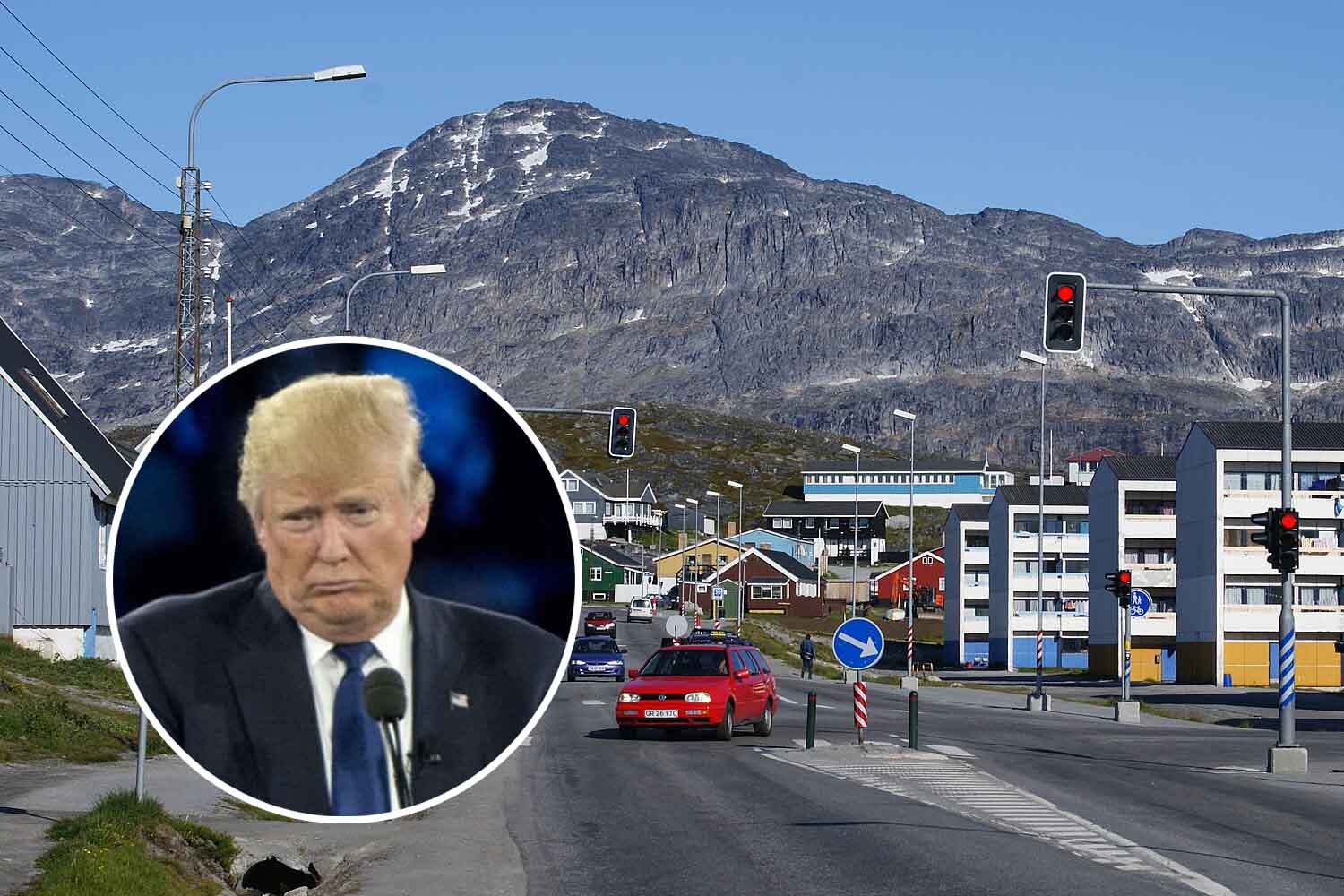
By July the equipment had already been moved to the Jameson Land area in eastern Greenland. The authorizations to proceed, however, were still being processed. We talked about it a few days ago: the American oil project was running significantly faster than the permits. Now Nuuk has put things back in the correct order. There will be no drilling in Nunap Qeqqa, Jameson Land, in the winter of 2026-2027.
The Greenland Government has determined that the necessary process cannot be completed before the planned start date of drilling. Greenland Energy Company, a US company listed on the Nasdaq and operator of the project, has therefore communicated to the Securities and Exchange Commission that the objective for obtaining permits has been postponed to the winter of 2027. The document speaks of a “more extensive and complete” review required by the complexity of the project. The Arctic, evidently, is not drilled according to the investors’ timetable.
The project is still at the beginning of the process
The detail that best measures the distance between the announced programs and a truly authorized drill is in the administrative process. The Government of Greenland has published a page dedicated to the Nunap Qeqqa/Jameson Land project: the path towards a possible authorization includes eleven steps, including documentation, environmental and social impact assessments, public consultations and further approvals. The project is still in its initial phase.
This also explains the recall received in the previous weeks. White Flame Energy, the license holder, had received the green light to transfer a limited amount of material in 2025, but the permit had expired. In 2026 he submitted a new request; while the case was still under examination, part of the equipment had nevertheless been moved from Tasiilaq to Nerlerit Inaat airport. Authorities allowed them to remain there, prohibiting further movement before clearance was granted.
In fact, exploration licenses exist. There are three, they date back to 2015 and 2018 and belong to White Flame Energy A/S, a company controlled by the British 80 Mile. They predate Greenland’s 2021 decision to stop granting new oil licenses and can therefore continue under the old regime. Having an exploration license, however, does not mean you already have authorization to drill. This is even specified in the company documents filed in the United States, which expressly recall the need for Greenlandic approvals.
There is also another useful precision. Greenland Energy today does not own those three licenses: it finances and operates the program through an agreement with White Flame. According to documents filed with the SEC, it would acquire 50% of the interest after the first well and would reach 70% after the second. Before drilling the first one, its share remains zero.
The 13 billion barrels still exist mostly on paper
The allure of Jameson Land is measured by a number large enough to work well in investor presentations: up to 13 billion barrels of oil. The estimate cited by Greenland Energy comes from an independent assessment by Sproule ERCE and concerns prospective resources recoverable in a 3U scenario, therefore the high end of the estimate.
Then you get to the pages dedicated to risks and the landscape changes a lot. Greenland Energy itself writes that it has never drilled a well in the basin, that no commercial oil discovery has yet been made in the area, and that prospective resource estimates are “highly uncertain.” There are no proven reserves and there is no guarantee that any hydrocarbons discovered can be extracted in economically viable quantities.
Jameson Land therefore remains a huge exploration project: promising according to the valuations used by the company, very risky according to the company itself. Before transforming those billions of barrels into oil, a well, a discovery, verification of its economic viability and, even before that, authorizations are needed. At the moment the first element in the row is already missing.
The links with the Trump environment remain clearly visible
Greenland Energy does not belong to the White House and calling these drills “Trump’s” in a proprietary sense would be incorrect. The connections with his political environment, however, are documented. The company has partnered with Phil McGraw’s Envoy Media, the television Dr. Phil appointed by Trump to the Religious Liberty Commission, to produce a series dedicated to the Jameson Land oil adventure. The company statement describes the project as a sort of Arctic treasure hunt entrusted to “modern-day wildcatters”. The documentary, at least, had already found the plot.
Carol Craig, founder of Sidus Space and former US Navy officer, also sits on the board of directors. His company is among the recipients of the Missile Defense Agency’s SHIELD contract, a program that Sidus itself places within the broader Golden Dome missile defense strategy, one of the major projects of the Trump administration.
The geopolitical context therefore makes it difficult to treat Jameson Land as a normal private oil venture. Trump continues to consider Greenland central to US strategic interests, while decisions on natural resources on the island rest with the Greenlandic authorities. And this time Nuuk has made a very concrete decision: the companies’ calendar cannot skip that of the authorizations.
Greenland Energy assures that it will continue the project and will use the postponement to review logistics and infrastructure. He can do it. In the meantime, however, the first well which until a few weeks ago was supposed to start in 2026 has slipped to at least 2027. The equipment arrived before the permits. The drills, fortunately, still have to wait for them.
