
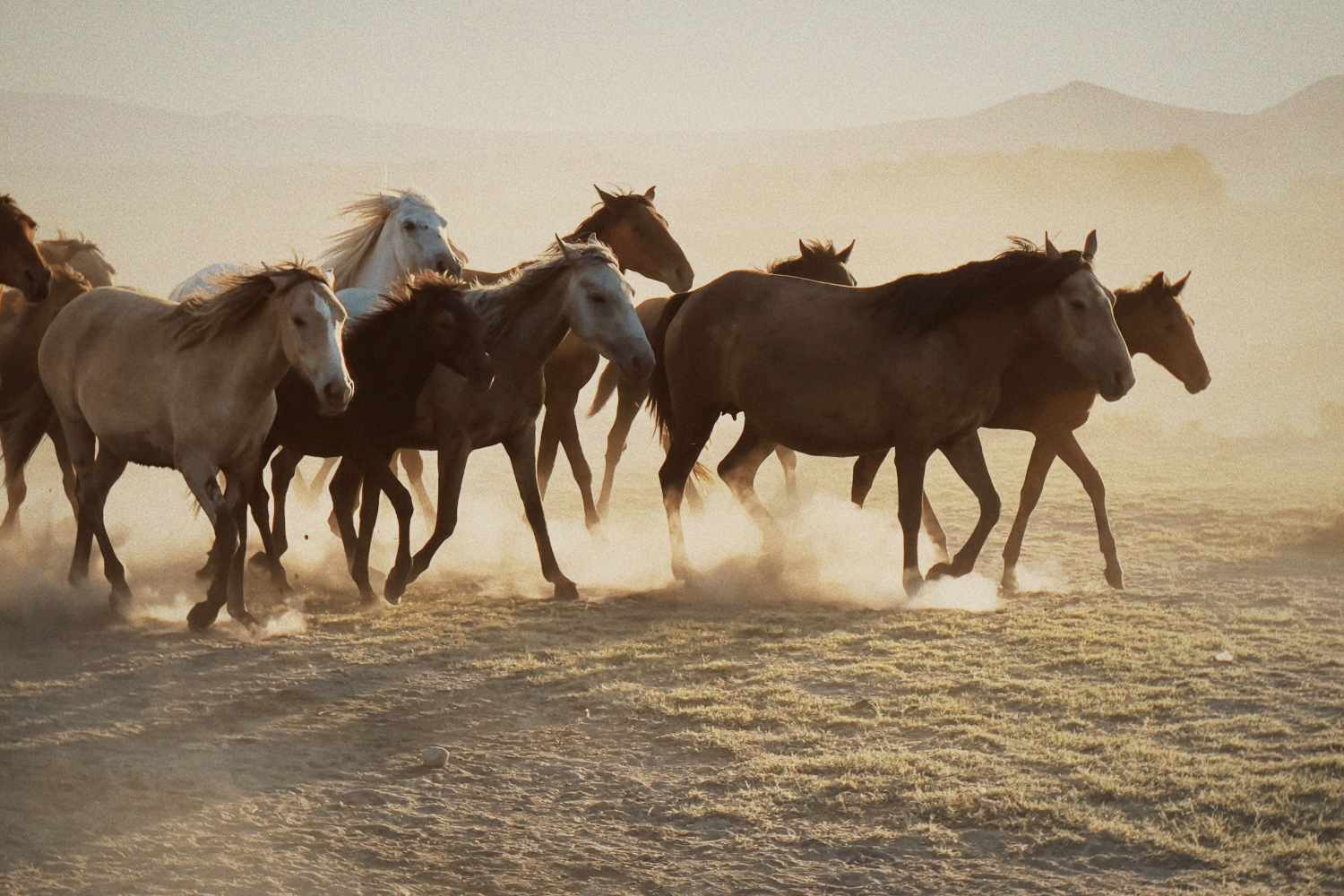
The icon par excellence of American freedom is experiencing its darkest moment, trapped in a bureaucratic and commercial mechanism with chilling results. A shocking investigation by New York Timesconducted in collaboration with American Wild Horse Conservation (AWHC) and investigator David Philipps, has exposed a shadow supply chain pushing hundreds of federally protected mustangs straight to the slaughterhouse.
View this post on Instagram
In 2025, under the pressure of new directives from the administration led by Donald Trump, sales of wild horses managed by the Bureau of Land Management (BLM) more than doubled, reaching 3,700 specimens. Behind the official justification of wanting to reduce the costs of maintaining reception centers – equal to around 100 million dollars a year – lies a regulatory chasm that transforms the symbols of the West into cannon fodder destined for the markets of Canada and Mexico.
View this post on Instagram
The emblematic case of Brandon Jones and the 68 mustangs that disappeared during the night
The figure of Brandon Jones, a cattle dealer from Ohio who quickly became the main buyer for the Bureau of Land Management, managing to acquire over 500 specimens, embodies the lethal flaws in this system. In March 2025, Brandon Jones purchases a batch of 68 mustangs from the Idaho government center for the paltry price of $25 each.
That same night, two huge unmarked trucks pick up the animals and make them vanish into thin air. Although Jones denies any connection to the slaughter, traceability indicates that many of his horses quickly end up at auctions frequented by traffickers. Border records directly link his supplies to key industry figures such as exporter Fred Bauer, photographed at Canadian crossings with horses still bearing US government branding.
Rigged auctions and triangulation towards foreign slaughterhouses
The mechanism for circumventing the Wild Free-Roaming Horses and Burros Act is finely calculated. When a wild horse is not adopted after three online attempts, it loses federal protection and is put up for sale by the Bureau of Land Management. The first buyer signs a commitment not to send the animal to slaughter, but the protection ends at the first resale: unscrupulous intermediaries buy back the mustangs and place them at compliant auctions, such as those documented in Poteau in Oklahoma, in Kansas, Texas and Tennessee.
Activists like Clare Staples of the Skydog Ranch sanctuary in Oregon report that it is no longer old specimens that are disappearing, but young specimens of 2 or 3 years. A disturbing dynamic that the Italian association IHP (Italian Horse Protection) defines as comparable to the illegal trafficking of equines that regularly occurs in Italy and Europe with falsified documents and absent controls.
View this post on Instagram
The refusal of prevention and the call for systemic change
Faced with the accusations, the spokesperson for the Bureau of Land Management defends the agency’s actions by claiming that it acts in compliance with the law and investigates every reported violation. However, the director of American Wild Horse Conservation, Patricia Miller, together with veterinary reproduction experts such as Martin Schulman, highlights how the government deliberately avoids the only ethical and sustainable solution: immunocontraception and fertility control programs for free-roaming herds. Preferring mass captures and quick sales, the federal system continues to condemn mustangs to a dramatic fate, transforming a law created to protect them into an inevitable death sentence.
