
Courgettes are among the most popular summer vegetables. Light, versatile and easy to cook, they find space in many recipes, from first courses to side dishes, including savory and velvety pies and vegetarian preparations. Anyone who grows a vegetable garden or buys seasonal products from local producers knows well that during the summer months it can happen that they find themselves with abundant quantities of courgettes to consume in a short time.
To avoid waste and continue to enjoy them in the following months, freezing represents one of the simplest and most effective solutions. However, many wonder whether it is better to freeze them raw or cooked, how long they can last in the freezer and how to use them once thawed. The good news is that both methods are valid, as long as you follow some precautions that help preserve as much flavor, consistency and nutritional properties as possible.
Why freeze courgettes
Freezing courgettes allows you to preserve a seasonal product when it is at its best. It is a useful practice for those who have a home garden, but also for those who take advantage of summer offers or purchase large quantities of vegetables at farmers’ markets.
The freezer allows you to significantly extend the life of courgettes, preventing them from deteriorating in the refrigerator after a few days. Furthermore, having a ready supply can be very convenient in preparing daily meals, especially when you have little time to dedicate to cooking.
From a nutritional point of view, freezing is considered one of the most effective preservation methods. In fact, low temperatures slow down the degradation processes of food and allow us to maintain most of the nutrients present in the vegetable.
Can raw courgettes be frozen?
@123rf
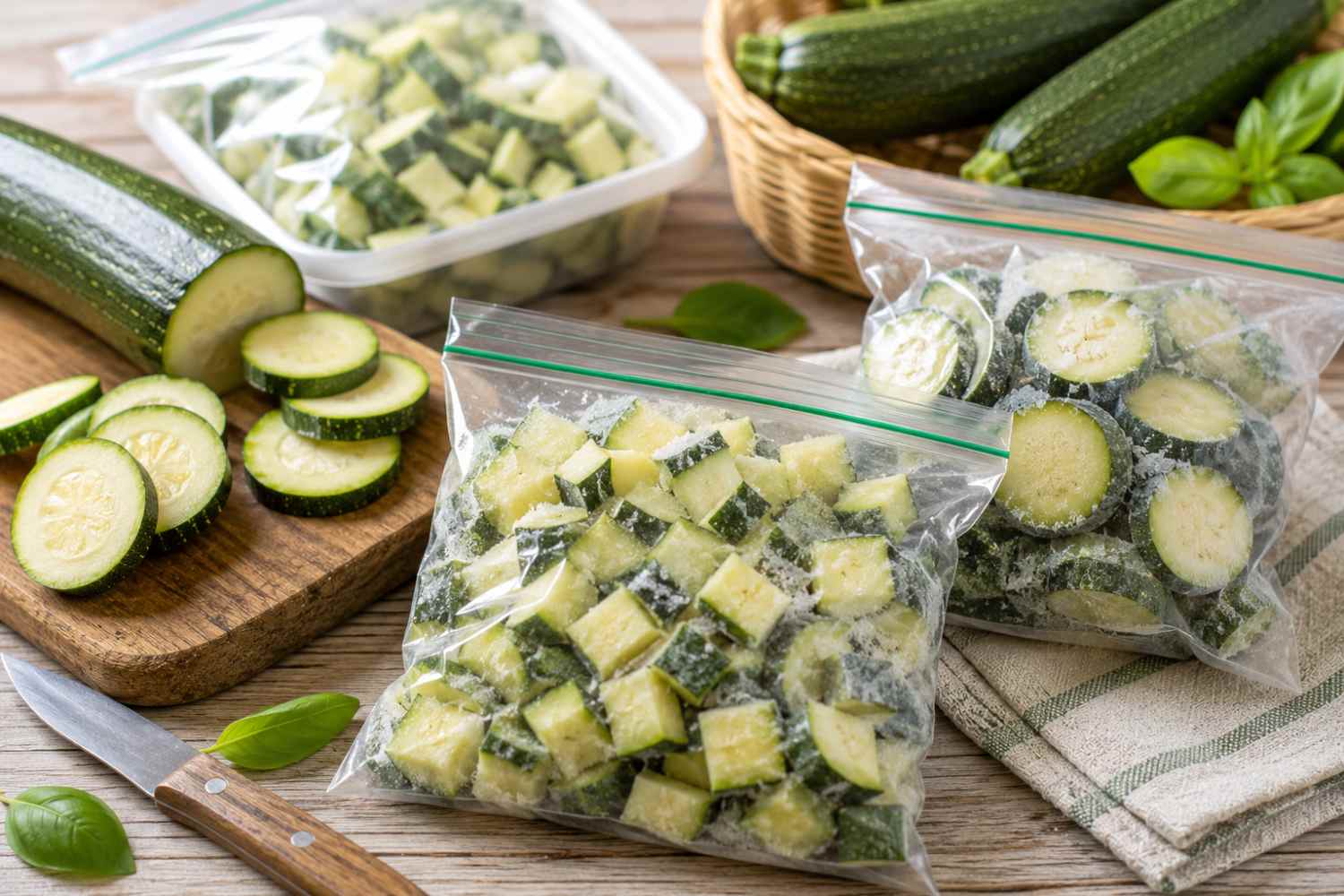
Courgettes can easily be frozen raw and, for many, this represents the most practical solution. It does not require preliminary cooking times and allows you to quickly prepare supplies for the winter.
Before proceeding, it is important to choose fresh, firm and bruised courgettes. The fresher the product is when stored, the better the final result will be.
After having washed them carefully under running water, you need to remove the ends and check that there are no damaged parts. At this point they can be cut according to your needs. Some prefer rounds, particularly suitable for side dishes and pan preparations, while others choose cubes or sticks, ideal for minestrone, soups and baked recipes.
Once cut, it is advisable to dry them carefully to eliminate surface water. This simple step helps reduce ice formation during storage.
The courgettes can then be transferred to freezer bags or airtight containers. It is preferable to eliminate as much air as possible before closing, in order to limit the risk of cold burns and better preserve the quality of the product.
How to freeze cooked courgettes
Those who want to have a ready-made base for their recipes can opt for freezing cooked courgettes. This is a very practical solution that allows you to reduce meal preparation times.
Courgettes can be frozen after a short blanching, a light pan cooking or after being grilled. In all cases it is important to avoid cooking for too long, which would risk making them excessively soft once defrosted.
Blanching is one of the most widespread techniques. The courgettes are immersed in boiling water for a few minutes and then quickly cooled. This treatment helps preserve its color and slow down the natural deterioration processes.
Grilling is also a valid alternative. Courgette slices are cooked quickly on a griddle or grill and then allowed to cool completely before freezing. Once defrosted they can be used for side dishes, sandwiches, savory pies and many other preparations.
In any case, it is essential to wait for them to cool completely before transferring the courgettes to the containers intended for the freezer. Freezing food while it is still hot can compromise the quality of the product and encourage the formation of condensation.
What is the best method between raw and cooked?
There is no one-size-fits-all answer. The choice mainly depends on the use you intend to make of the courgettes.
Raw courgettes are particularly versatile and maintain greater flexibility in the kitchen. They can be used in numerous preparations without requiring particular attention.
Already cooked courgettes, on the other hand, are perfect for those looking for convenience and want to have ingredients almost ready for use. However, they require an extra step before conservation.
Many people choose to prepare both versions, so as to have different solutions available depending on the recipe to be made.
How to defrost courgettes correctly
One of the most common mistakes is thinking that all frozen foods must necessarily be defrosted before use. In the case of courgettes this is not always necessary.
When they must be used in soups, cream soups, risottos, sauces or baked preparations, they can be used directly from frozen. This saves time and often helps to better preserve its consistency.
However, if they are intended for cold preparations or to be consumed as a side dish, it is preferable to let them defrost slowly in the refrigerator. A gradual process limits the loss of liquids and helps maintain a more pleasant consistency.
However, it should be remembered that, being very rich in water, thawed courgettes naturally tend to be softer than fresh ones.
How long do courgettes last in the freezer?
The shelf life of frozen zucchini depends on storage conditions and freezer temperature. If kept constantly at -18 degrees and stored in tightly closed containers, they can maintain good quality for several months.
Raw courgettes can generally be stored for around six to eight months, while previously cooked courgettes can last up to eight to ten months.
For better organization it is advisable to apply a label with the freezing date. In this way it will be easier to consume the products stored for the longest time first.
How to use frozen courgettes in cooking
Frozen courgettes can be used in many preparations. They are particularly suitable for enriching soups and soups, but also find space in first courses such as pasta and risotto.
They can be added to savory pies, flans and gratins or used to prepare quick pan-fried side dishes. The grilled versions also lend themselves well as an accompaniment to second courses of meat, fish or legumes.
Precisely because the consistency tends to become slightly softer after defrosting, their use in cooked preparations is often what guarantees the best results.
Mistakes to avoid when freezing
To achieve good conservation it is important to avoid some rather common mistakes. One of the most frequent is to freeze courgettes that are already old or overripe. The freezer does not improve the quality of food, but simply preserves it.
Excess humidity can also be a problem. Drying the courgettes well before freezing helps limit the formation of ice and improves the final result.
Another mistake to avoid is refreezing an already defrosted product. This practice can compromise both food quality and safety.
Save courgettes to reduce waste
Freezing courgettes is a simple habit that allows you to enhance seasonal products and reduce food waste. Whether they come from the home garden, from a local market or from the weekly shop, storing them correctly allows you to have them available for many months.
With a few precautions it is possible to bring the flavor of summer to the table even during the winter, optimizing the available resources and making daily cooking more practical and sustainable.
