
For years we have imagined the ancient producers of wine like people who pressed fresh grapes and waited for the fermentation did the rest. A romantic image, sure, but not entirely correct. Today we know that the yeast responsible for the transformation of sugars into alcohol used in modern wine cellars, the famous Saccharomyces cerevisiaeis rarely found on the skins of freshly harvested grapes. Such a scarce presence would never be able to guarantee stable fermentations, especially in times without scientific knowledge or pure cultures.
So, if yeast is not commonly present on fruit, how did they do it? Was it really enough to crush the bunches and close everything in an amphora? The point is, the answer wasn’t in the grapes. It was in the raisins.
The surprising role of raisins in ancient fermentations
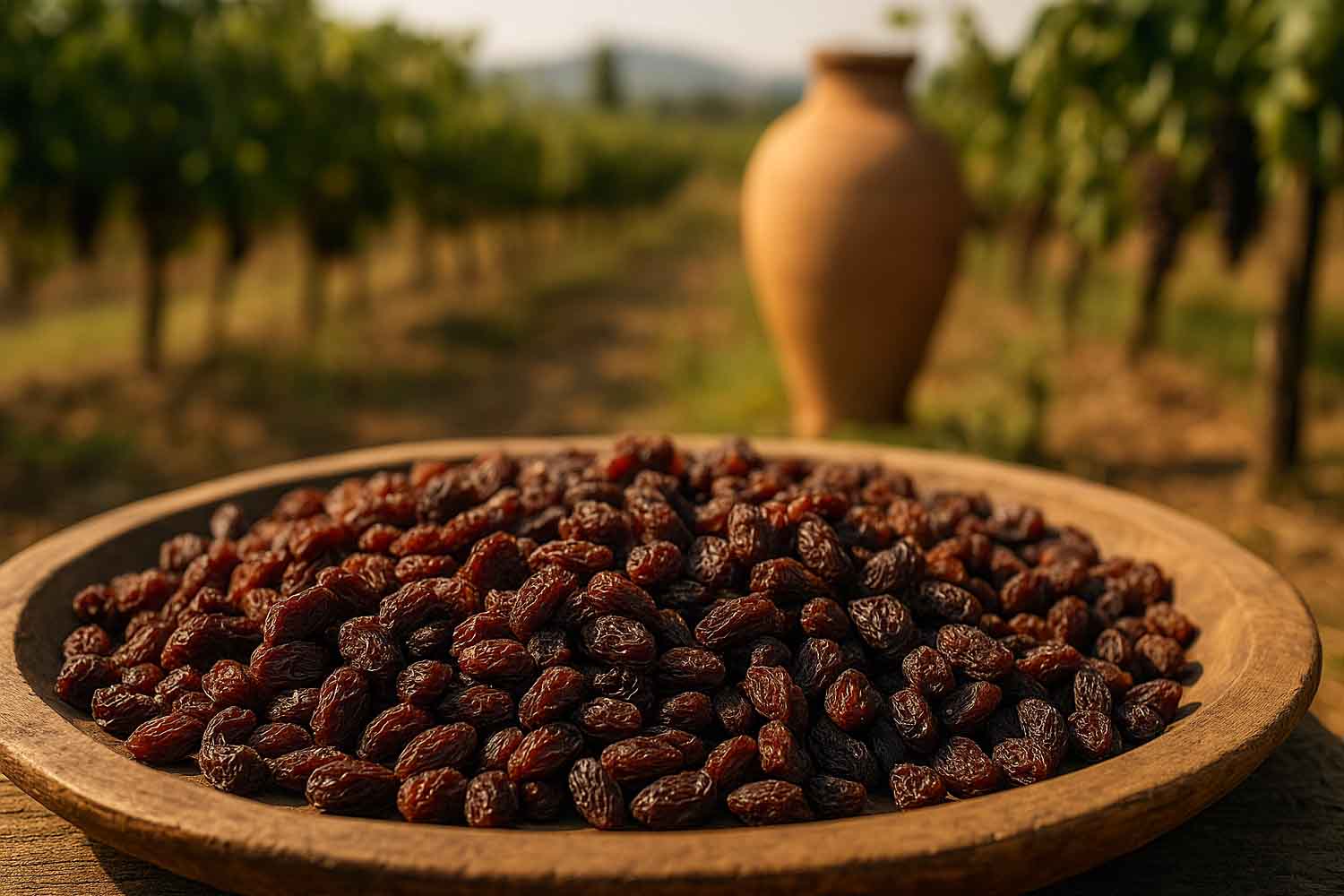
A group of researchers from Kyoto University he wondered if we had been looking in the wrong place for too long. Rather than study fresh grapes, they chose to analyze ldried grapes. The intuition comes from a detail overlooked by most: the raisins, yeast S. cerevisiae it is abundantAnd. This means that the passage under the sun, and not the harvest, could have made spontaneous fermentation possible.
The researchers then collected fresh grapes and dried them following three methods: one month in an incubator, one month in direct sunlight and a mixed route. Once they obtained the raisins, they immersed them in simple water at room temperature, sealing everything in bottles for two weeks. The result was unequivocal: only those dried in the sun fermented without hesitation, all three. The other samples managed to do so only occasionally, and with lower alcohol levels.
@ScientificReport
Genetic analysis of the microbial communities confirmed what the scent suggested: where fermentation really worked, the most resistant yeasts dominated the scene. And among these there was always him, the Saccharomyces cerevisiae.
According to researchers, the sun doesn’t just wrinkle the skin of the fruit: it creates a small ecosystem perfect for microorganisms that know how to grow in the midst of heat, ventilation, dust and even insects. A combination that a laboratory incubator cannot replicate. Once immersed in water, those colonies find an environment rich in sugars ready to be transformed into alcohol.
This is probably how ancient winemakers were able to start regular fermentations without knowing anything about microbiology. Not a miracle, but a natural intuition: letting the sun select the best yeasts.
From raisins to wine: ancient knowledge that resurfaces
Thinking back to traditional practices, this theory even connects to those folktales that describe the ability to “turn water into wine” simply by using raisins. Immerse them meant release the yeasts accumulated on their surfaceand two weeks were enough for the water to transform into an alcoholic drink.
Today, however, there is a detail modern that complicates things: most commercial raisins are covered in edible oil to prevent them from sticking together. That same layer prevents microorganisms from working. For spontaneous fermentation you need naturally dried raisins, without treatments.
The study is still in its infancy, but it opens up fascinating avenues. We will need to test the same procedure in environments more similar to those of the ancient Middle East and work with larger quantities to find rare microorganisms that may have played an important role. The team wants to better understand the microbial dynamics of fruits exposed to the sun, also to imagine new food products and reduce waste.
This is not an archaeological curiosity, but a possible cultural revolution: it means rediscovering a way of producing fermented drinks closer to nature, with unique aromas and a biodiversity that modern industry has often put aside.
If the hypothesis is confirmed, the great merit will not be due to ancient mysterious rites or secret skills. It will be the sun, the time and the grape’s ability to become something different before the wine even begins to form.
