
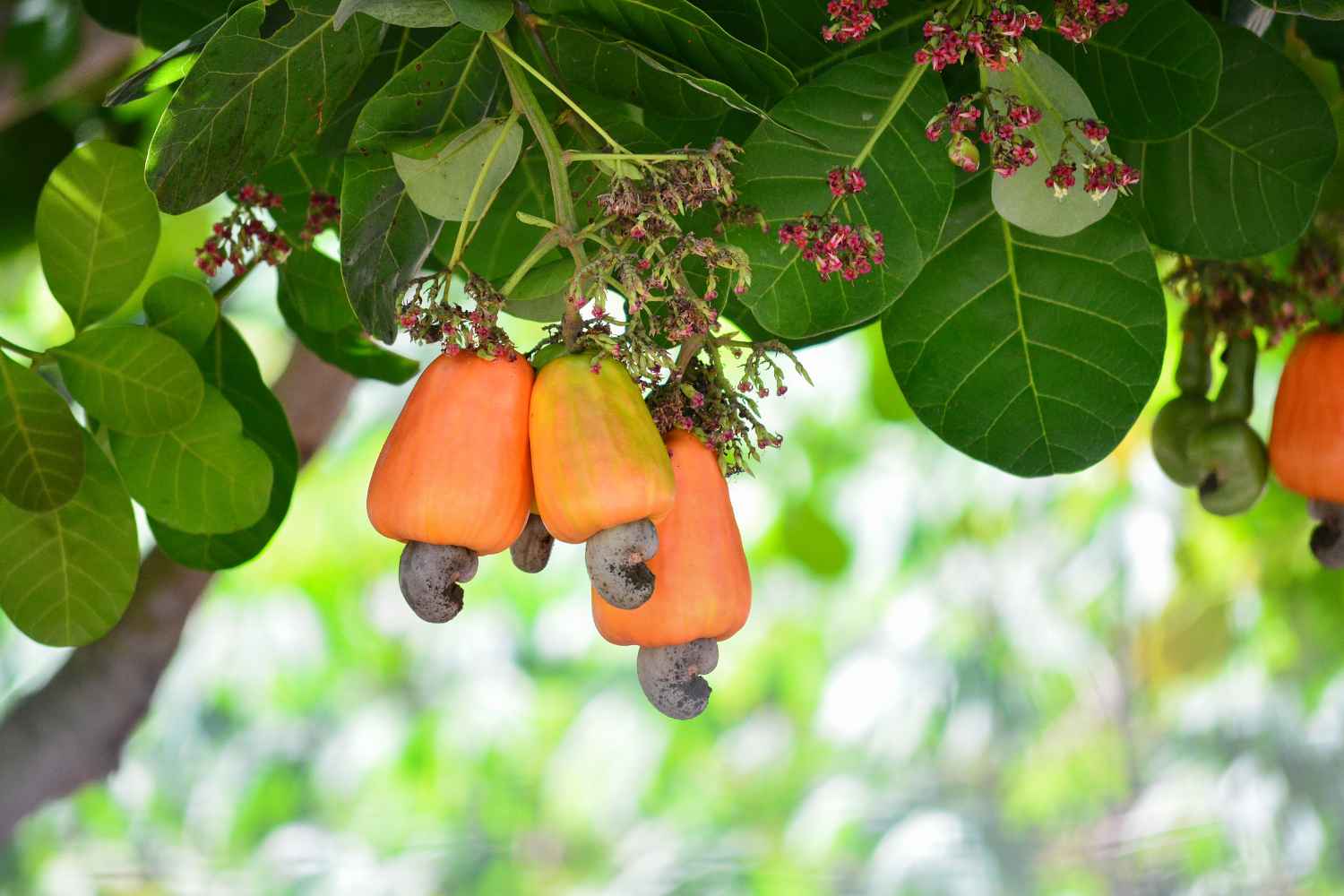
A kind of small yellow or red pear, with a shiny skin, with a curious bean-shaped protuberance attached to the end. If you have never seen a cashew tree, you would probably struggle to recognize what you are looking at. Yet it is precisely from this unusual structure that the cashews we find in supermarkets are obtained.
The images of tropical crops show something very different from the dried fruit we are used to. The most showy part, the fleshy and colored one, is called cashew applewhile the small curved structure that emerges from its end contains the edible seed.
But how does such a fruit develop? And why, if the cashew apple can be eaten, do we only find shelled cashews?
View this post on Instagram
How do cashews really grow?
The plant is called Western Anacardiumbelongs to the Anacardiaceae family and is native to tropical America, in particular Brazil. Today it is cultivated in numerous countries with a warm climate, especially in Africa and Asia.
The tree can reach several meters in height and produces small flowers gathered in inflorescences. After fertilization, a truly unusual structure begins to develop: the peduncle that supports the fruit progressively enlarges, becoming fleshy and taking on shades ranging from yellow to intense red.
This is the so-called cashew apple, which when ripe can resemble a small pear or pepper. Its peculiarity is that it is not a real fruit from a botanical point of view. It is a pseudofruit, because the fleshy part derives mainly from the swelling of the peduncle and not from the ovary of the flower, as happens in fruits proper.
The real fruit is found at the end of the apple, has a characteristic kidney shape and contains a single seed: what, once extracted and processed, we commonly call cashew.
Here too there is a botanical curiosity: cashews are usually considered dried nuts and called walnuts, but in a botanical sense the fruit is described as a drupe, inside which is the edible seed. The distinction may seem like a subtlety, but it helps to understand why the appearance of the plant is so different from that of a walnut or a hazelnut.
Can cashew apple be eaten? Yes, and it is highly appreciated in tropical countries
The largest and most colorful part of the plant is perfectly edible. The cashew apple has a very juicy pulp, a sweet-sour flavor and a characteristic astringent note, due to the presence of tannins. In Brazil, where it is known as cajuit is consumed fresh or used to prepare juices and other drinks. In various tropical regions it is also transformed into jams, syrups and confectionery products.
Unlike the seed, which can be stored and transported for long periods after processing, the cashew apple is extremely delicate. The thin skin and water-rich pulp make it vulnerable to shock and deterioration. After harvesting it can quickly become damaged, especially if it is not refrigerated or processed quickly.
This is one of the reasons why the cashew apple is practically absent from Italian supermarkets, while the seeds are exported all over the world.
There is also a less well-known aspect: in some production areas, when there is no local supply chain capable of transforming apples into juices or other foods, a substantial part of this resource is discarded. The recovery of the cashew apple could therefore represent an economic opportunity for producers and a way to reduce food losses in growing areas.
Why can’t you eat cashews straight from the tree?
Anyone who has seen a freshly harvested cashew may wonder why it is not enough to simply break the shell to eat the contents, as we do with walnuts. The reason lies precisely in the outer covering of the fruit.
Between the layers of the shell there is a resinous liquid called Cashew Nut Shell Liquid (CNSL), which contains irritants and caustic substances, including anacardic acid and cardol. Direct contact can cause irritation and actual skin burns.
For this reason, freshly harvested cashews should not be opened and consumed without proper treatment. After separation from the apple, the fruits are generally dried and subjected to heat treatments, often with steam or roasting systems, which facilitate the opening of the shell and manage the irritating liquid. This is followed by shelling, removal of the skin and selection of the seeds.
It is a delicate process, which requires adequate equipment and precautions, especially when shelling is done manually.
In some supply chains, in fact, workers can be exposed to caustic liquid during opening operations. The use of protections and safe processing technologies is therefore essential.
A clarification also concerns cashews sold as raw: this wording does not mean that they were simply collected and packaged. The seeds marketed for consumption have already undergone the necessary processes to safely separate them from the shell.
Could cashews be grown in Italy?
Seeing these particular fruits spontaneously raises another question: would it be possible to grow them here too, perhaps in the southern regions where avocados, mangoes and other subtropical fruits already grow?
The cashew is a decidedly demanding plant from a climatic point of view. It needs high temperatures, lots of sun and a substantially frost-free environment. The most favorable conditions for cultivation are found in tropical regions, where the alternation between the wet and dry seasons helps to regulate development and fruiting.
According to FAO agronomic data, the species has a rather wide optimal thermal range, approximately between 15 and 35 °C, but suffers from low temperatures and is not suitable for normal Italian winters.
Even the mildest areas of Sicily and Calabria can be affected by cold episodes incompatible with stable and productive large-scale cultivation.
It is not excluded that individual specimens could be kept in heated greenhouses or in particularly favorable microclimates, but an Italian cashew commercial supply chain would today be difficult to sustain from an agronomic point of view.
In the countries where it is cultivated, however, the cashew is also appreciated because it can grow in relatively dry conditions and on soil that is not always suitable for other tropical crops.
However, there remains a question to consider when we buy cashews: behind those small clear and curved seeds there is a much more complex process than the packaged product suggests, from harvesting the fruits to removing a shell that cannot be handled without precautions.
