
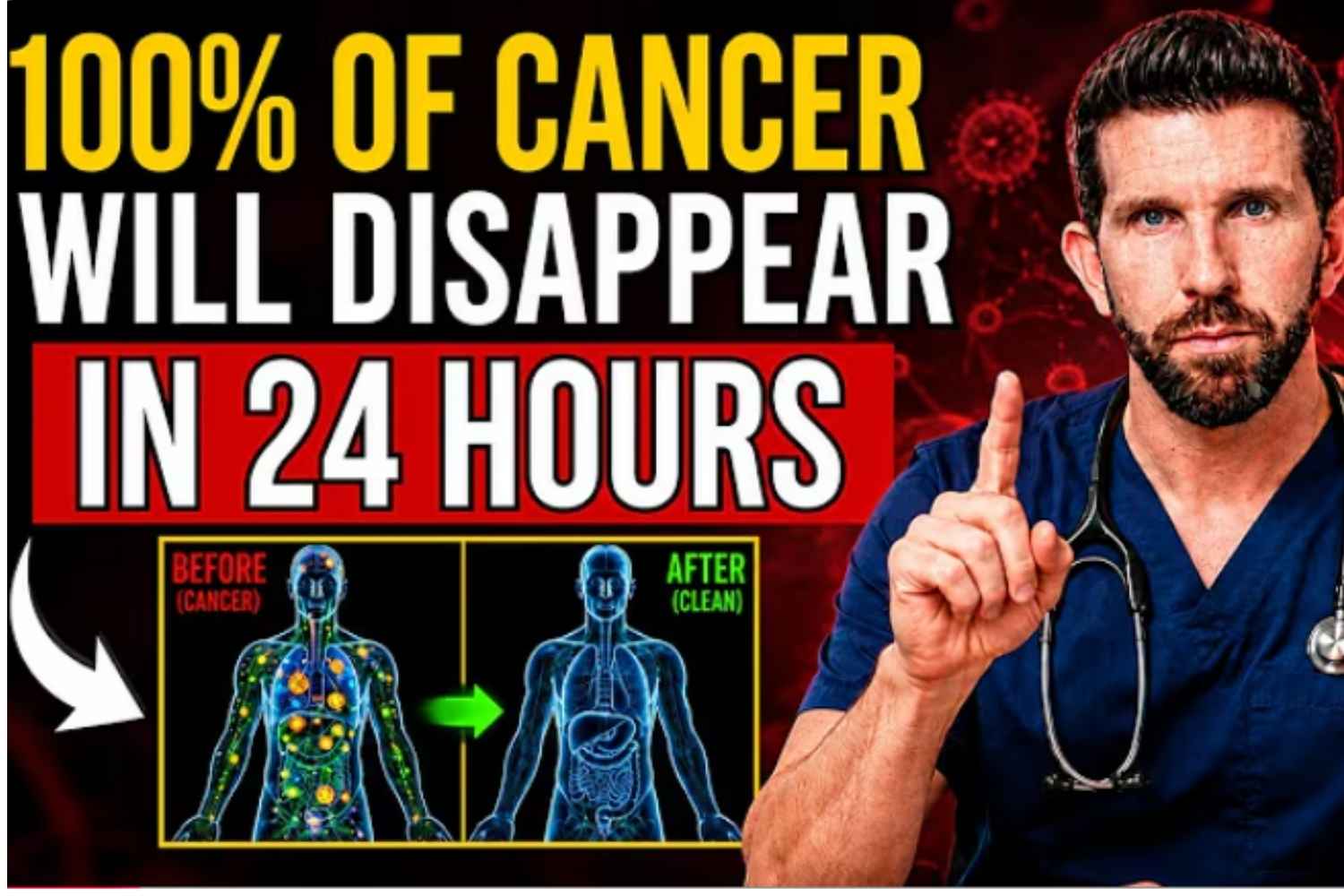
They look like real doctors, they wear scrubs and talk about tumors, Alzheimer’s, diabetes and nutrition. In reality they are avatars created with artificial intelligence that spread advice without any scientific basis. A new Spanish investigation has discovered over 1,000 such channels on YouTube, with almost 100,000 videos in 33 languages, including Italian.
The promise is one of those capable of immediately attracting attention: making cancer disappear in just 24 hours. Or say goodbye to Alzheimer’s simply by eating certain fruits. Or even being able to “reverse” diabetes through supposed natural remedies.
However, they are not real doctors making these statements. They are virtual characters created with artificial intelligence, often represented just as we would expect to see a healthcare professional: white coat, stethoscope, clinic in the background and apparently authoritative language.
The extent of the phenomenon is illustrated by an investigation published on 31 July 2026 by Maldita.es, a Spanish editorial project of the Fundación Maldita.es, a non-profit organization that combats disinformation through fact-checking, investigative journalism and research.
Fake doctors created with artificial intelligence
Spanish journalists have identified as many as 1,046 YouTube channels that use content generated by artificial intelligence to spread information and alleged health advice. The data that is even more striking is the speed with which the phenomenon has developed: over 77% of the channels analyzed appeared between January 2025 and July 2026.
The 809 channels created in the last 18 months have already attracted more than 13 million subscribers and published over 62,000 videos. Considering the entire sample, the contents exceed 96,400 videos, with almost 1.84 billion overall views.
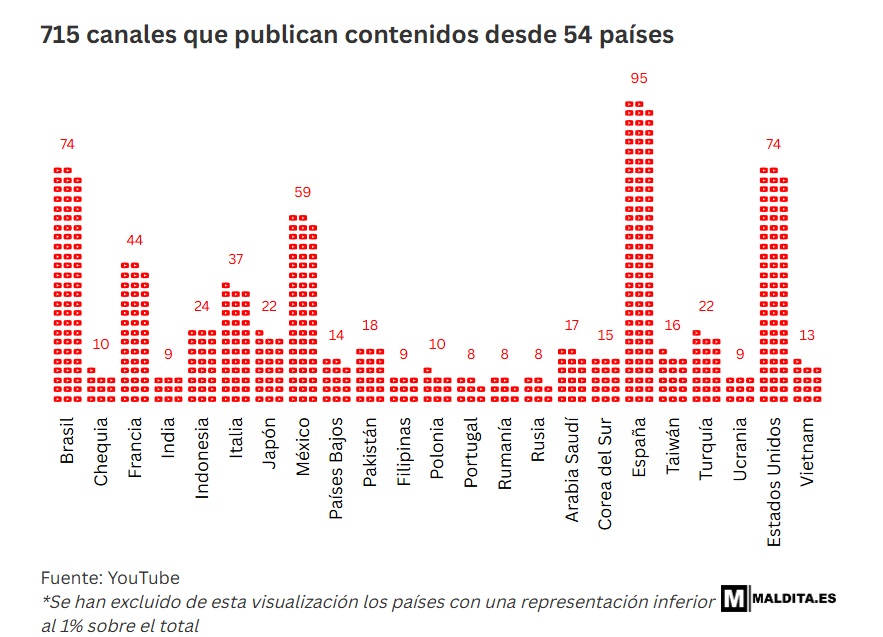
And this is not a phenomenon limited to a few countries. The videos identified by Maldita.es were published in 33 languages, including Spanish, English and Portuguese. This means that the disinformation network can reach a very large audience, even outside the countries where these accounts were created.
Among the languages used there is also Italian, which is in sixth place among the most widespread ones in the channels of fake doctors. In total, 37 channels in our language have been identified.
@Maldita.es
@Maldita.es
But who are the “doctors” who appear in the videos? The mechanism is simple. An AI-generated avatar is transformed into a supposed healthcare professional. The character may have a first and last name, a seemingly professional photograph and a biography that recounts decades of experience.
In some cases he presents himself as an oncologist, in others as an emergency room doctor or specialist in a specific pathology.
From cancer to Alzheimer’s: the impossible promises
Among the cases identified by investigators there are some particularly serious ones. For example, the self-styled “Dr. Richard Ben,” who introduces himself as an oncologist, posted a video whose thumbnail promises that it is possible to make 100% of cancer disappear in 24 hours. The video has garnered over 430,000 views in less than three months.
In reality, the content talks about habits that could contribute to the prevention of cancer, but the promise reported in the thumbnail is completely misleading and can lead a sick person to believe in the existence of a miracle cure.
Another example concerns “Doctor Laura Mendoza”, whose video promises to say goodbye to Alzheimer’s by eating certain fruits. Again, the problem isn’t just false information: it’s the way it’s packaged.
The thumbnail, designed to get the click, can contain a much stronger and more misleading promise than the actual content of the video. It’s a particularly dangerous strategy when the topic involves serious illnesses and vulnerable people.
Believing a video that promises to cure an illness with a food, a supplement or a miracle remedy can push a person to replace or stop truly effective therapies. This is one of the most worrying aspects highlighted by the survey.
Among just 20 videos dedicated to the alleged possibility of curing cancer analyzed in more depth by Maldita.es, over 1.7 million views and 4,275 comments were recorded. And many comments came from sick people or their families who seemed to be convinced that they were dealing with a real doctor.
It’s not just misinformation but business
According to the investigation, there may also be a real economic model behind these false experts. Some channels ask users to become members by paying a monthly fee to get exclusive content. Others direct followers to external platforms where they can make donations. Still others sell books, guides, and purported health-enhancing programs.
In a case analyzed by Maldita.es, a French channel with almost 50 thousand subscribers linked to a guide intended for the over 60s, sold for around 8 euros. But there is another even more significant aspect: YouTube itself can become a source of income for this content.
According to the survey, 45% of the channels analyzed are monetized. In practice, YouTube inserts advertising into videos and a portion of the revenues is paid to the channel owners.
YouTube had been warned
Maldita.es also did a concrete test. Investigators reported 20 videos to YouTube, one for each of 20 channels that explicitly promised a cancer cure in 24 hours, explaining to the platform the nature of the content and the thumbnail problem.
YouTube confirmed it had received the reports and in some cases requested additional information. After 72 hours, however, all 20 videos were still available.
The finding is particularly significant because YouTube’s own rules prohibit content that poses a serious risk of harm through health misinformation and, specifically, claims that there is a guaranteed cure for cancer outside of approved treatments.
The issue is not just that of YouTube’s internal rules. Maldita also recalls the European Digital Services Act (DSA), which imposes specific obligations on large online platforms to address systemic risks arising from the operation of their services. These also include the spread of illegal content and other phenomena that can have negative consequences on public health.
How to protect yourself from fake doctors on YouTube
Faced with an apparently convincing video, recognizing a fake doctor may not always be easy. However, there are some signs to pay particular attention to.
Let us first of all be wary of miracle cures. Phrases such as “permanent cure”, “guaranteed cure”, “eliminates cancer in 24 hours” or “no doctor will tell you” should immediately raise alarm bells.
Also be careful of sensationalistic thumbnails which, as Maldita’s investigation shows, can contain promises that do not even correspond to what is actually explained in the video.
Another thing to check is who is speaking. A realistic face, a lab coat and a stethoscope do not prove that there is a doctor behind that character. Even a seemingly authentic name is no guarantee.
It is then essential to check whether the claims are supported by verifiable scientific sources. A video that talks about a new treatment should allow you to trace it back to studies, health institutions, guidelines or real scientific publications, not just say that “science has proven it”.
Finally, when talking about an illness or therapy, you should never replace the opinion of your doctor with that of a person seen on social media. And above all, you should not interrupt a prescribed therapy based on a video found online.
A final red flag is when the advice leads to buying something. If after listening to the supposed doctor you are offered the purchase of a supplement, a book, a guide, a “miracle” product or a subscription, it is a good idea to further increase your level of attention. In this case the content may not just be misinformation but could be constructed precisely to lead the user towards a purchase.
