
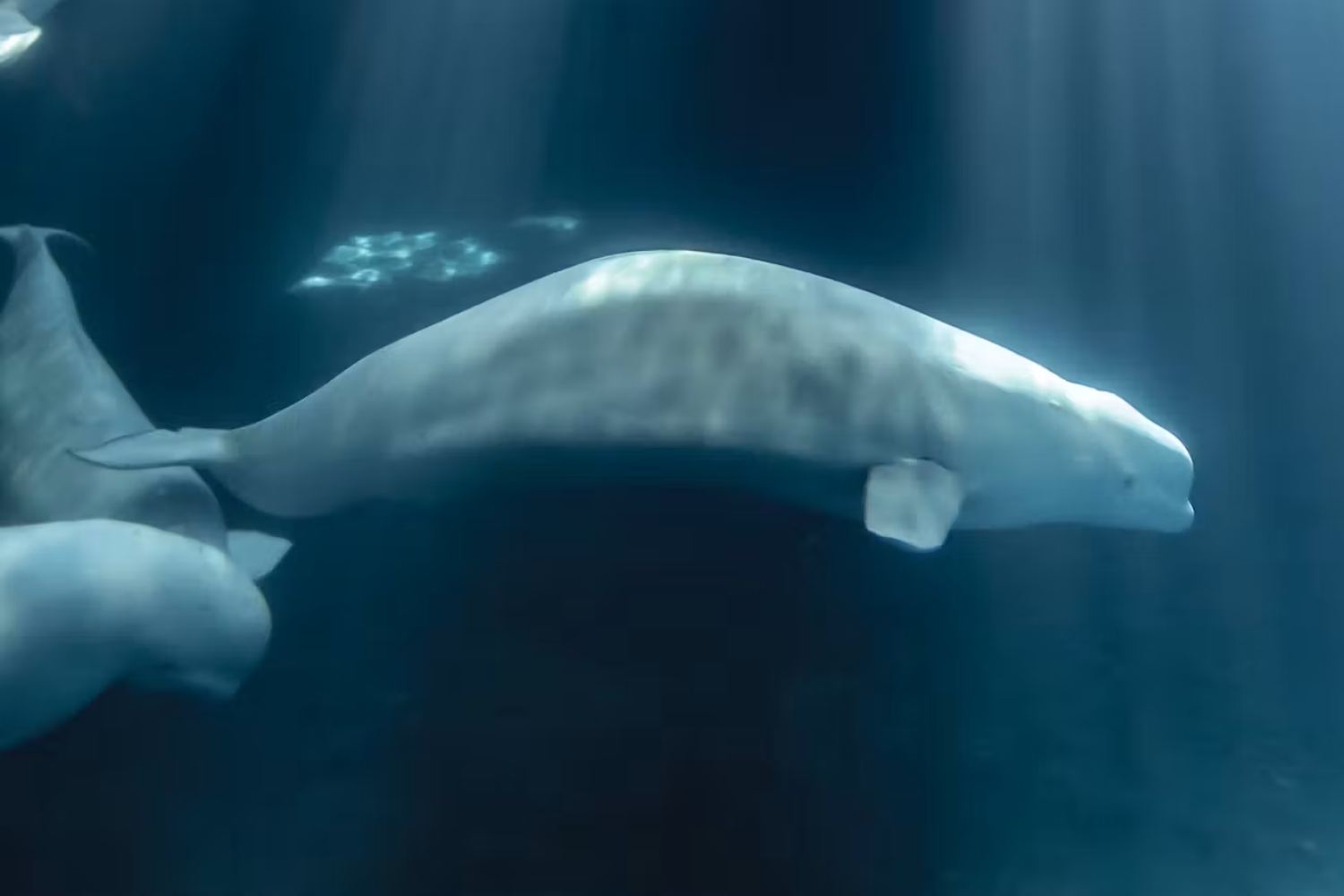
The international rescue operation aimed at rescuing the animals of the Canadian Marineland park has encountered its first dramatic obstacle. The 23-year-old female beluga whale Peekachu died on August 26 at the Shedd Aquarium in Chicago. The specimen was part of a group of eight female whales transferred in alternating phases starting in July, also including Acadia, Osiris, Sierra, Lillooet, Caspian, Secord and Rain.
View this post on Instagram
Despite being blind in one eye and smaller than average in size, Peekachu initially showed good settling-in skills. However, the clinical picture worsened when the team led by vice president for animal care Andrew Pulver found a decline in nutrition. Blood tests showed a strong state of dehydration and the animal suddenly passed away while the medical staff were administering fluids and drugs.
Activists’ protests and the issue of sanctuaries
An in-depth necropsy examination was ordered on the matter to ascertain the exact causes of death. The disappearance of the animal immediately reignited the debate on the methods of air transfer from Niagara Falls to the network’s partner aquariums, including the Georgia Aquarium in Atlanta, SeaWorld San Antonio, SeaWorld San Diego and Oceanogràfic in Valencia.
@Aquarium Shedd
The Animal Justice organization had expressed strong doubts about the risks linked to the stress of travel for already severely debilitated subjects. The head of veterinary care Karina Tang responded to the criticism, highlighting the absence of marine sanctuaries suitable to guarantee the necessary assistance and the impossibility of reintegration into the wild for animals that have lived in captivity for decades. An epilogue of the beluga Peekachu demonstrates how complex and traumatic transfers between artificial structures, although aimed at avoiding euthanasia, do not represent a real solution for the well-being of cetaceans in captivity.
A reflection on the fate of rescued cetaceans
Despite this, Peekachu’s death raises inevitable ethical questions about the real effectiveness of these massive evacuation maneuvers. The tragic epilogue requires serious reflection: what future are we really offering these creatures by taking them away from a decommissioned structure and subjecting them to such devastating transport trauma?
Although the relocation was necessary to prevent the threatened euthanasia after the stop to international sales, the price paid in terms of psychophysical stress raises the doubt whether staying in artificial structures, however cutting-edge, could represent a real solution.
