
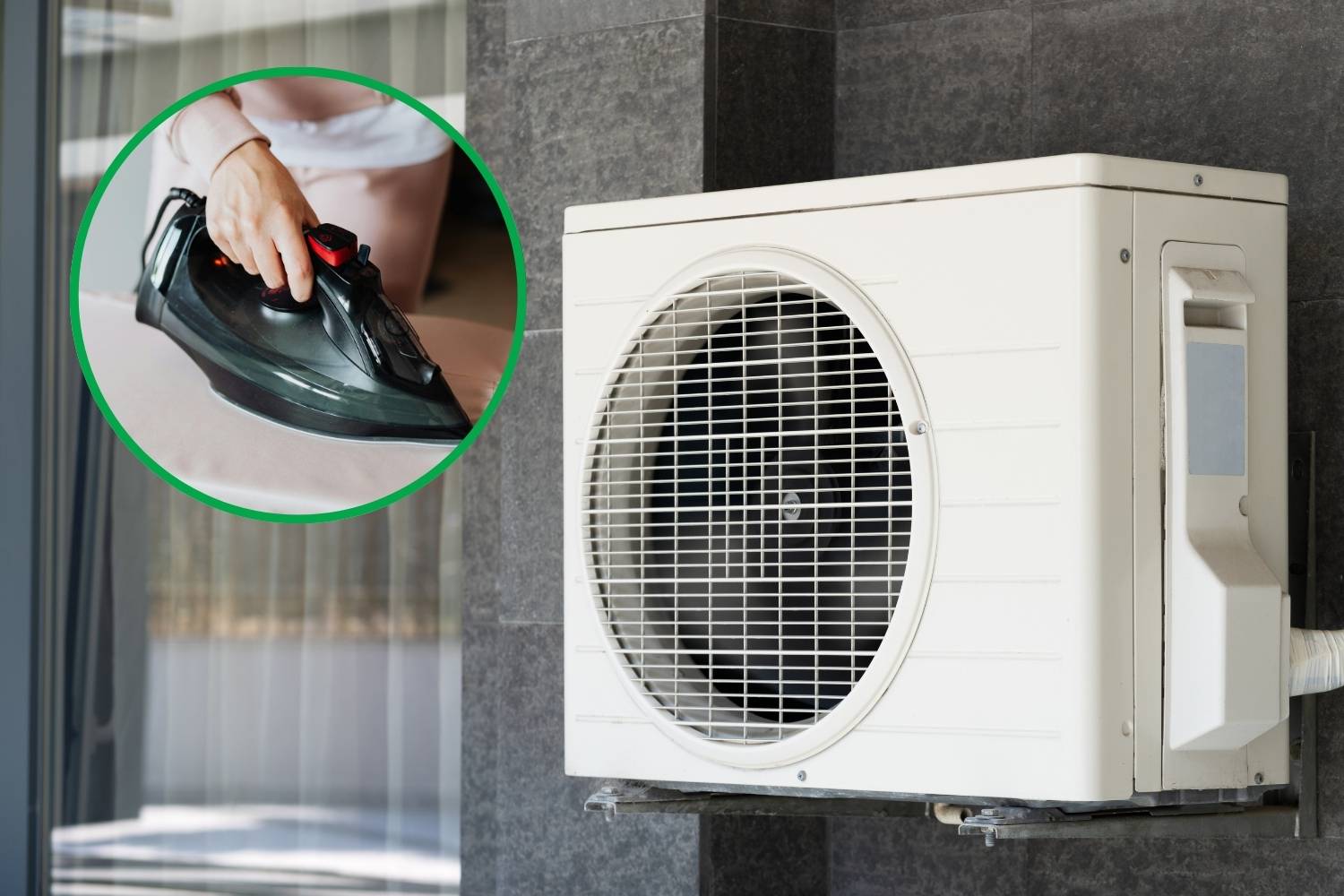
If you are lucky enough to have an air conditioner in your home and you have collected the water that comes out of the drain pipe, avoid throwing it away. It is in fact a precious resource, especially in periods of drought, which can be recovered and used in different ways.
Of course it is not drinkable water, so it should not be drunk or given to animals. However, being the result of the condensation of humidity present in the air, it is practically limescale-free. Precisely this characteristic makes it particularly useful for numerous domestic activities, from washing the car to ironing.
If you have an air conditioner, therefore, it may be worth purchasing a tank or container in which to collect the water coming from the drain pipe, thus avoiding wasting it. However, it must be remembered that not all uses are suitable: in some cases, in fact, this water may not be suitable. Let’s see how to reuse it correctly.
https://www.facebook.com/reel/1468006515163548
Replace the bathroom toilet
Every time we use the toilet we can consume several liters of drinking water. Bathroom waste represents, in fact, an important part of domestic water consumption.
Using the water collected by the air conditioner to flush the toilet is probably one of the simplest ways to recover it. In this way we can avoid using drinking water unnecessarily for an activity that does not require its use at all.
Wash the car
The water from the air conditioner can also be used for cleaning the car. Being low in limestone, it is particularly suitable for washing windows and windshields, reducing the formation of streaks and residues on surfaces.
It can also be used, with due precautions and following the vehicle manufacturer’s instructions, for some uses related to car maintenance where demineralised or low-limescale water is required.
Press
Especially during the warmer months, ironing can become an unpleasant activity, as well as resulting in further consumption of electricity. However, when we cannot do without using the iron, the water collected from the air conditioner can represent an alternative to tap water. In fact, its reduced presence of limescale can help limit the formation of encrustations inside the appliance.
However, before using it, it is always advisable to check the iron manufacturer’s instructions, as some models require specific types of water. In this way we can obtain a double advantage: recover water that would otherwise be thrown away and reduce the purchase of packaged demineralised water.
Do house cleaning
Condensed water can also be useful during household cleaning, for example for washing floors or other surfaces.
The reduced presence of limescale can help limit the appearance of stains and rings. In some cases it can also be used in steam cleaning appliances, provided the manufacturer’s instructions allow its use. Another possible use concerns the preparation of DIY detergents for the home. The water collected by the air conditioner can, for example, be used to dissolve citric acid, a substance widely used in household cleaning for its anti-limescale properties.
Citric acid is generally sold in solid form and must be dissolved in water before use. Using water low in limescale can be particularly practical for this type of preparation.
Water the plants? Better with some forethought
Using air conditioner water to water plants requires more care. Since it is condensation water, it has a very small quantity of mineral salts. If used continuously as the only source of water, it may not provide the soil with all the elements that plants need.
It can however be recovered for occasional irrigation, possibly alternating it with other water sources and ensuring that the soil receives an adequate supply of nutrients through correct fertilization.
This way we can avoid wasting a resource and, at the same time, take care of the needs of our plants.
Use it to wash your hair?
Among the uses sometimes suggested there is also that of using the water from the conditioner to wash the hair, taking advantage of its reduced presence of limestone.
Less hard water can in fact leave less residue on the hair than particularly calcareous water. However, since the water collected by the air conditioner can come into contact with dust, mold, bacteria or impurities present in the system, it is not advisable to use it directly for personal hygiene without adequate treatments.
It is therefore better to allocate the condensed water to domestic uses where it is not necessary for the water to be drinkable or hygienically safe, transforming what we normally consider waste into a small resource against waste
