
The autumn hunting season in the Province of Trento officially kicks off on Sunday 6 September 2026, after an initial start brought forward to 16 August dedicated exclusively to chamois hunting. According to the data illustrated by Matteo Rensi, president of the Trentino Hunters Association, the annual censuses record a total presence of approximately 73,000 ungulates in the provincial territory. In light of this monitoring, the authorities have authorized a harvesting plan which involves the killing of approximately 13,000 animals including deer, chamois, roe deer and mouflon.
The drastic contraction of the mouflon population
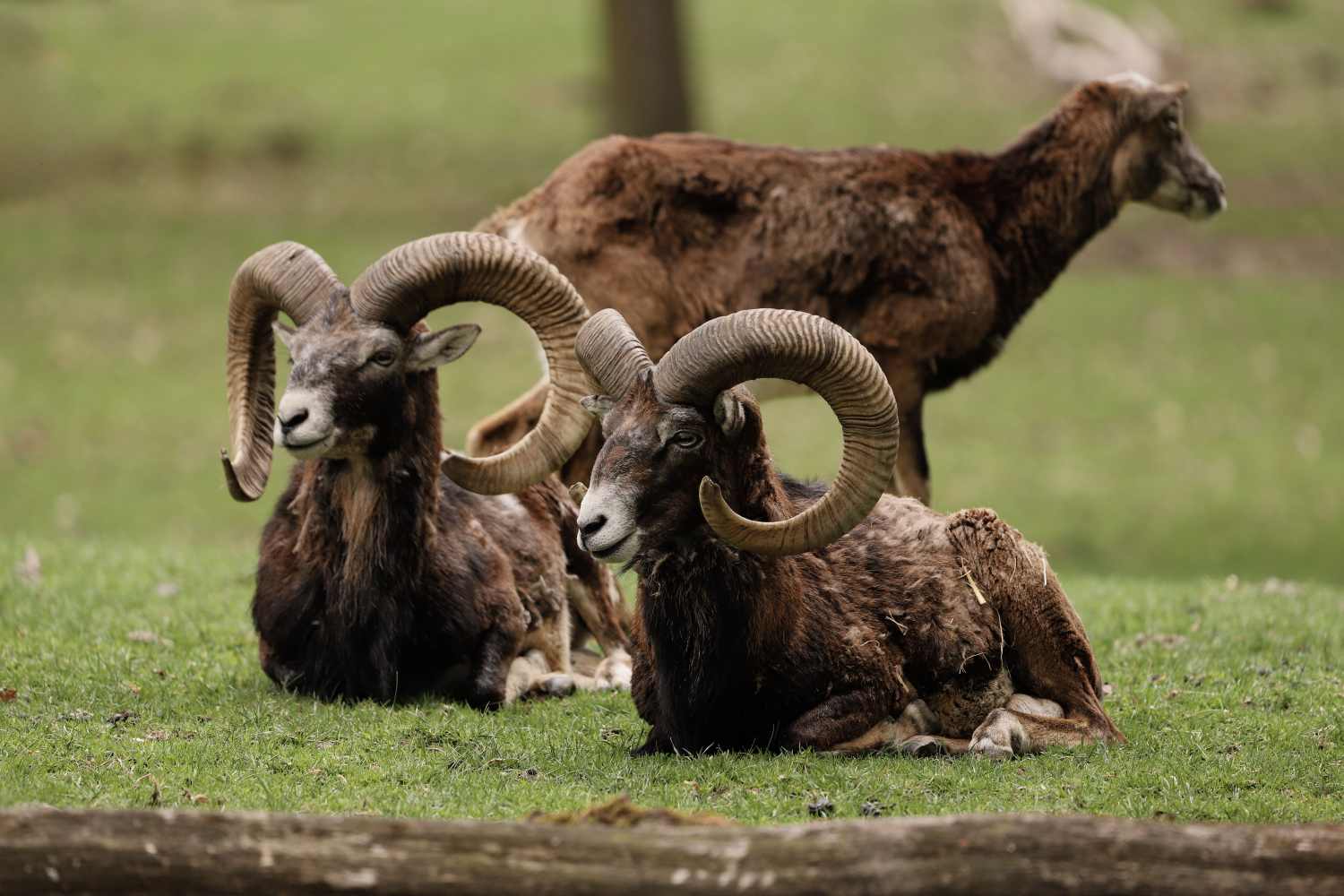
Within the Trentino provincial plan, a particular situation concerns the mouflon, a species introduced for hunting purposes in the 1970s with specimens coming from Sardinia. The Province approved the killing of 129 specimens out of a residual population estimated at approximately 400 animals. As explained by Alessandro Brugnoli, director of the Provincial Wildlife Service, the species has suffered a numerical collapse compared to the over 1,400 individuals registered before 2019.
This clear decrease is largely due to the natural return of the wolf, which reappeared in Trentino in 2012. Not having evolved in contact with this predator, the mouflon does not have adequate defensive strategies. An investigation conducted by the Science Museum of Trento in collaboration with the hunting network has also revealed how the artificial winter foraging points have involuntarily favored wolves, transforming the feeders into easy hunting places where the ungulates concentrate en masse.
The provisions for the Alto Garda CA8 district
At the same time, in Lombardy, the Region formalized the withdrawal plan for the Alto Garda CA8 Alpine area, redefining the quotas following the technical opinion expressed by ISPRA. The measure involves the killing of 278 ungulates, divided into 205 deer, 45 roe deer and 28 mouflon. The measure responds to the constant demographic growth of deer throughout the pre-Alpine range, with densities reaching historically high levels in some areas. The administrative procedures provide that the data collected in the field by hunters are evaluated by ISPRA before the final regional decree.
An unacceptable plan: a full-scale massacre
Although the plan aims to limit the impact of wildlife on agriculture and roads, authorizing such a killing of animals can only leave one disconcerted. This is a real massacre of unacceptable specimens. Defining “wildlife management” or “containment” what to all intents and purposes amounts to a planned massacre of over 13 thousand defenseless animals is intolerable hypocrisy.
The decision to authorize the systematic killing of deer, roe deer, chamois and mouflons between Trentino and Alto Garda represents a bloody and barbaric choice, which places man’s inability to manage the ecosystem and guarantee authentic protection of biodiversity on wildlife. The figures approved by local institutions and hunting areas describe a real war bulletin.
Behind the accounting facade of “withdrawal plans” and census statistics, lies the cold desire to transform the Alpine woods into shooting ranges for thousands of shotguns. Particularly emblematic and ruthless is the case of mouflons in Trentino: the approval of the culling of 129 specimens out of a population already dramatically decimated and reduced to around 400 animals appears to be truly obstinate.
First these animals were introduced artificially by man for mere hunting purposes, then they were left defenseless in the face of the return of natural predators and today they choose to exterminate almost a third of the last survivors by shooting. Even human practices such as winter foraging have ended up turning out to be death traps, demonstrating how any interference from hunting only ends up altering the natural balance, causing further suffering.
Ethical and non-bloody alternatives exist, from ecological corridors to prevention and sterilization systems. Getting used to the idea that the only possible response is to take up a rifle represents a total ethical and cultural defeat, in the face of which it is necessary to rebel to stop this unacceptable massacre.
