
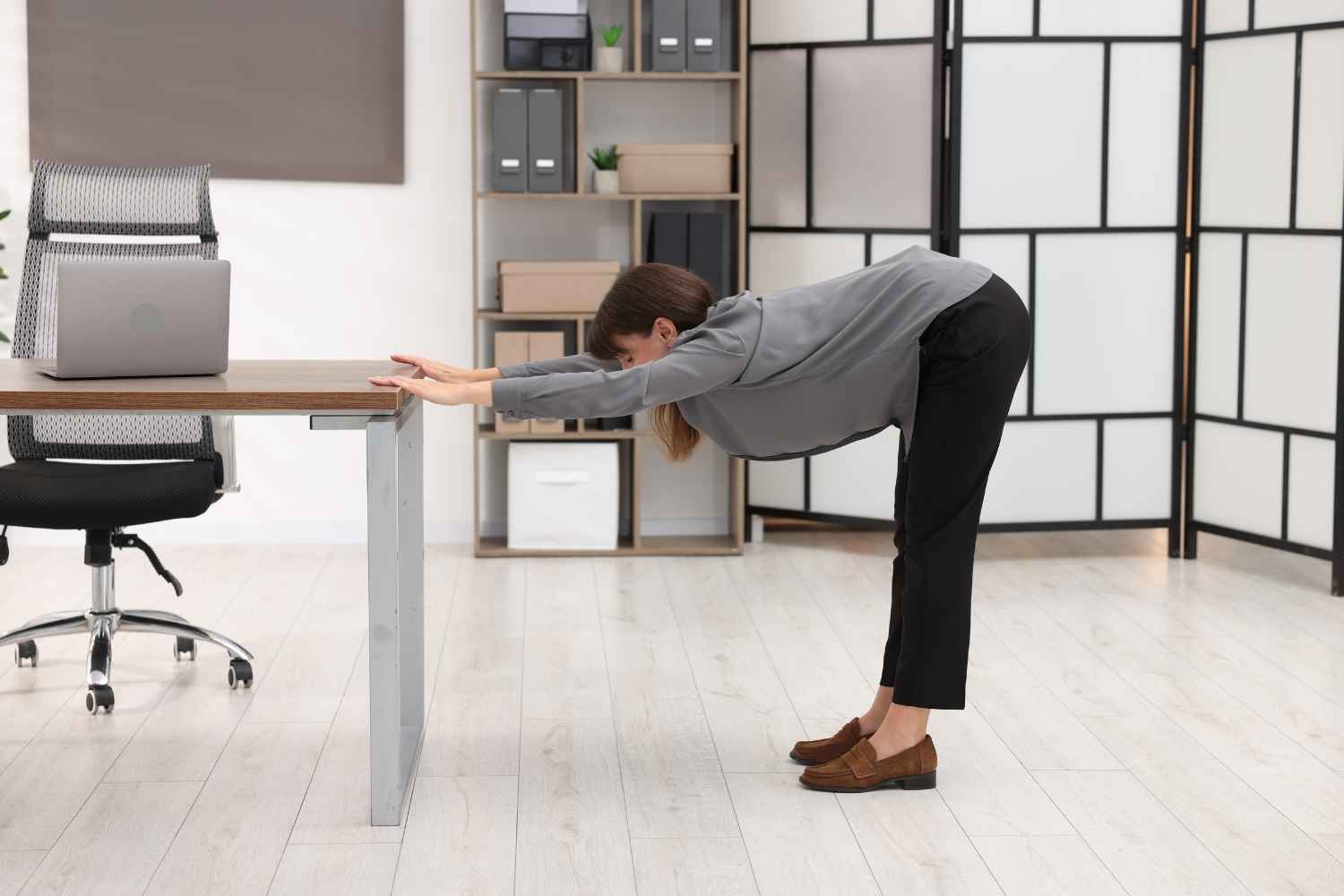
Back pain is one of those ailments that can affect everyone sooner or later. Hours sitting in front of the computer, little physical activity, postures maintained for a long time, but also movements performed in the wrong way can put a strain on the spine. It is therefore not surprising that back problems are among the most common musculoskeletal disorders and also represent one of the most frequent causes of absence from work.
The good news is that, in addition to taking action when pain appears, a lot can be done every day to keep your back mobile and the muscles that support it strong. You don’t necessarily need long workouts or special equipment, even some simple habits and a few exercises can become part of your daily routine.
Dr. Markus Klingenberg, a specialist in orthopedics and trauma surgery, with particular experience in arthroscopic surgery and the conservative treatment of arthrosis, explains which ones he personally practices. Klingenberg recounted his routine and his advice in an article published on Focus Online (German version), dedicated specifically to back health.
The first rule: move throughout the day
According to the orthopedic surgeon, a healthy back is built first and foremost through daily habits. It doesn’t necessarily mean dedicating yourself to intense training every day, even moving regularly and stopping a sedentary lifestyle can make a difference.
Klingenberg says that when he does activities that force him to sit, he tries to take a short break to move at least every 30 minutes. Choosing the stairs instead of the elevator and including a walk in your lunch break are also useful little tips.
The doctor admits, however, that even he is not always able to perfectly respect this last habit. An interesting detail, because its message is not to follow a perfect routine, but to reduce the time spent completely still as much as possible.
For those who work long hours at a desk, Klingenberg also suggests, when possible, using a workstation that allows you to alternate between sitting and standing.
The three exercises to keep the spine mobile
In his routine, the doctor pays particular attention to the thoracic spine, an area which, according to his experience, can be greatly affected by the many hours spent sitting.
The mobility of the thoracic part is also connected to the functioning of the other portions of the spine: the cervical one acts from above, while the lumbar one exerts its influence from below. For this reason Klingenberg suggests some simple movements to keep this area flexible.
1. Lengthening of the thoracic spine
The first exercise is performed while sitting. You need to keep your back straight and your legs crossed, place your hands behind your head and delicately extend the thoracic part of your spine while leaning on the backrest. The position should be maintained for approximately 15-60 seconds, two or three times.
The goal is not to force the movement, but to gradually work on the mobility of the upper back.
2. Torso rotations
Still sitting, with your hands crossed on your chest and your torso erect, slowly rotate your trunk first to one side and then to the other. Klingenberg recommends accompanying each rotation with an exhalation and performing the exercise for about a minute, three times.
Again, motion control matters more than speed.
3. Cow cat
It is the classic exercise performed on all fours. From this position, a rounded back, similar to a cat’s bow, and a back that is delicately arched slowly alternate. The movement should be performed calmly for about a minute, without jerks.
For Klingenberg it is precisely the quality of the movement that is important, you should not try to do the exercise as quickly as possible, but perform it in a conscious and controlled manner.
Core exercises
Mobility, however, is not the only element to work on. According to Klingenberg, to adequately support the spine it is also important to have strong and stable core muscles.
For this reason he proposes three exercises that can be performed without equipment.
Plank on the forearms
In the forearm plank, the body must remain aligned, supported by the forearms and toes. The doctor suggests holding the position for 30 seconds, repeating it three times.
For those who are already trained, it also offers a more challenging variant, in which from a position similar to that of push-ups you alternately bring one knee towards the opposite shoulder.
Side plank
The second exercise is lateral support. You rest on one elbow and forearm, keeping your legs and torso aligned and raising your pelvis. The position must be maintained for approximately 30 seconds on each side, repeating three times.
This movement allows you to work on the lateral stability of the trunk.
Pelvis lift
The third exercise is the glute bridge. Start by lying on your back, with your knees bent and your feet flat on the ground. By contracting the buttocks, you lift your pelvis until you create as continuous a line as possible between your torso and legs. Then you slowly return to the floor.
Klingenberg recommends 15 repetitions for three sets, paying attention above all to the controlled phase of the movement.
Whole body movements
The doctor’s routine does not stop at specific exercises for the spine and core. When he has time, he also incorporates some movements that involve the whole body.
Among these is the backward lunge, performed by bringing one leg behind while the arms are raised above the head. There are 15 repetitions per side, for three sets.
Another exercise is the one-legged deadlift: balancing on one leg, you tilt your torso forward while keeping your back straight and at the same time bring the other leg backwards. The movement must be performed slowly and under control.
Finally there is the so-called “good morning”, a movement in which, starting standing with your feet shoulder width apart, you tilt your torso forward while keeping your back straight and then return to the initial position. Klingenberg suggests three sets of ten repetitions.
Beyond the number of repetitions or seconds of maintenance, there is an indication that returns in all the exercises suggested by Klingenberg: a slow and controlled movement is better than one performed quickly and without attention.
Taking care of your back doesn’t necessarily mean spending hours in the gym. Above all, it means avoiding spending the whole day immobile, maintaining good mobility and strengthening the muscles that help support the trunk.
Of course, these exercises are not suitable for everyone. If you have pain, already diagnosed back problems or doubts about the correct execution, it is advisable to ask a doctor or physiotherapist for advice before incorporating them into your routine.
