
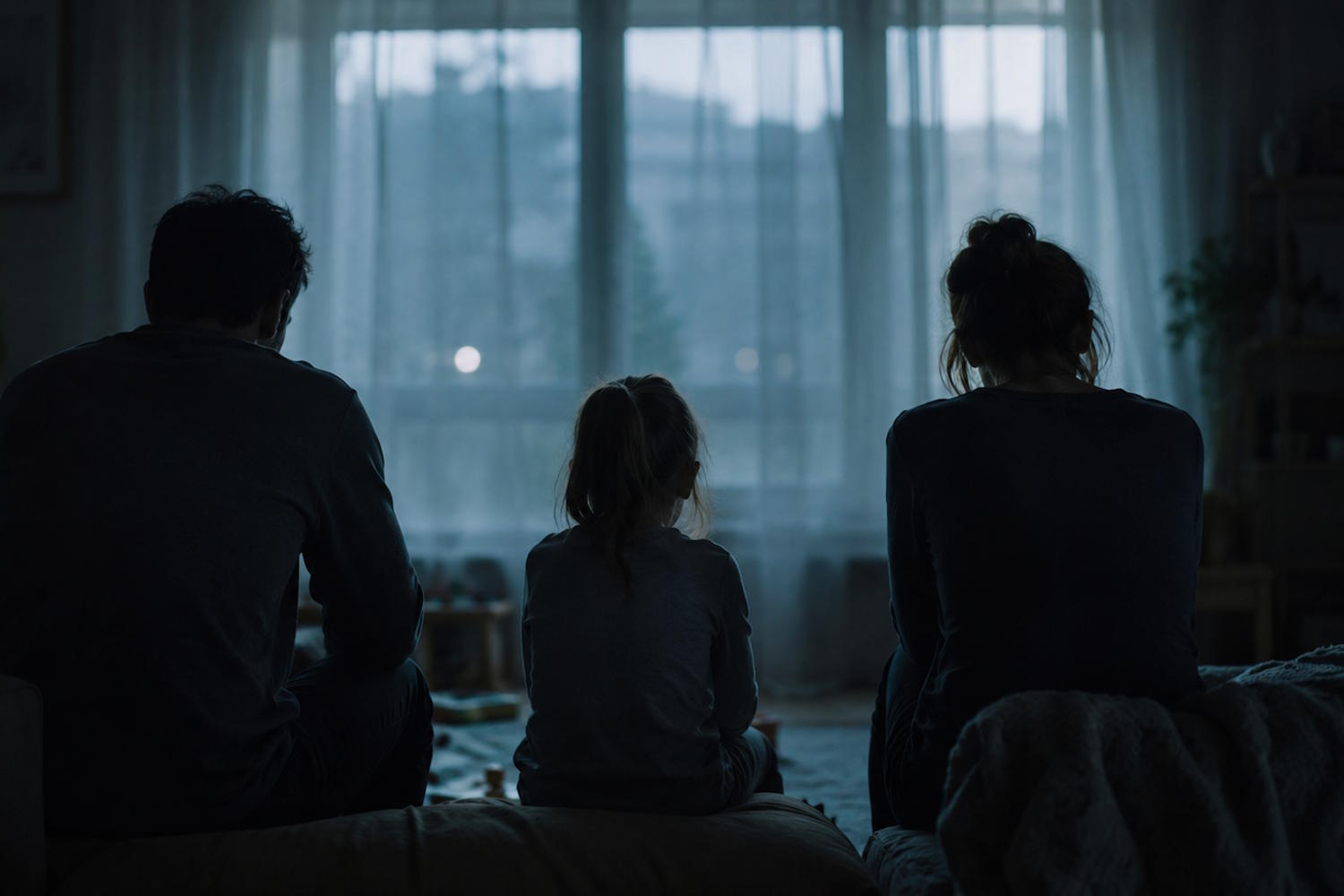
There is probably such a big pain behind Valentina Pambianco and Luca Abbasciano’s decision to end it together with their little Bianca. There is probably unbearable suffering, unbridgeable loneliness. There is disarmament. And also desperation.
Yet, say those who knew them, it didn’t seem like it. It didn’t seem like that internal pain was so excruciating that there was no respite. Anyone who has been close to those who have disabled children, even just for a while, knows well those fluctuating moods amidst that constant and subtle anguish. He knows well that every silence can be addressed to that child, every thought, every avoidant attitude, every closure. Until, sometimes, the inability to see anything else.
It feels lonely, of course, furiously lonely. And for this very reason we should never be left in the belief that no one can understand. The support should be there before it is asked for, they should know how to enter homes without invading them, see that tiredness before it becomes desperation, intercept that invisible weight before it becomes impossible to carry. Sometimes, being formally within a support network does not mean feeling truly supported.
What happened in Pietralata
Valentina Pambianco, Luca Abbasciano and their daughter Bianca, who was 5 years old and suffering from a serious disability, were found lifeless on August 31st in their home in the Pietralata district of Rome.
The alarm was raised by some family members who had not been able to contact them for hours. Several writings addressed to relatives were also found in the house, now acquired by investigators. The investigations are reconstructing in detail the dynamics and sequence of events. From those letters, however, a phrase emerges that weighs enormously: “We can’t do it alone”.
Luca worked as an IT technician. Valentina, according to what was told by those who knew them, had left her business to dedicate herself to caring for her daughter. Over the years, the couple had searched for answers and therapeutic possibilities for Bianca, to the point of even evaluating options abroad. From the outside, friends and neighbors say, they appeared like a united family, respectable people who had been fighting their daily battle for years.
Perhaps this is precisely one of the aspects that hurt the most: how little we sometimes know about the pain of those around us.
They were followed by social services. But “be followed“may not be enough. Massimiliano Umberti, president of the IV Municipality of Rome, confirmed that the family was followed by social services and that the little girl had a serious disability. He spoke of people who “they had been fighting for years” and directly recalled the theme of loneliness. A detail on which we should focus, because this story demonstrates how the word “followed” can be insufficient to describe the reality of a family. You can have a social worker as a reference and be alone. You can get a few hours of assistance and be exhausted. You can receive a benefit, a financial contribution, therapy, a specialist visit, and still continue to be afraid of what will happen tomorrow.
Because the burden of care is not just made up of bureaucratic procedures, therapies or appointments. It is made of sleepless nights and fear. Of couples who stop having their own space, of parents who cannot get sick, cannot collapse.
It is also made of that question that many parents of children with disabilities ask themselves sooner or later: what will happen to him or her when we are no longer here?
The invisible burden of caregivers
However, Bianca’s disability does not “explain” what happened. A child with a disability is not a burden and cannot become the narrative reason with which to justify a tragedy. The problem, if anything, is what can happen when care becomes an almost exclusively family task, when an enormous amount of responsibility is concentrated on the shoulders of a mother or father. Physical and psychological and economic and organizational. And the problem in the end is a society that too often takes for granted that a family can infinitely absorb every need.
That someone gives up work and sleep and their social life. That someone holds everything together and continues to do so tomorrow and the day after and for years, until that sacrifice becomes normal from the outside. Mental distress and desperation do not necessarily have the face we imagine. You work, you accompany your child on a visit, you greet your neighbors, you reply to a message, you go out with friends. And inside there can simultaneously be a darkness that others don’t see.
For this reason we should ask ourselves how much a family was really supported, how much space those parents had to simply be Valentina and Luca and not just the mother and father who had to take care of everything.
But how capable are we, as a community, of intercepting a crisis before it becomes an emergency? Today we have no elements to know what could have changed the course of this story, but, let’s think about it: we can know what we should expect for all the other families who today experience enormously complex situations. Adequate home care, respite services, accessible psychological support, real school inclusion, economic resources, continuity of care and a network that does not wait for the now exhausted caregiver to find the strength to knock on yet another door.
Loneliness can become unsustainable. The absence of respite, the feeling that there is no possible tomorrow, the conviction of having to do it alone. Our society should have arrived here a long time ago, with time, people, money, services and listening.
