
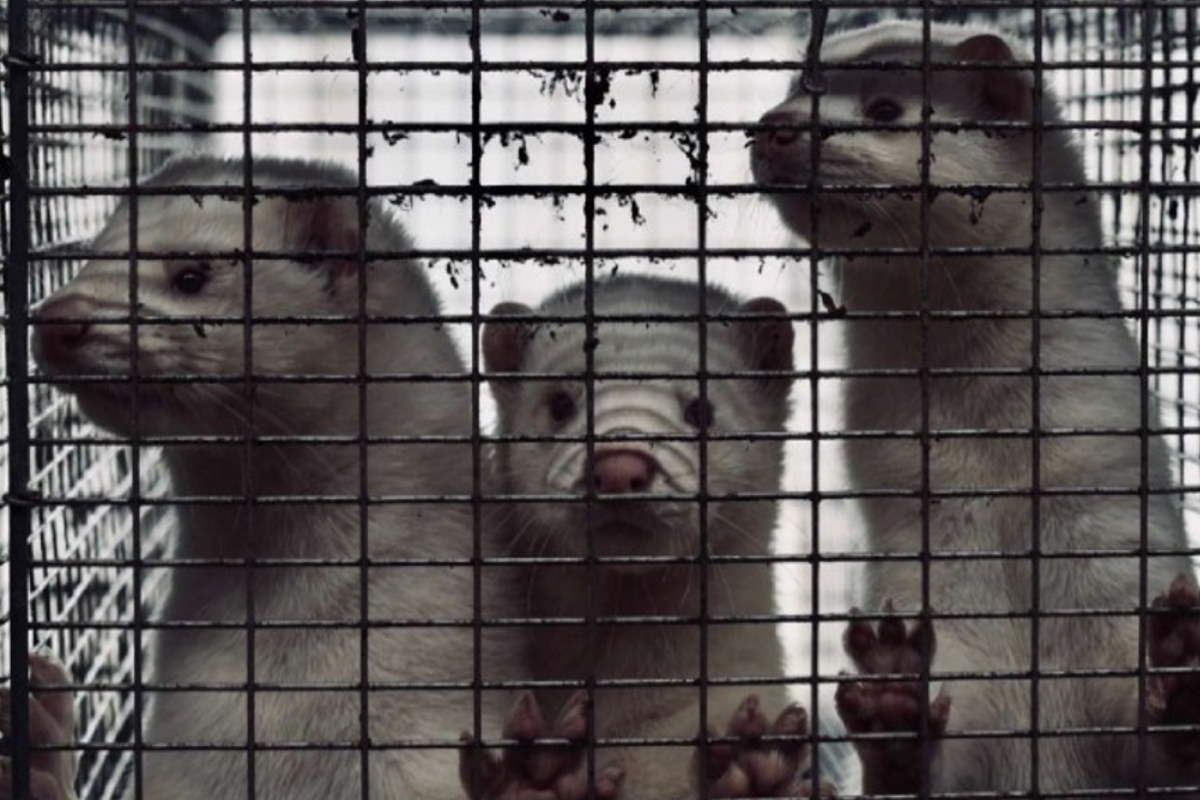
The debate on the breeding of animals for fur production is enriched by a new, authoritative chapter. No longer just an ethical issue, but a public health emergency: this is the warning launched by international scientists and experts through a comment published in the prestigious journal The Lancet Regional Health – Europe. Their request to the European Union is clear: ban fur farming to prevent the spread of dangerous zoonotic diseases.
The experts’ warning: a preventable risk for public health
As the European Commission evaluates its response to the European Citizens’ Initiative (ECI) “Fur Free Europe”, a chorus of authoritative voices rises to highlight a risk that is too often underestimated. According to experts, farming animals for fur creates ideal conditions for the emergence and spread of diseases that can pass from animals to humans, so-called zoonotic diseases. If the EU is serious about embracing the “One Health” approach – which recognizes the interconnection between human, animal and environmental health – it cannot simply introduce welfare standards, but must impose a definitive ban.
From cages to viruses: a fertile ground for zoonoses
The intensive conditions of livestock farms, where wild species such as mink, foxes and raccoon dogs are confined in narrow spaces, represent a fertile ground for viruses. Here, pathogens can spread rapidly, adapt and potentially evolve, acquiring the ability to infect humans. Examples of outbreaks of SARS-CoV-2 and H5N1 are recorded in the Netherlands, Denmark, Finland and Spain, demonstrating the concrete extent of the risk.
“Farming animals for fur is a senseless and entirely preventable threat to public health,” says Dr Joanna Swabe, director of institutional relations at Humane World for Animals Europe. «The introduction of animal welfare controls and standards will not eliminate this risk. The Commission must act firmly and ban the farming of animals for fur production.”
The EU at a crossroads: standard or ban?
The EU’s decision on the ECI “Fur Free Europe” has been postponed, apparently due to an internal disagreement over the choice between a total ban or the introduction of new welfare standards. However, the unequivocal advice of the European Food Safety Authority (EFSA), an independent scientific agency, has already established that welfare issues in mink, foxes, raccoon dogs and chinchillas cannot be effectively prevented or mitigated in current cage farming systems.
Furthermore, the fur industry is in steep economic decline and entails high costs for public health and the environment, without being able to solve animal welfare problems or health risks with simple minimum standards.
The Italian case: a ban still incomplete
Italy, despite having banned the farming of animals for fur in 2022, also faces significant challenges in implementing the measure. Despite the law, thousands of mink are still held on farms awaiting an implementing decree that allows their transfer. «The article published on The Lancet it is yet another confirmation of the health risks linked to the breeding of animals for fur production”, comments Martina Pluda, director of Humane World for Animals Italia. «We ask the Italian Government to finally adopt the implementing decree which would allow the possible transfer of animals still locked up in structures more compatible with their well-being and ethology, and to stand in favor of a ban on breeding for the production of fur at a European level».
An industry in decline and a choice of prevention
Keeping wild species, such as mink, in cages is dangerous to our health,” adds Dr. Neil Vora, director of the Preventing Pandemics at the Source coalition. «In these terrible conditions, these animals are like sponges for viruses: they can contract respiratory viruses from us, incubate them and then transmit them back to us in a mutated form. It makes no sense to take wild species and confine them for life in small cages, and then kill them in gas chambers or by electrocution, for the purpose of producing furs for fashion.
The stakes are too high to limit ourselves to half measures. A ban on fur farming in the EU would be a concrete and preventative measure in line with the One Health approach and a clear example of preventing pandemics at source. It is time for Europe to make a decisive choice, not only for animal welfare, but for public health and for a more sustainable and compassionate future.
