
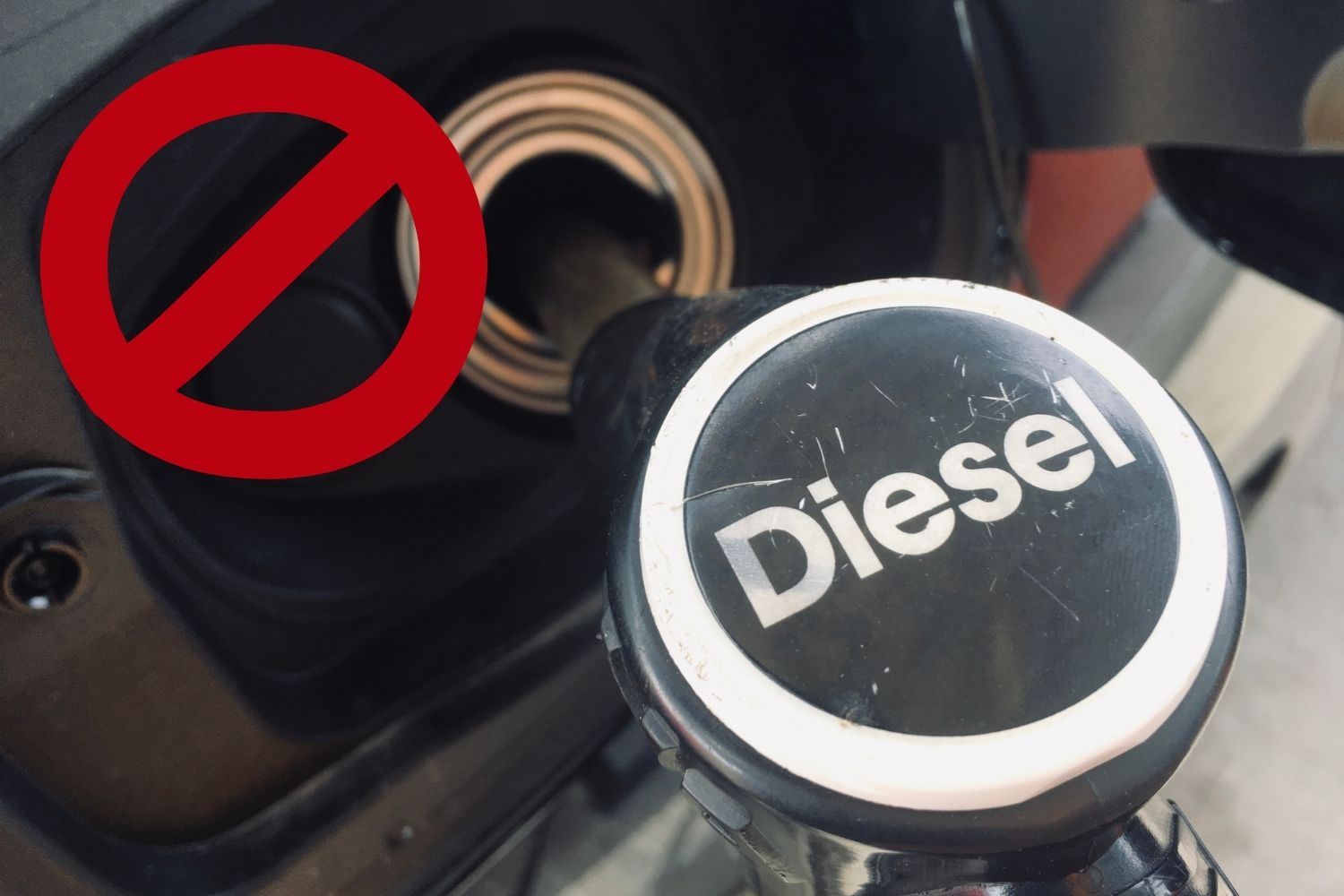
In three weeks, on weekdays and during rush hours, four Lombard capitals will say goodbye to more than 200 thousand Euro 5 diesel engines. In three other regions of the Po Valley, however, the exact same problem may not arise at all: it depends on who has done their homework in time and who has not. In fact, from 1 October, barring regional alternatives, the structural block on the circulation of Euro 5 diesel vehicles comes into force, the rule that the Infrastructure Decree (law decree of 21 May 2025, no. 73) postponed by one year compared to the original deadline of 2025, simultaneously raising the demographic threshold of the municipalities concerned from 30 thousand to 100 thousand inhabitants. The provision concerns four regions of the Po basin, namely Lombardy, Piedmont, Veneto and Emilia-Romagna, called to include the ban in their respective regional air quality plans, unless they demonstrate that they can achieve the same result with equivalent compensatory measures. This is where the road forks.
Who risks being stopped: cars registered between 2011 and 2015
The criterion is not only the environmental class but also the date of registration, therefore, at risk are vehicles, categories M1, M2, M3, N1, N2 and N3, registered approximately between 2011 and 2015. In municipalities with more than 100 thousand inhabitants, circulation may be limited with time slots decided by the individual administrations, which remain free to extend the block even to the smallest centres.
Piedmont has already closed the game
Piedmont is the first region to have formally avoided the ban. The Regional Council approved the update of the Regional Air Quality Plan (PRQA) on 28 July, with a spending change of more than 43 million euros. Instead of the general blockade, the council led by Alberto Cirio has put in place incentives for HVO biofuels intended for public transport and Euro 5 and Euro 6 diesel vehicles, resources for car sharing and cycle mobility, and interventions on heating systems. Cirio claimed responsibility for the choice, arguing that blocking over 300 thousand vehicles, including around 40 thousand work vehicles, would have shifted the burden of the ecological transition onto less well-off families. In Turin and Novara, therefore, Euro 5 diesels will continue to circulate as always.
Veneto has started the process, but the word goes to the Council
Veneto is pursuing the same goal with a path that is still open. President Alberto Stefani announced on 5 August the start of the process to suspend the block which would concern the 325 thousand Euro 5 diesel engines circulating in the region, defining it as “unacceptable to prevent many Venetians from going to work or accompanying their children to school” just because of the impossibility of changing cars. Among the measures under study, the anticipation of the tender for the transformation of vehicles into Dual Fuel (the conversion that allows the diesel engine to burn diesel and a gaseous fuel at the same time) and the use of smart working for public employees on orange or red PM10 alert days, with the exception of those who carry out functions that necessarily require their presence. However, the council’s resolution still has to pass the scrutiny of the Regional Council: until then, the ordinary rules remain valid, which in municipalities with over 100 thousand inhabitants (Padua, Venice, Verona, Vicenza) provide for a stop from Monday to Friday, from 8am to 6pm.
Emilia-Romagna, alternatives still under study
Emilia-Romagna is also looking for a way out, without however having formalized anything yet. The region manages the limitations through the Regional Integrated Air Plan (PAIR), implemented by Arpae, which already today imposes a seasonal stop (from 1 October to 31 March, on weekdays from 8.30 to 18.30) on diesel up to Euro 4 in lowland municipalities. The hypothesis at the center of the discussion is to extend the Move-In system to Euro 5, the black box that allows a maximum limit of kilometers that can be traveled in exchange for the exemption from the time block: in the current configuration, however, the service only covers vehicles up to Euro 4 and should therefore be adapted. The use of HVO, on the Piedmontese model, is also being evaluated. In the absence of an agreement by the deadline, the structural ban will still come into effect from 1 October in municipalities with more than 100 thousand inhabitants, therefore Bologna, Modena, Parma, Reggio Emilia, Ravenna, Rimini, Forlì and Piacenza, with timetables similar to those already in force for the lower classes.
In Lombardy the blockade remains the most concrete hypothesis
Lombardy, at the moment, has not put on the table an alternative plan comparable to the Piedmontese one. If no last-minute decisions arrive, based on Regional Council resolution no. 4843 of 28 July 2025, from 1 October the stop will start on weekdays, from 7.30 to 19.30, in the four municipalities with over 100 thousand inhabitants, which are Milan, Monza, Brescia and Bergamo.
If you have a Euro 5 registered in those years, you would do well to look not at the license plate but at the regional border, because what will decide its fate will not be the exhaust pipe, but the resolution that the council will have managed, or not, to bring home in time.
