
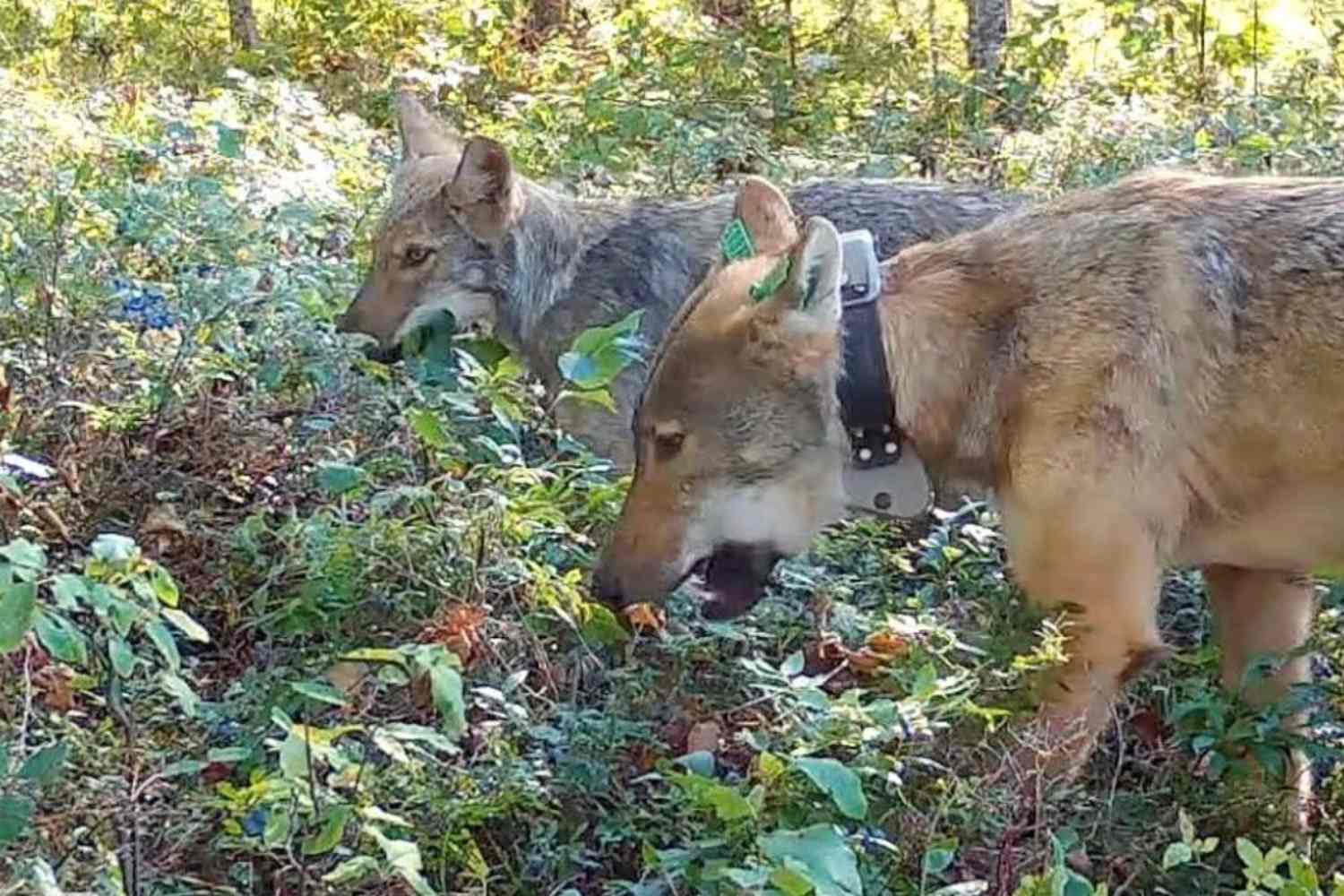
In the collective imagination, the wolf is a relentless predator, specialized in killing large ungulates such as deer thanks to a complex social structure. Yet biological reality reserves unexpected surprises, revealing an opportunistic and incredibly adaptable side of these carnivores. In northern Minnesota, during the summer months of July and August, berries can make up more than 80 percent of the wolves’ diet, becoming a critical resource when young deer become too quick to catch and beavers take refuge in the water.
Puppies also benefit from this eating habit, getting up to a third of their energy needs from fruits that adults sometimes regurgitate for them. This unusual passion for blueberries of the species Vaccinium angustifolium prompted researchers from the Voyageurs Wolf Project to investigate further, publishing the results in the scientific journal Biology Letters to reveal the ecological impact of this phenomenon.
How wolf digestion and feces enhance blueberry seed germination
The most extraordinary aspect that emerged from the analyzes conducted by the scholars concerns the fate of the seeds ingested by predators and subsequently dispersed into the environment through feces. By examining over a thousand seeds taken from samples collected between 2017 and 2018 and comparing them with those collected directly from plants, it emerged that seeds that passed through the digestive system of wolves showed a 5% to 27% higher probability of germination.
Not only that, because these seeds manage to germinate about seven days earlier than those not ingested. The merit is twofold: on the one hand the mechanical action of digestion and contact with the bone fragments create micro-lesions in the external covering, facilitating the entry of water; on the other hand, excrements act as a natural fertilizer, creating an environment rich in nutrients and protective against microorganisms hostile to growth.
Zoochory and the advantage of traveling enormous distances in wild forests
This mechanism of seed dispersal, known scientifically as zoochory, usually involves birds, herbivores and omnivorous mammals such as bears, rarely relegating large predators to the role of active disseminators. Yet wolves offer a unique ecological contribution thanks to their daily mobility, which leads them to travel enormous distances within their territory.
A single specimen can ingest hundreds or thousands of seeds and transport them much further from the mother plant than other animals, releasing them all together in one solution thanks to their excrement. This dynamic demonstrates how intricate the network of ecological relationships is that links wildlife to natural habitat, overturning traditional labels and demonstrating that even the most feared predator of forests that is increasingly often unjustly cut down can transform into a precious ally for plant biodiversity.
View this post on Instagram
