
The sun comes when it wants. At midday it hits hard, then a cloud passes, then returns, then drops. For a photovoltaic panel this is normal administration. For a system that has to transform that light into fuel, however, it becomes quite a technical nuisance.
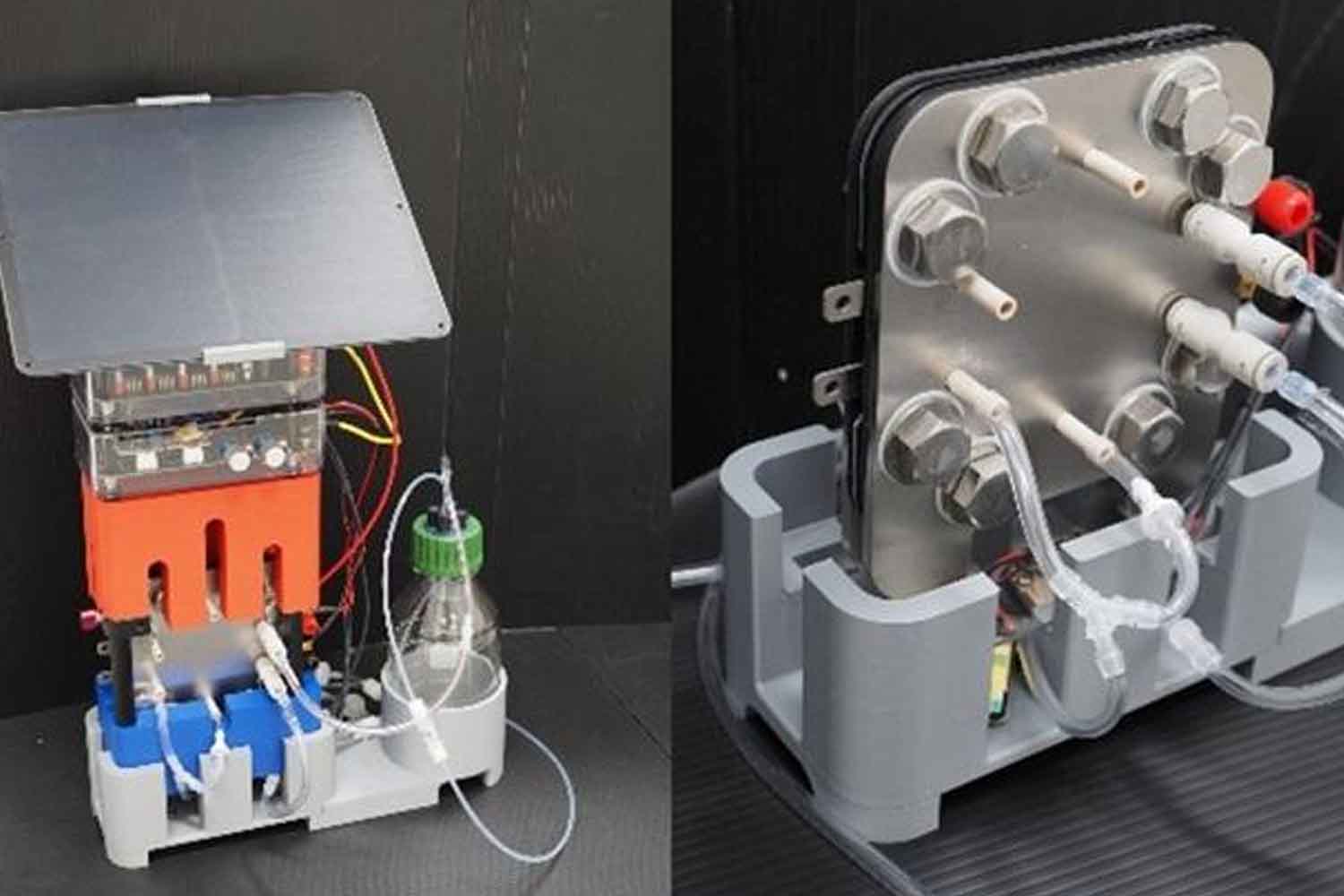
A research group fromOsaka Metropolitan University has tried to circumvent this very obstacle with a system of artificial photosynthesis without batteries. Basically, the device uses sunlight, water and carbon dioxide to produce formic acida liquid substance that can function as a store of chemical energy.
It seems like a laboratory thing very far from everyday life, and for now it still is. But the technical step matters: the system manages to regulate itself when the light changes, without needing a battery or an external electronic control unit to keep everything in balance.
An artificial leaf, so to speak
There artificial photosynthesis tries to imitate, in its own way, what plants do. Plants take in light, water and CO₂ and produce energy to live. Here the reasoning is different, more industrial: take those same basic ingredients and turn them into a usable solar fuel.
In the case studied in Japan, the end product is formic acid. The name may sound unfamiliar, but the idea is quite intuitive: instead of using the sun only when it shines, it is transformed into a substance capable of conserving energy. A kind of chemical tank, with all the limitations and precautions involved.
At the heart of the system is an electrolyser. It is the device that receives electricity from solar cells and uses it to make the reaction happen: water and CO₂ enter the process, formic acid comes out as a result. The problem, as often happens with solar, lies in continuity. The light changes continuously and the device must follow it without losing too much efficiency.
The piece that adjusts itself
In traditional systems a mechanism called Maximum Power Point Trackingabbreviated to MPPT. The name immediately makes you want to close the page, so let’s keep it simple: it’s a regulator that helps the solar panel work in the best possible spot, adjusting voltage and current as the light changes.
It works, but it adds pieces. Electronic components, converters, often batteries or stabilization systems are needed. More parts means more cost, more complexity, more maintenance.
Researchers led by Yasuo Matsubara and Yutaka Amao chose a different path. They put a solid electrolyte with a useful property: when it heats up, it lets the current pass better. So, as the sun rises and the system heats up, the internal resistance decreases and electricity flows more easily.
Put even more simply: the device senses the change in light through heat and adapts its behavior. Without battery to act as a crutch. Without an external control unit that has to constantly correct everything.
In the work published on EES Solarthis mechanism is defined chemical MPPTi.e. a tracking of the maximum power point entrusted to the chemical and physical properties of the system, rather than to external electronics.
It also works outside the laboratory
The most concrete part concerns outdoor tests. The prototype was tested under real sunlight and continued to produce formic acid from water and CO₂ even when the light intensity changed. This detail is important because the sun in the graphs is tidy, the real one much less so.
The numbers, however, must be read without turning them into a miracle. The study indicates a use of the photovoltaic energy of85% and an external sun-formic acid efficiency of the 2%with 0.1 kg of formic acid produced in daytime operation. These are interesting data for a prototype, still far from a domestic system ready to be installed on the balcony.
The system had already been demonstrated during the Osaka-Kansai Expo 2025, in the joint Iida Group × Osaka Metropolitan University pavilion, where the formic acid produced powered a small diorama. A tiny example, almost like a scientific showcase, but useful to make the concept clear: light is transformed into a substance that can restore energy.
Because it can be useful
Solar has one huge advantage and one stubborn flaw. It produces clean energy when there is light, then you have to conserve it. Batteries are already an important answer today, especially for homes, networks and mobility. This research follows another path: directly transforming part of the solar energy into chemical fuel.
The difference is all there. A simpler system, with fewer external electronics, could become cheaper and easier to manage. The conditional remains mandatory, because many checks pass between a prototype and a truly widespread technology: durability of materials, safety, costs, large-scale yield, maintenance, integration with existing systems.
There is also an element to keep in mind: the research is linked to Iida Group Holdings and the work indicates a Japanese patent application on the system. Nothing strange for a technology with possible industrial applications, as long as you read the result for what it is: a promising technical step, still within the research path.
There artificial photosynthesis without batteries it remains one of the most fascinating ways to imagine a different use of sunlight. Here the step forward lies in simplicity: less electronics, fewer external supports, an electrolyser that uses its own heating to work better. For now it doesn’t light up a house. It keeps an idea going. And that’s enough to look at carefully.
