
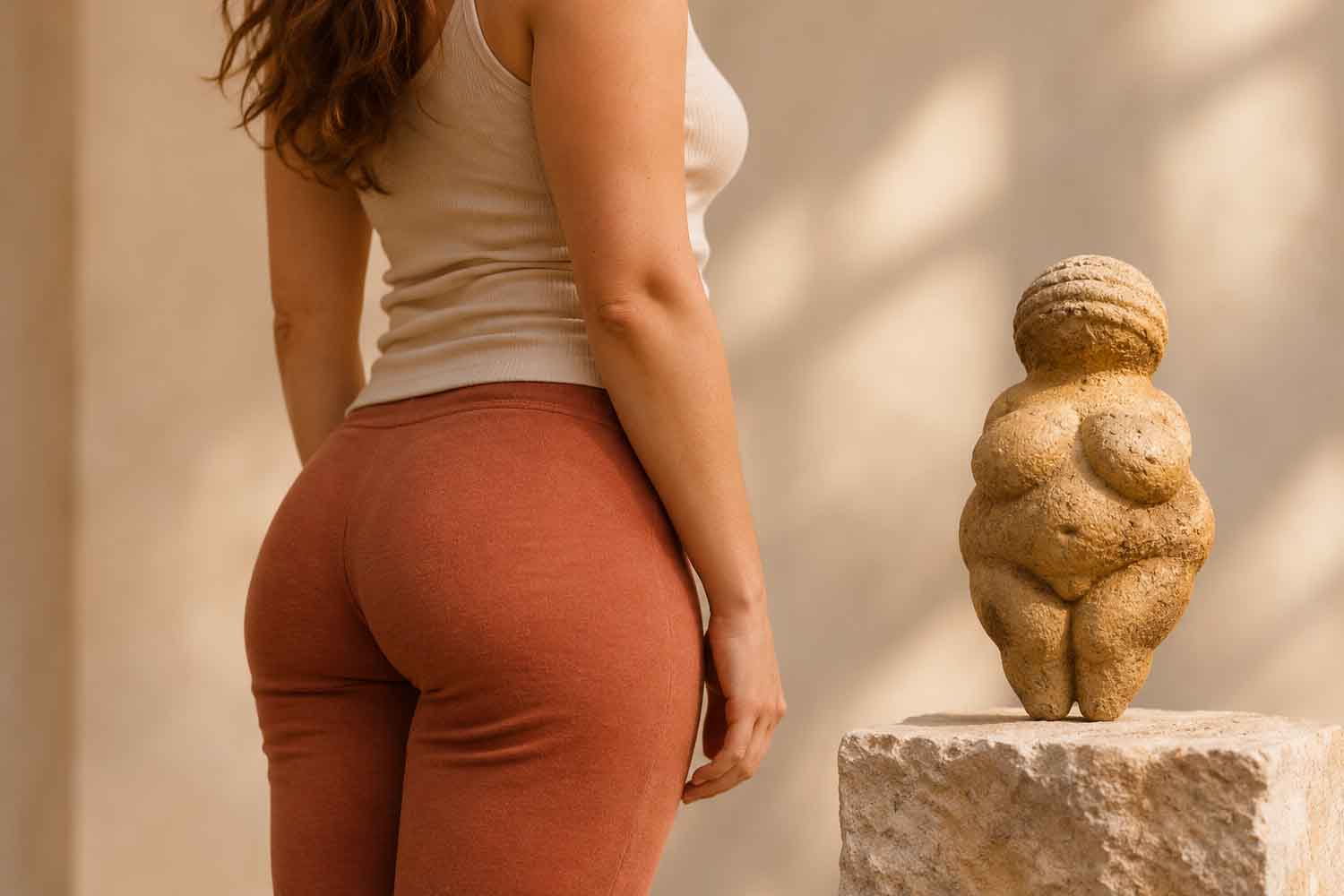
The elbows are bony, the buttocks decidedly softer. A difference that we know well, even if we rarely stop to think about it. Our body, in fact, tends to accumulate fat in some areas much more than in others and this distribution depends on a combination of genetics, hormones and age. But there could also be an evolutionary explanation, linked to when getting something to eat required much more effort than a visit to the supermarket.
Reconstructing the reasons for this characteristic is Cara Ocobock, an anthropologist at the University of Notre Dame in the United States, who studies the relationship between human evolution, physiology and adaptation to the environment. According to the researcher, our ability to accumulate large quantities of adipose tissue may have represented an advantage for ancestors, forced to face long periods without the certainty of finding food. And even that fat that is deposited on the buttocks, often considered only from an aesthetic point of view, performs important functions.
Body fat does more than just store energy
Adipose tissue is generally associated with energy reserves: when we introduce more energy than we consume, a part is stored in the form of fat to be used later. A fundamental mechanism for survival, but only one of its functions.
Subcutaneous fat, the fat we can pinch between our fingers, is found just under the skin and helps protect us from impacts and maintain body temperature. The visceral one, on the other hand, surrounds the internal organs, occupying part of the spaces present in the abdominal cavity.
Adipose tissue also participates in the regulation of metabolism through the production and response to various hormones, also involved in the mechanisms of hunger and satiety. And then there are different types of fat. White fat makes up the majority of our reserves, while brown fat specializes in heat production.
The latter contains numerous mitochondria, the cellular structures that allow energy to be used. In newborns it is particularly important because it helps maintain body temperature, when thermoregulation mechanisms are still immature. As we grow, its quantity and activity generally decrease, but a part also remains in adults, especially in the neck region, above the collarbones and in some deeper locations. In short, fat doesn’t just sit there, motionless, waiting to be consumed.
Apple shape and pear shape: what hormones have to do with it
Fat distribution varies from person to person. Some tend to accumulate it especially on the abdomen and trunk, others on the hips, buttocks and thighs. These are the two conformations commonly defined as apple-shaped and pear-shaped, respectively associated with a distribution android And gynoid of body fat.
In the first case, accumulation prevails in the upper part of the body, particularly in the abdomen, where the adipose tissue can be found both under the skin and around the internal organs. In the second, however, the fat is concentrated more in the gluteal-femoral region, therefore on the hips, buttocks and thighs.
These differences depend partly on genetics, but hormones play an important role. Estrogens, generally present in higher concentrations in women during childbearing age, promote the accumulation of subcutaneous fat in the lower part of the body. With menopause, when their levels decrease, the distribution may shift more towards the abdomen.
Cortisol, involved in the stress response, can also influence visceral fat storage, especially when its levels remain excessively high. The difference also concerns metabolism. According to a scientific review published in npj Metabolic Health and Diseasesubcutaneous fat in the buttocks and thighs is associated with a better ability to store lipids, while excessive accumulation of visceral fat is associated with greater metabolic risks.
Naturally these conformations describe general trends: many people have characteristics of both and the shape of the body alone does not allow us to establish the state of health.
Why doesn’t fat accumulate equally on elbows and knees?
There is also a rather practical question. Let’s imagine you have large fat deposits around your elbows or knees: bending your arms and legs would become more difficult. Ocobock suggests that the distribution of adipose tissue can also be influenced by needs of this type.
Some areas of the body, such as the hips, buttocks and thighs, can accommodate substantial reserves without impeding movement in the same way. This is a possible functional explanation, yet to be explored further. Research knows different mechanisms that regulate fat distribution, but has not completely clarified why some deposits have developed in certain anatomical regions.
From bears to humans: why do we need so many reserves?
In the animal world, fat is a fundamental resource, even if it is used in different ways. Bears, for example, accumulate enormous reserves before hibernation, when they will have to spend months without feeding. Seals and whales, on the other hand, have a thick layer of fat that helps protect them from low water temperatures.
Humans do not hibernate or spend their lives in the oceans. Yet, compared to other primates and many land mammals, they can accumulate a particularly high amount of body fat. Why? According to Ocobock, a possible explanation must be sought in the habits of our ancestors. For thousands of years, humans have lived by hunting and gathering, activities that required considerable energy expenditure without guaranteeing constant results.
There could be periods of plenty followed by others when finding something to eat became difficult. Storing energy in the form of fat would therefore have represented a sort of insurance against hunger, allowing the body to draw on its reserves in times of scarcity. It is a plausible evolutionary hypothesis, although reconstructing when and through which selective pressures this ability developed remains complicated. And some clues may even be found in prehistoric art.
The Paleolithic Venuses and those bodies depicted thousands of years ago
Between approximately 25,000 and 30,000 years ago, in several European regions, small female figurines with particularly pronounced breasts, abdomens, hips and buttocks were made. They are the so-called Paleolithic Venuses, among which is the famous Venus of Willendorf, preserved in the Natural History Museum of Vienna. Just eleven centimeters high and dating back to around 29,500 years ago, it has very accentuated body shapes, reproduced with great care.
For Ocobock, these representations constitute a possible clue to the fact that our ancestors knew bodies characterized by important adipose deposits. Be careful, though: the statuettes are not photographs of the prehistoric population. They could represent people who really existed, but also symbolic figures, cultural ideals or images related to fertility. Their meaning is still debated by archaeologists.
However, it remains interesting that thousands of years ago someone chose to represent precisely those shapes. In an era marked by harsh winters and often unpredictable food availability, possessing energy reserves could offer a concrete advantage. How much this affected the proportions of the human body is still a subject of research.
Meanwhile, we know that adipose tissue continues to perform indispensable functions: it conserves energy, protects organs, contributes to temperature regulation and participates in hormonal activity. The next time we complain about the fat accumulated on our buttocks, we could at least give him some seniority. Our ancestors probably had very different concerns than ours.
