
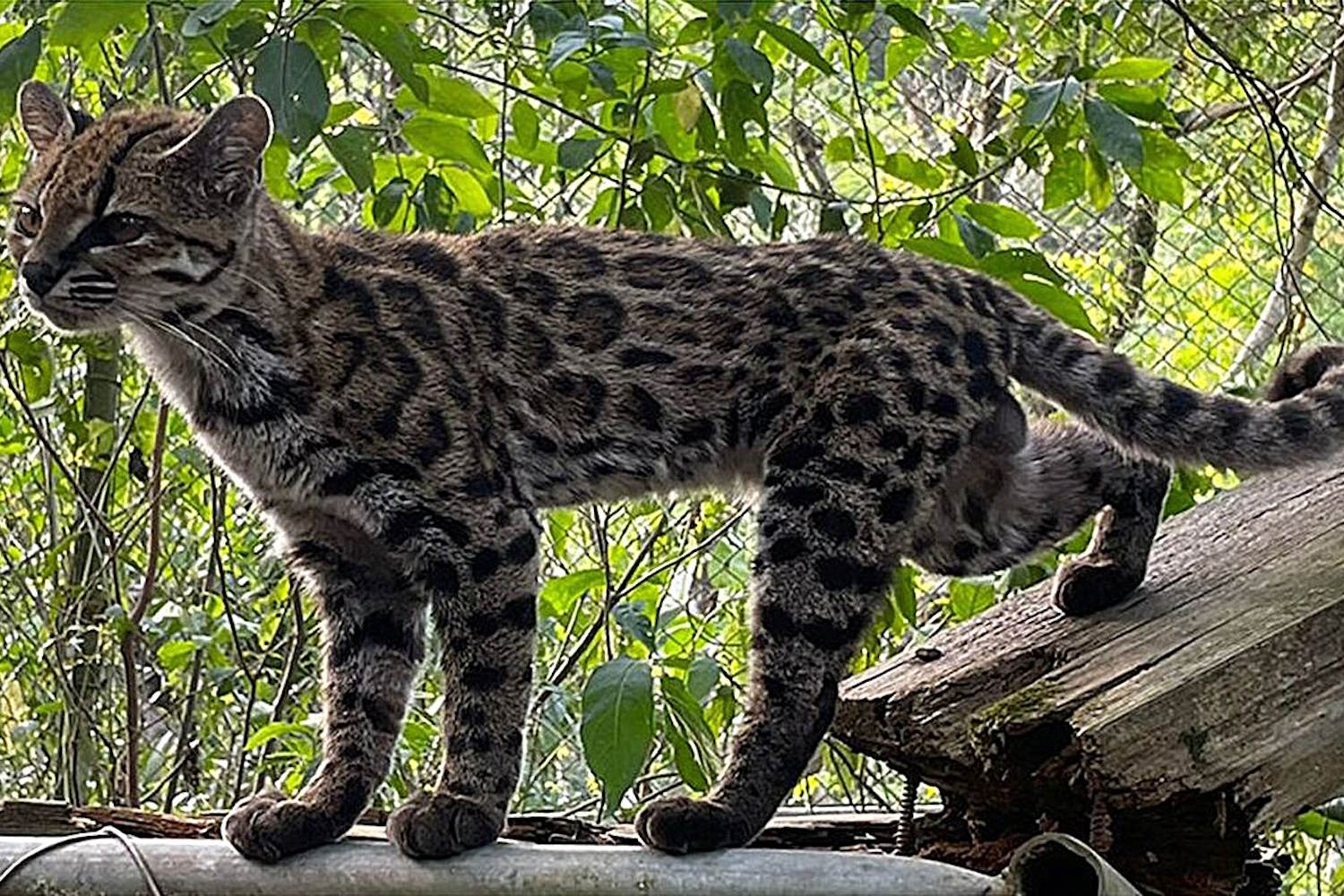
It looked like a common domestic cat but it was a new species: a research team led by University of Antwerp (Belgium) discovered the Leopardus tilcayoa wild cat never before identified. The discovery occurred in Boliviaparticularly in the mountainous region of Yungasnear the capital La Paz. And it hasn’t happened in over 100 years.
Locals who had spotted the animal in the Bolivian Andes had mistaken it for a common domestic cat, and had nicknamed it “tilcayo”, a term that later inspired its new scientific name Leopardus tilcayo.
Scientists defined the discovery as an extraordinary event: in fact, a new species of wild feline had not been described for over 100 years, i.e. since the identification of the Uruguayan pampas cat in 1923.
This feline is slightly smaller than a domestic cat, measuring approximately 45 centimeters and has rounded ears. The sequencing of the entire genome of the only two specimens identified so far is currently underway.
One of them currently lives in an animal shelter in the Yungasafter being handed over by a family who had welcomed him, the other, a female, was rescued and released into the wild after being attacked by local inhabitants.
Scientists have reported that the animals are classified as “vulnerable to extinction”, but their small numbers (so far they have only been spotted in Bolivia) suggest they may soon be considered at “much higher risk” of disappearing.
The work was published on Current Biology.
Sources: Phys.org / Current Biology
