
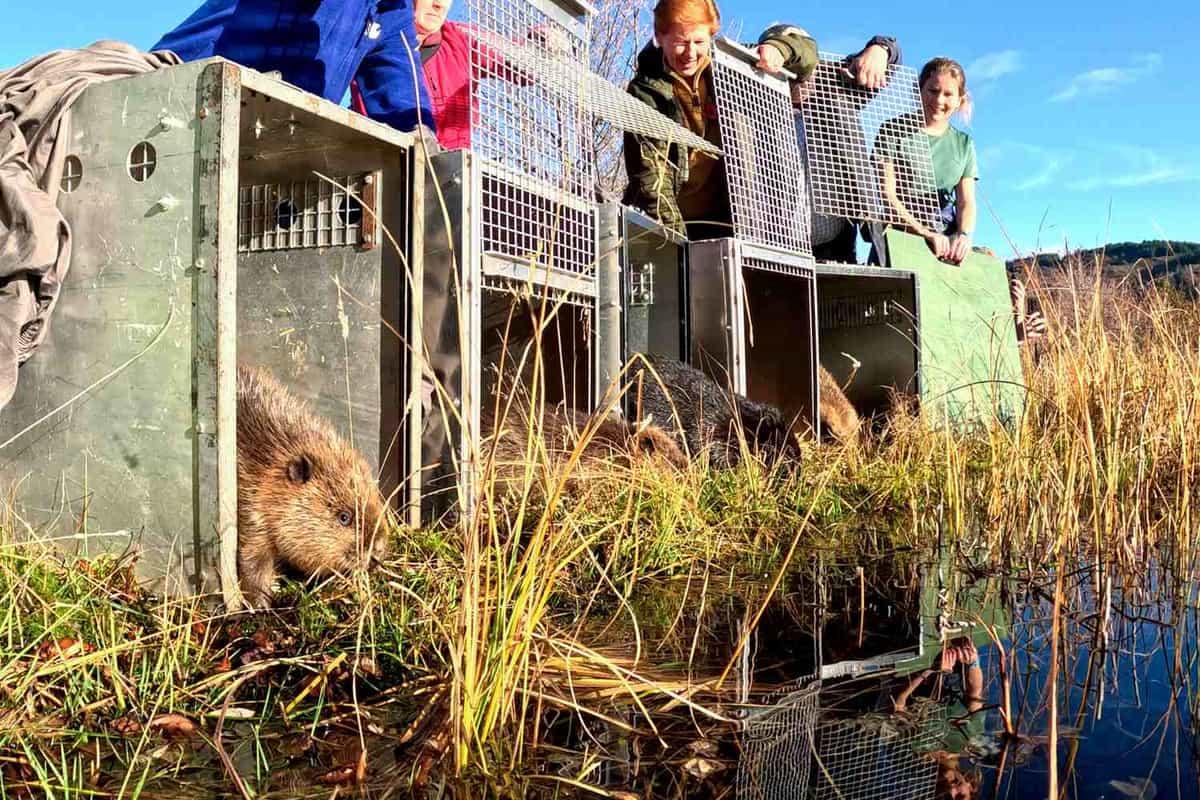
Five centuries after the last recorded historical testimony between 1526 and 1527, beavers officially return to populate the Loch Ness basin, marking one of the most important stages for environmental conservation in Scotland. The operation, supported by a grant of 47,000 euros from Rewilding Europe’s European Wildlife Comeback Fund, features the organizations Trees for Life and Beaver Trust.
On November 4, a first family of six was released into a small lake on the 10,000-acre Dundreggan estate in Glenmoriston. This intervention is part of the broader plan of the Ness Beaver Project, which aims to reintroduce at least 15 family groups over 3 years, exploiting the ideal natural habitat offered by the forests and rivers of the Affric Highlands to trigger a virtuous process of neopopulation and recovery of freshwater ecosystems.
NatureScot’s release plan, local management and permissions
The animals involved in the project are transferred from the Tayside area, where populations are growing rapidly, after having passed strict health checks and an adaptation period with food and temporary shelters. The public agency NatureScot, after having positively evaluated the project with an approval rating of 73% during public consultations, granted the license to release up to 15 beavers in 3 years, certifying that the territory presents a low risk of significant negative impacts.
To prevent any friction with local communities, Trees for Life CEO Steve Micklewright and manager Alan McDonnell have engaged in ongoing dialogue with farmers and fishermen, supported by a team dedicated to mitigation and the protection of valuable trees. The aim is to ensure peaceful and long-lasting coexistence, while also offering visitors to the Dundreggan Rewilding Center the opportunity to closely observe the work of these extraordinary nature engineers.
The European context and the vision for the future of the Highlands
The release of the rodents in Loch Ness does not represent an isolated event, but is directly linked to the experience already started in October 2025 in Glen Affric, where 7 specimens were released giving rise to successfully monitored spontaneous reproduction. On a continental scale, the Eurasian beaver is the protagonist of one of the most extraordinary faunal recoveries in Europe, with a population that has grown from just 1,200 individuals in 1900 to over 1.5 million today.
Using FTTH network coverage and a strong focus on sustainability, Steve Micklewright’s ambition is that within 15 to 20 years beavers could reclaim much of Scotland’s land. Their dams and wetlands created along waterways will not only increase biodiversity, supporting species such as Atlantic salmon, but will also make landscapes and human communities much more resilient in the face of the extreme challenges posed by climate change.
