
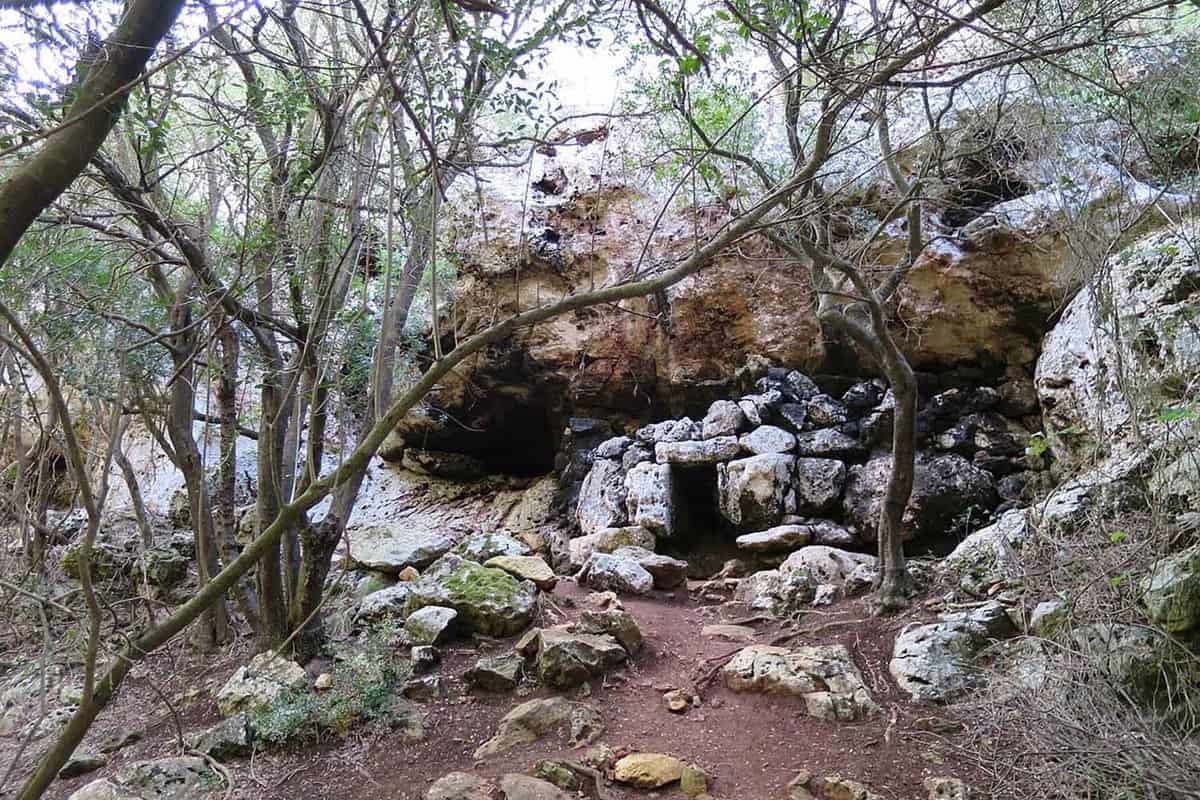
Milk, wine and even a bottle. They are the traces left by an ancient funerary ritual celebrated over two thousand years ago in Minorca, in the Balearic Islands, where archaeologists analyzed 34 containers recovered in cave 45 of Calescoves necropolis. Apparently empty vases which, after centuries, still retained the residues of the substances used by local communities to greet their deceased.
The discovery comes from a study published in Journal of Archaeological Scienceled by the Universitat Autònoma de Barcelona (UAB), the Barcelona Supercomputing Center (BSC-CNS) and the Universitat Pompeu Fabra (UPF). The analyzes identified traces of dairy products in most of the small traditional containers and, for the first time in a Minorcan funerary context, also the presence of wine. But among the recovered objects there is one that tells something even more everyday: a small vase with a spout probably used to feed children.
Menorca, map of archaeological sites – ©GreenMe
A baby bottle from two thousand years ago, left inside a tomb
The container has a rounded body and a small spout for pouring the contents. A shape that had already attracted the attention of archaeologists in the past, because similar objects had been found in child burials in Ibiza. The analyzes found residues of milk fat inside it, strengthening the hypothesis that it was indeed an ancient baby bottle.
The vase was recovered in the burial chamber, the space intended to accommodate the deceased and the objects that accompanied them. We don’t know who it belonged to: people of different ages were buried in the cave and it is not possible to link it with certainty to the tomb of a child.
Margalida Collresearcher at the Universitat Pompeu Fabra and co-author of the study, explains that this finding allows us to recognize some gestures linked to the growth and care of the little ones even in funerary practices. A very common object, at least in its function, which two thousand years ago could also find a place among those intended to accompany the dead. A testimony of daily life that has come down to us through a burial.
To greet the dead, milk and wine were brought
To understand the discovery we need to go back to the second Iron Age, in the so-called ppost-talayotic periodwhen the communities of Menorca buried their dead in artificial caves dug into the rock.
The Calescoves necropolis, in the Alaior territory, preserves over ninety tombs and funerary cavities distributed along the rocky walls of two valleys that reach the sea. Some burials were preceded by small open-air courtyards, in which the living could gather to make offerings and commemorate the deceased.
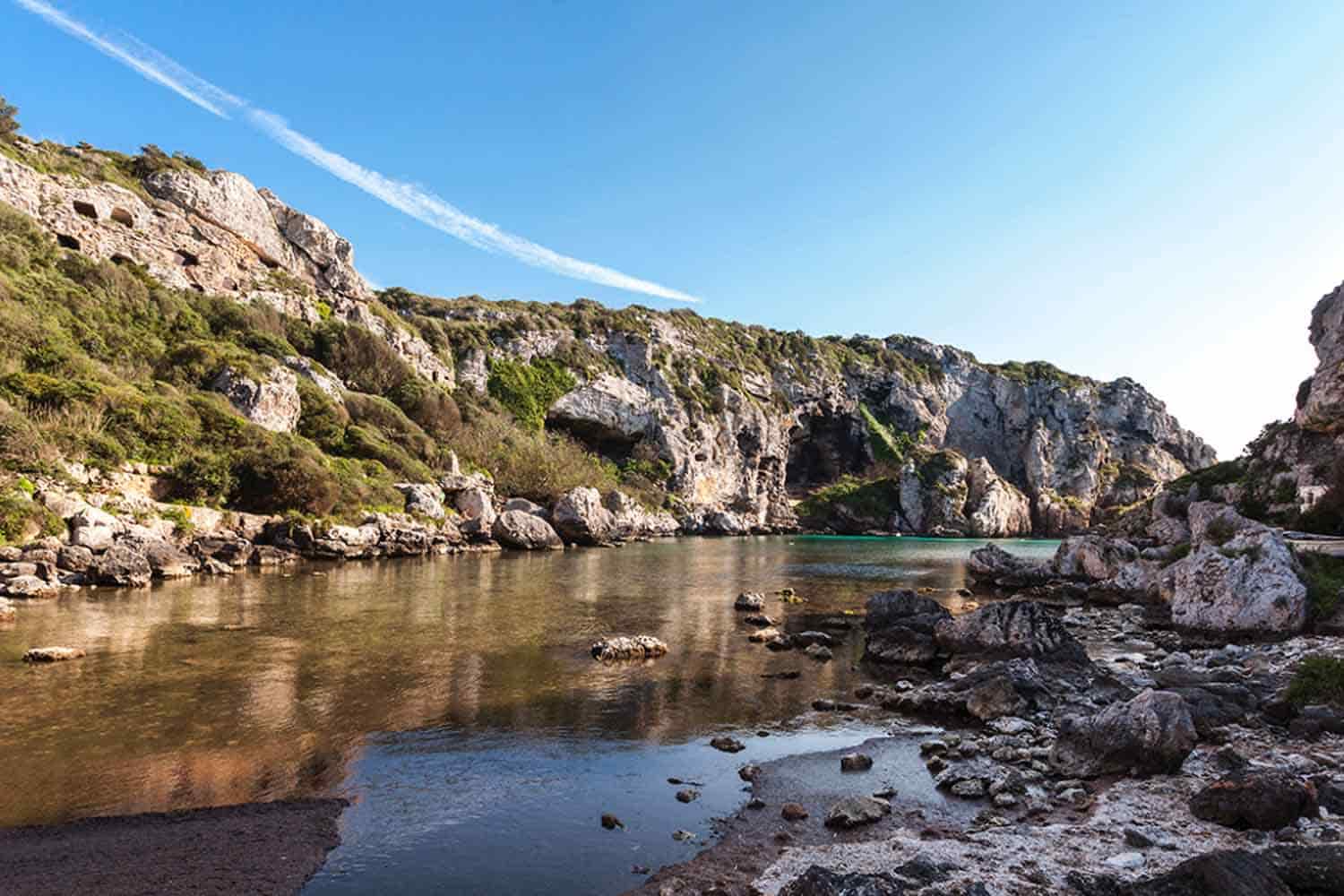
Necropolis Cales Coves Menorca – @Wikimedia Commons
Precisely one of these spaces was at the center of the excavations of 2023 and 2024. Archaeologists recovered numerous ceramic objects, many of which were still intact and in their original position. A rather rare circumstance, especially considering how ancient they are. Among the finds there are small handmade vases, with a raised bottom and geometric or vegetal decorations. They are characteristic objects of local culture, also documented in homes and places of worship, but particularly numerous in tombs.
For years their function remained uncertain. Scholars had hypothesized that they could contain substances used during rituals, without being able to identify them. Now we know that Most of these small containers contained dairy products.
Their small size suggests that they were used to symbolically offer or consume small quantities of food. On the other hand, milk and dairy products occupied an important place in the diet of the Minorcan communities of the time, who lived mainly from livestock farming and agriculture. Wine, however, tells another story.
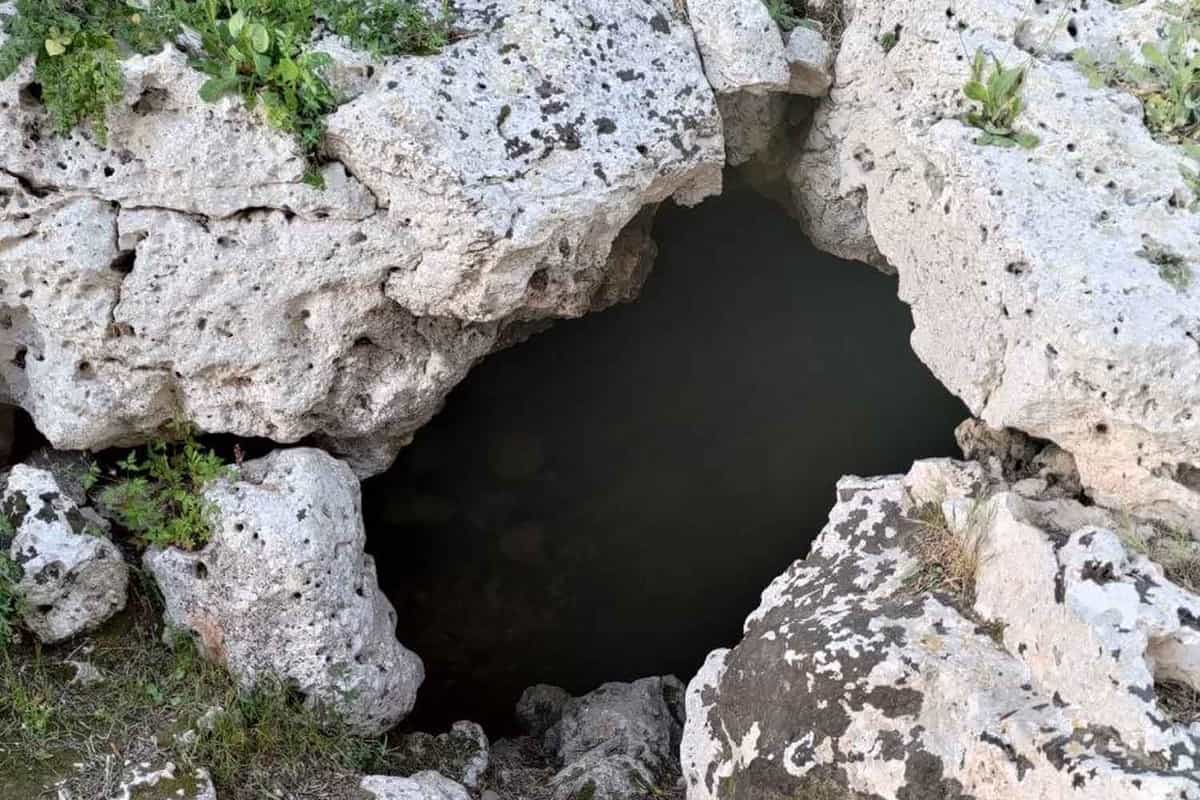
Cavities in the limestone rock of Menorca – ©GreenMe
The wine came from far away, but the rituals remained local
Traces of wine were identified only in some containers other than traditional ones: small jugs, bowls and containers made on the island, but inspired by the ceramic forms widespread in other regions of the Mediterranean, especially in the Punic world. A difference that says a lot about the commercial and cultural relations of the time.
The wine was a product of external origin and would have arrived in Menorca through the Mediterranean exchange networks, probably also thanks to the connections with Ibiza. The inhabitants of the island had learned to know these containers and to reproduce them, while maintaining their original function: to contain the wine.
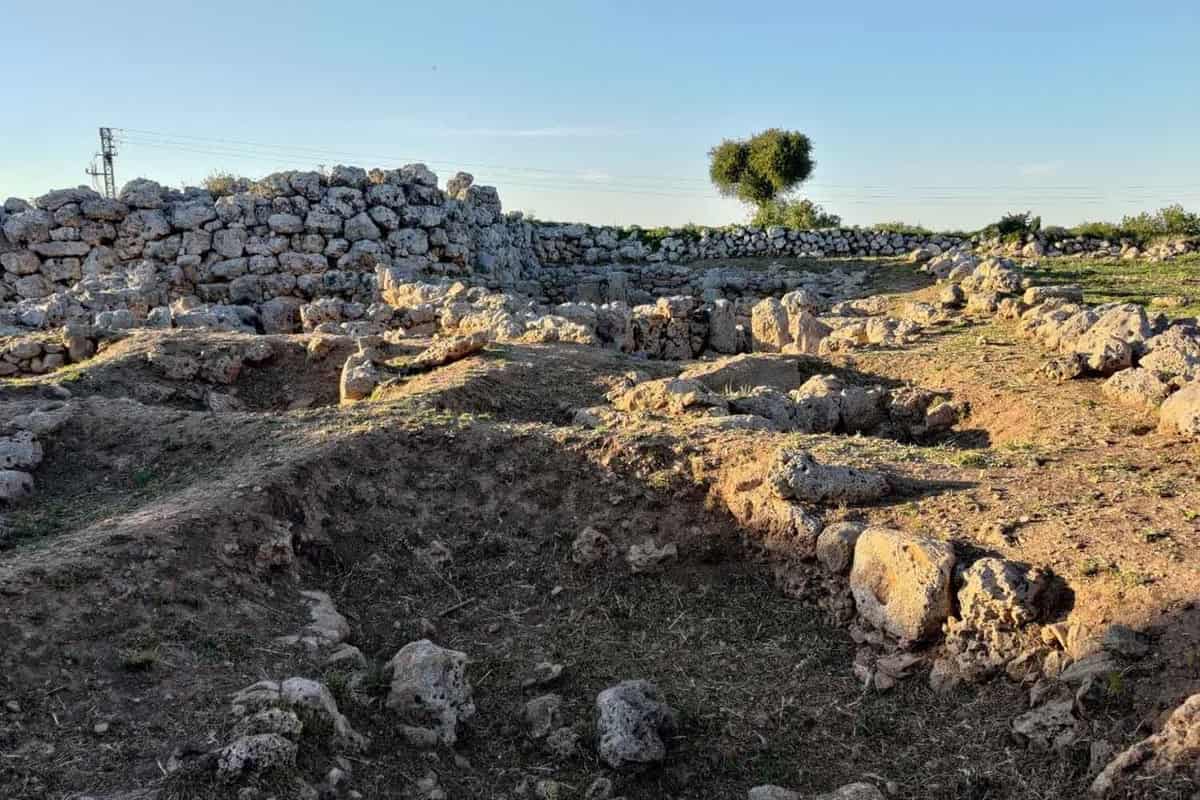
Archaeological remains of a prehistoric settlement in Menorca – ©GreenMe
According to Sònia Carbonell, researcher at the Barcelona Supercomputing Center and co-author of the study, the discovery shows how local communities incorporated elements from other cultures without abandoning their own traditions. In essence, the wine could come from abroad, but the way of greeting the dead continued to be Minorcan.
We don’t know if it was a drink reserved for the most important people in the community or if it was used on particular occasions. The researchers hypothesize that its diffusion was also linked to the demand of certain individuals or social groups. The presence of wine in funerary rituals, however, is documented for the first time on the island thanks to these analyses.
The courtyard was for the living, the cave for the dead
The arrangement of the containers also suggests a distinction between the different burial environments. Inside the cave there were objects intended to accompany the deceased, such as the small baby bottle. In the courtyard, however, there were vases that archaeologists link to the activities of the living: offerings, shared consumption of food and commemorative ceremonies.
These external spaces are precisely at the center of the archaeological project dedicated to cave 45 of Calescoves, coordinated by Sònia Carbonell and Margalida A. Coll and supported by the Island Council of Menorca. The research also identified traces of animal fats and vegetable oils, adding other elements to the reconstruction of funerary practices.
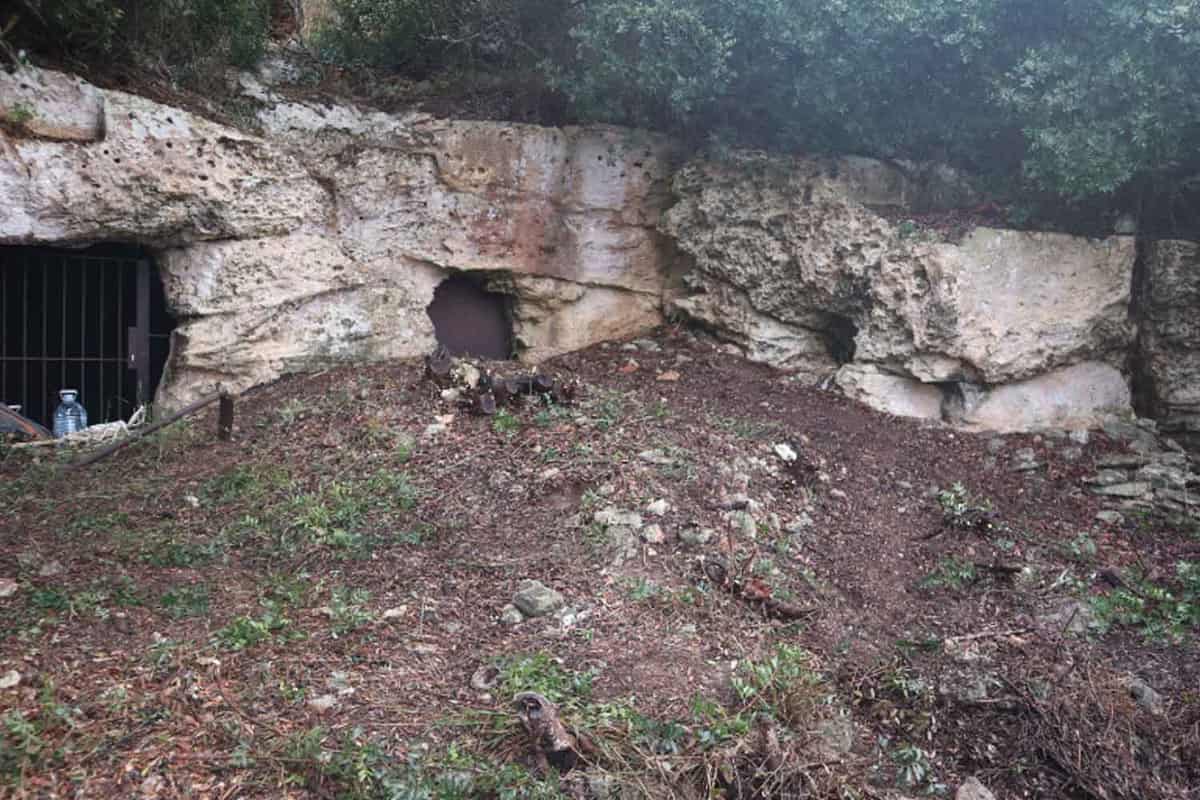
Cave 45 of Menorca – ©Departament de Cultura i Educació – Consell insular de Menorca
To identify these substances, the researchers combined scans of the containers, small excavations carried out in the laboratory and chemical analyses. Ceramic, in fact, is a porous material and can retain tiny quantities of the products it has come into contact with in its walls, even after thousands of years.
There was a problem, however: the vessels were so small that it was difficult to collect enough material for normal analyses. Adrià Breu, a researcher in the UAB Department of Prehistory, explains that the team was able to combine the tests to identify dairy products and wine into a single procedure, halving the amount of sample needed.
An improvement that made it possible to study the vessels without excessively compromising such delicate finds. Until now archaeologists had tried to understand their function by observing above all the shape, the decorations and the place in which they were found. Now they also have traces of what they contained.
A result that provides some more details on the habits of a community that lived over two thousand years ago: what it ate, what it imported from the Mediterranean and what objects it chose to leave next to its dead. However, we do not know the name of the owner of that small bottle. We don’t even know if he was a child. The container remained, with traces of the milk it contained.
