
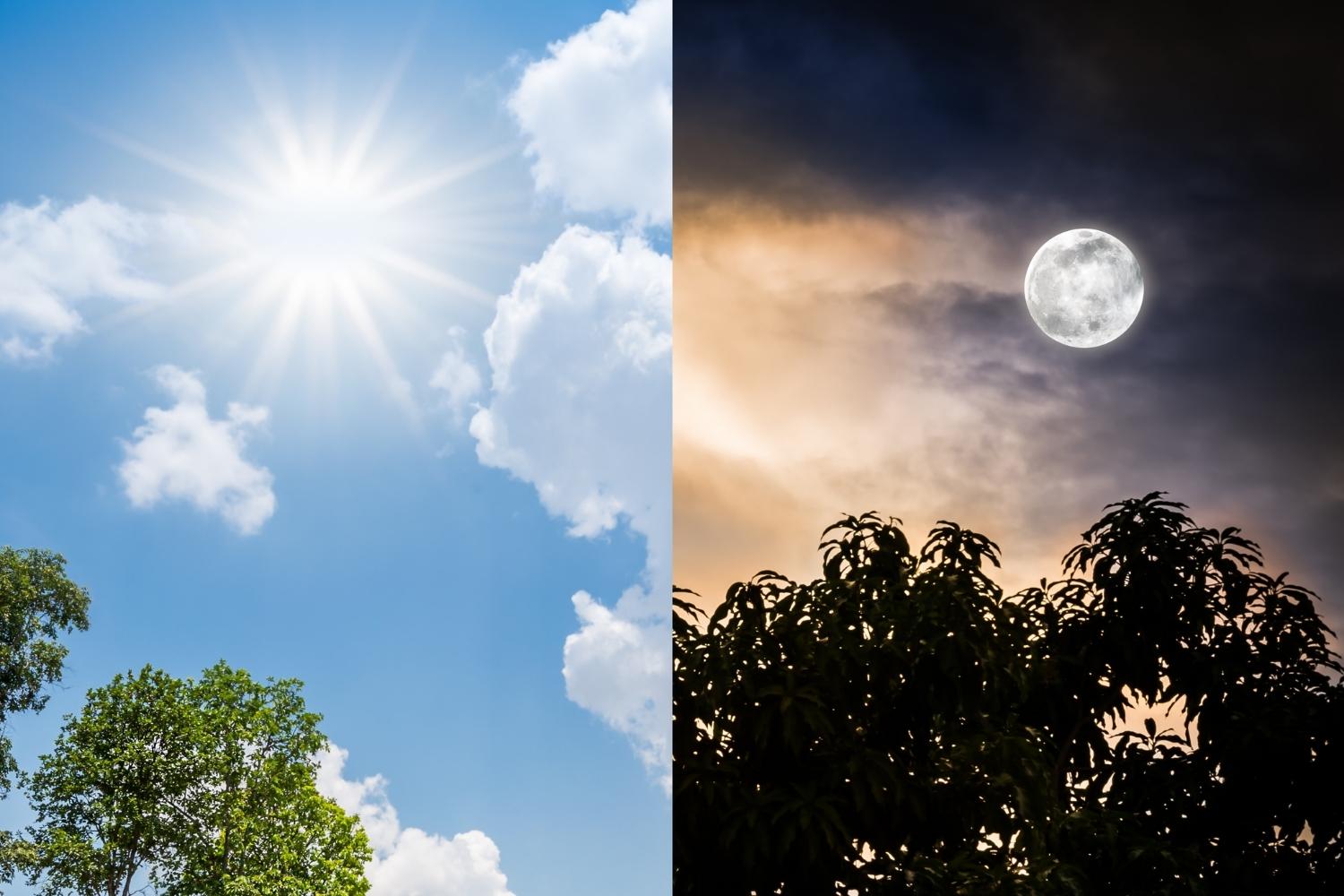
Every year, when autumn arrives, we hear that with the equinox, day and night have the same duration. In reality this is not really the case. The moment in which the hours of light and those of darkness are equal really exists, but it has another name: equilux or equiluce. And in 2026, in Italy, it will arrive a few days after the astronomical start of autumn.
The equinox is not the day of 12 hours of light and 12 hours of darkness
The word equinox derives from the Latin aequinoctium, meaning “equal night”, and recalls the idea that day and night are of the same duration. But from a practical point of view this is not exactly the case. The autumn equinox 2026 will fall on September 23: at that moment the Sun will cross the celestial equator and astronomical autumn will officially begin in the northern hemisphere. But on that day, in most places, the daylight hours will still be slightly higher than 12. The reason is linked to several astronomical and physical factors.
What is equilux and why does it come after the equinox
Equilux is the day in which the actual duration between sunrise and sunset reaches approximately 12 hours, i.e. when the light and dark periods are practically equal. The difference compared to the equinox depends above all on two phenomena.
The first is atmospheric refraction: the Earth’s atmosphere slightly bends light rays and allows us to see the Sun even when, geometrically, it is already just below the horizon. This makes sunrise appear a little earlier and sunset a little later. The second concerns the way in which we calculate sunrise and sunset: in fact, we consider the moment in which the upper edge of the Sun appears or disappears from the horizon, not the center of the solar disk. The result is that the day of the equinox is 12 hours longer.
When will equilux be in Italy in 2026?
The date of the equilight changes based on latitude: it does not arrive at the same time across the planet or even at the same time in all Italian regions. In our country, in 2026, it will fall between the 25th (in the northernmost areas of Italy) and the 27th September (in the southernmost areas), therefore a few days after the equinox of September 23rd.
Locations closer to the equator reach this balance more quickly, while as latitude increases the difference between equinox and equilux tends to increase.
After the equilight the nights become longer
Once the equilux has passed, in the northern hemisphere the hours of darkness will continue to increase until the winter solstice, scheduled for December 21, 2026. It will be the day with the fewest hours of light of the year, after which the cycle will slowly reverse and the days will begin to get longer again.
The equilux is therefore a small detail of the astronomical calendar, but it reminds us of an interesting thing: even events that seem simple and “precise” like the beginning of the seasons are the result of a balance between the movement of the Earth, the light of the Sun and the characteristics of our planet.
