
@ai generated
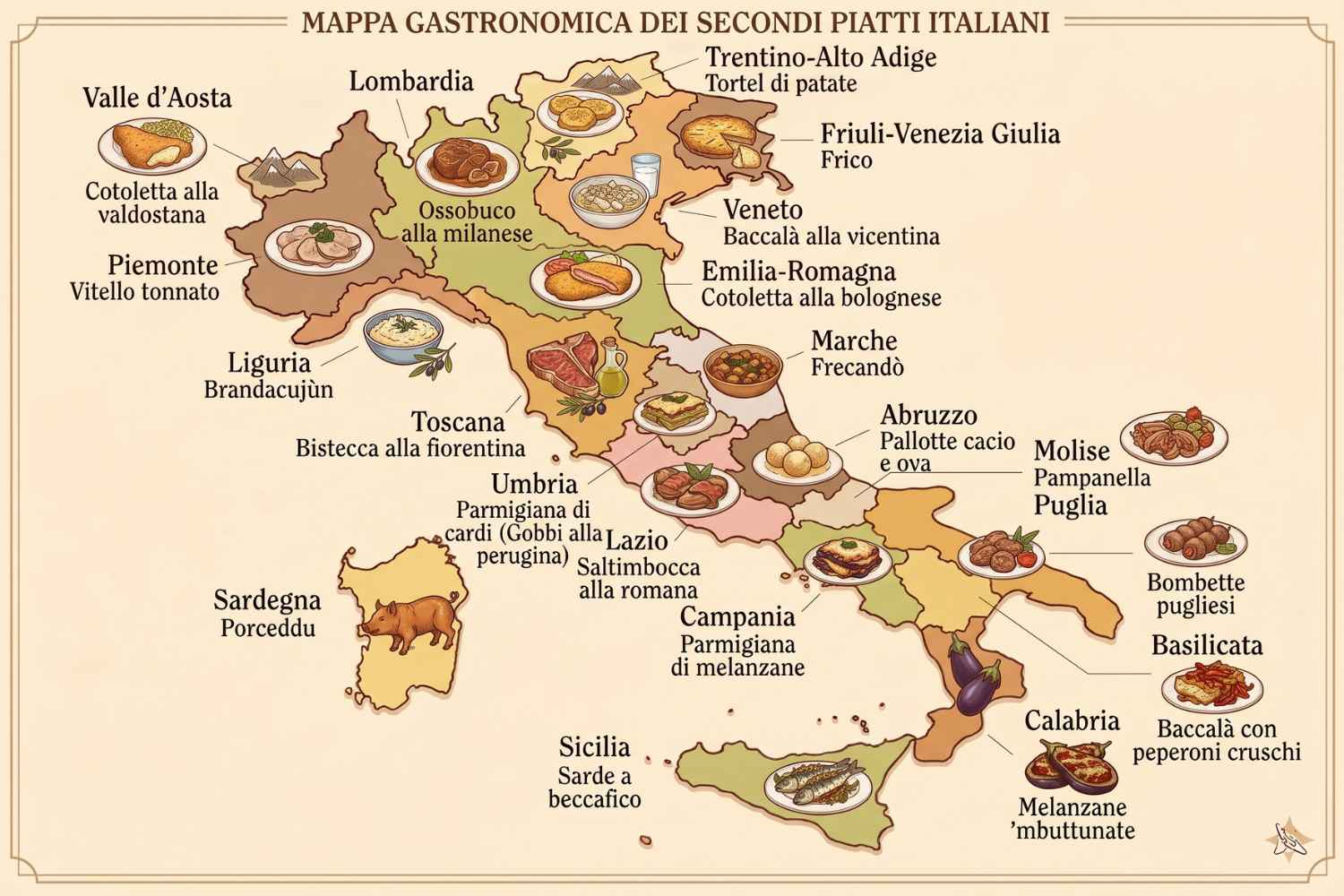
Grilled meat, fish, roasts, baked recipes and vegetarian specialities: typical Italian second courses change completely when moving from one region to another and tell the story of the profound connection between cuisine and territory.
There are preparations that have become famous throughout Italy, such as the Florentine steak, the Abruzzo kebabs or the Sardinian porceddu, and others that are decidedly more local. Alongside the great meat and fish main courses, there is also no shortage of vegetarian recipes born from peasant cuisine, often based on cheeses, eggs, legumes and vegetables.
Let’s see some of the traditional Italian second courses region by region, from North to South.
Aosta Valley
View this post on Instagram
Among the most characteristic second courses of the Aosta Valley are Aosta Valley cutlets, prepared with slices of meat or ribs enriched with Fontina and then breaded and fried. It is a substantial recipe, perfectly in line with the mountain cuisine of the region.
Another great classic is the Valle d’Aosta carbonade, a beef stew cooked slowly in red wine and characterized by an intense flavour.
Piedmont
View this post on Instagram
One of the best-known Piedmontese second courses is vitello tonnato, prepared with thin slices of veal accompanied by the characteristic tuna-based sauce.
Decidedly more opulent is the Piedmontese mixed fry, in which different cuts of meat and offal can be found, together with other sweet and savory ingredients breaded and fried.
Liguria
View this post on Instagram
Among the Ligurian fish-based specialities, brandacujùn deserves space, prepared with stockfish and potatoes, processed together until obtaining a soft and creamy consistency. It is generally served warm and seasoned with extra virgin olive oil.
It is a recipe deeply linked to the Ligurian maritime tradition and the simple cuisine of fishermen.
Lombardy
View this post on Instagram
In Lombardy one of the most representative second courses is ossobuco alla Milanese, often served together with saffron risotto. The long cooking makes the meat soft, while the marrow contained in the bone is one of the distinctive elements of the dish.
Another great classic is cassoeula, a robust preparation based on pork and cabbage.
For those looking for something without meat there are sciatt Valtellina, buckwheat pancakes with a heart of stringy cheese, traditionally accompanied by chicory or salad. Even grilled Valtellina cheeses with polenta, prepared for example with Casera or Bitto, can become a substantial vegetarian second course.
Trentino Alto Adige
View this post on Instagram
The cuisine of Trentino-Alto Adige offers numerous hearty dishes linked to the Alpine tradition, including grilled meat accompanied by sauerkraut. As a vegetarian alternative we find potato tortel, a sort of crunchy pancake made with grated potatoes, often accompanied by local cheeses. Served with a cheese like Vezzena, it can become a rich second course.
Veneto
View this post on Instagram
Among the most famous Venetian second courses is cod Vicentina style, which is not actually prepared with salted cod but with stockfish. The fish is cooked slowly with oil and milk until it becomes very tender. Another cornerstone of regional cuisine is Venetian liver, prepared with abundant onions. Among the fish recipes, it is also worth mentioning sardines in saor, with onions and a characteristic sweet and sour note.
Friuli Venezia Giulia
One of the symbolic dishes of the region is muset and brovade. Muset is a sausage similar to cotechino, traditionally accompanied by brovada, obtained by macerating turnips in marc.
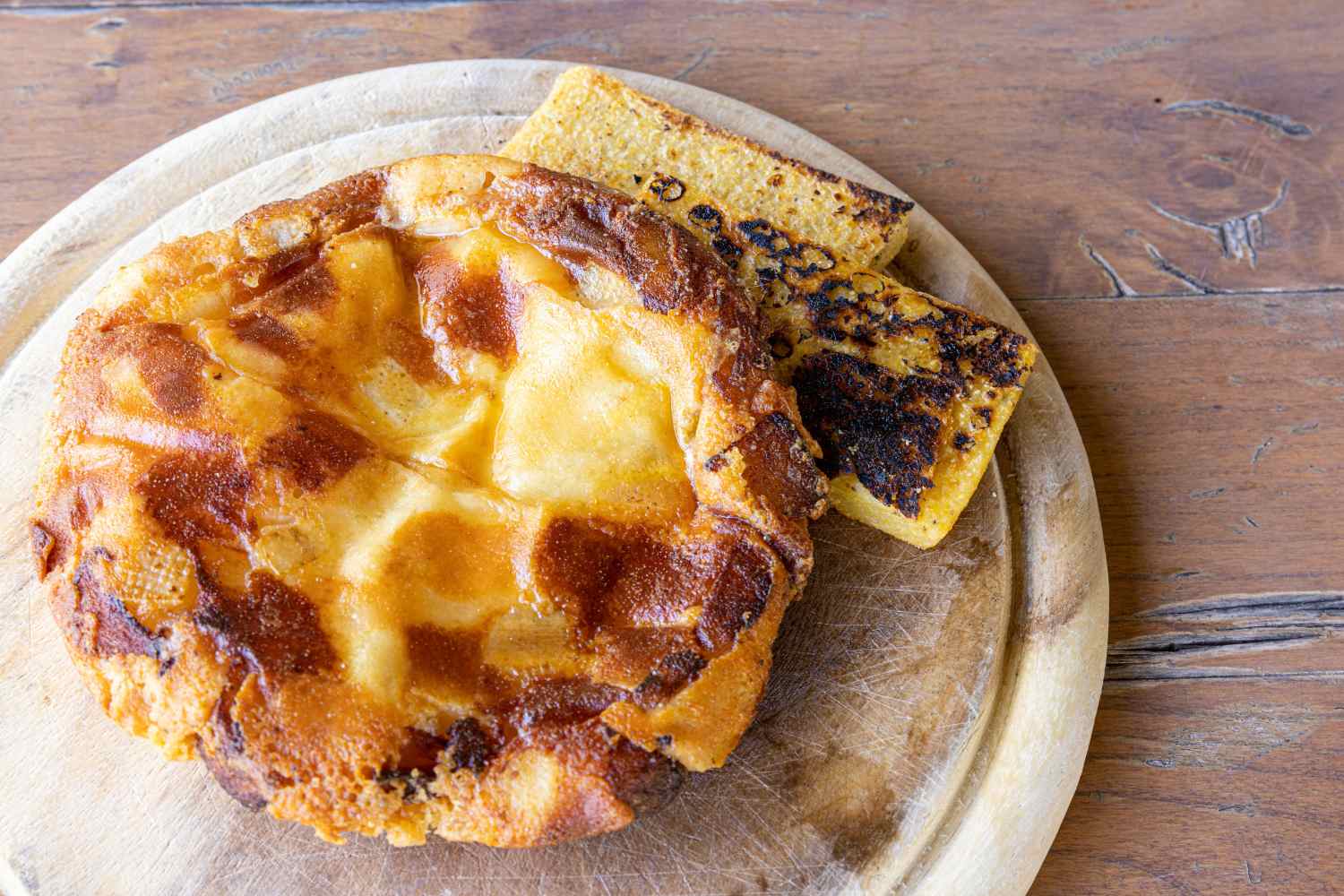
But Friuli also offers an excellent vegetarian second course: frico. The soft version is prepared mainly with Montasio cheese, potatoes and often onion, until a sort of golden cake is obtained, crunchy on the outside and stringy on the inside. There is also a thinner and crunchier version prepared mainly with cheese.
Emilia Romagna
Among the richest Emilian second courses we find the Bolognese cutlet, prepared with breaded meat and generally enriched with ham and cheese, to obtain a decidedly substantial dish.
Another pillar of regional cuisine is mixed boiled meat, made up of different cuts of meat cooked slowly and served with traditional sauces and accompaniments.
Tuscany
View this post on Instagram
The queen of Tuscan second courses remains the Florentine steak, a large cut of beef cooked on the grill and traditionally left very red in the heart.
In inland cuisine we also find stewed wild boar, often prepared with herbs and olives.
However, the Tuscan tradition also offers valid vegetarian alternatives. Cecina, also known as chickpea cake, is a thin preparation based on chickpea flour, water and oil cooked in the oven. In Livorno it is also closely linked to the famous “5 and 5”. Another possibility is the pod omelette, i.e. fresh broad beans, typical above all of spring peasant cuisine.
Umbria
View this post on Instagram
Among the most characteristic second courses we find friccò all’eugubina, a preparation similar to a stew which can include different meats, including chicken, rabbit, lamb and pork.
Another traditional dish is roast pigeon with herbs, linked to rural Umbrian cuisine.
For a vegetarian option you can instead look at cardoon parmigiana, also known as gobbi alla Perugina: a substantial recipe in which cardoons are transformed into a rich and tasty baked dish.
Marche
One of the most interesting second courses from the Marche region is rabbit in porchetta. The rabbit is flavored with fennel and can be stuffed with ingredients such as livers, bacon, sausage or lard before cooking.
On the vegetarian side we find frecandò, a traditional Marche peasant preparation based on stewed vegetables. In some ways it resembles a ratatouille: different vegetables are cooked slowly together until they become soft and tasty. It can be served as a side dish, but in a generous version and accompanied by bread it also represents a simple vegetarian second course.
Lazio
View this post on Instagram
Among the second courses of Roman cuisine, Roman saltimbocca stands out, thin slices of veal flavored with ham and sage and cooked quickly in a pan.
The preparation of the oxtail, one of the symbols of popular Roman cuisine, in which the meat is stewed for a long time until it becomes very soft, is decidedly longer and more laborious.
Abruzzo
View this post on Instagram
Arrosticini are probably the second most famous of Abruzzo: small pieces of sheep meat strung on long skewers and cooked on the characteristic embers of the furnacella.
Alongside meat we find one of the great vegetarian dishes of the Abruzzo tradition: pallotte cacio e ova. They are meatless meatballs prepared mainly with bread, cheese and eggs, first fried and then left to flavor in tomato sauce.
A perfect example of how poor cuisine has managed to create a rich and substantial second course using very simple ingredients.
Molise
View this post on Instagram
Among the most characteristic Molise second courses is pampanella, prepared with generously spiced pork, in particular with chilli pepper, and then cooked slowly. It is one of the recipes that best represents the strong character of regional cuisine.
Campania
A combination that is practically inseparable from Neapolitan cuisine is sausage and broccoli: pork accompanied by the characteristic broccoli sautéed in a pan with garlic, oil and chilli pepper.
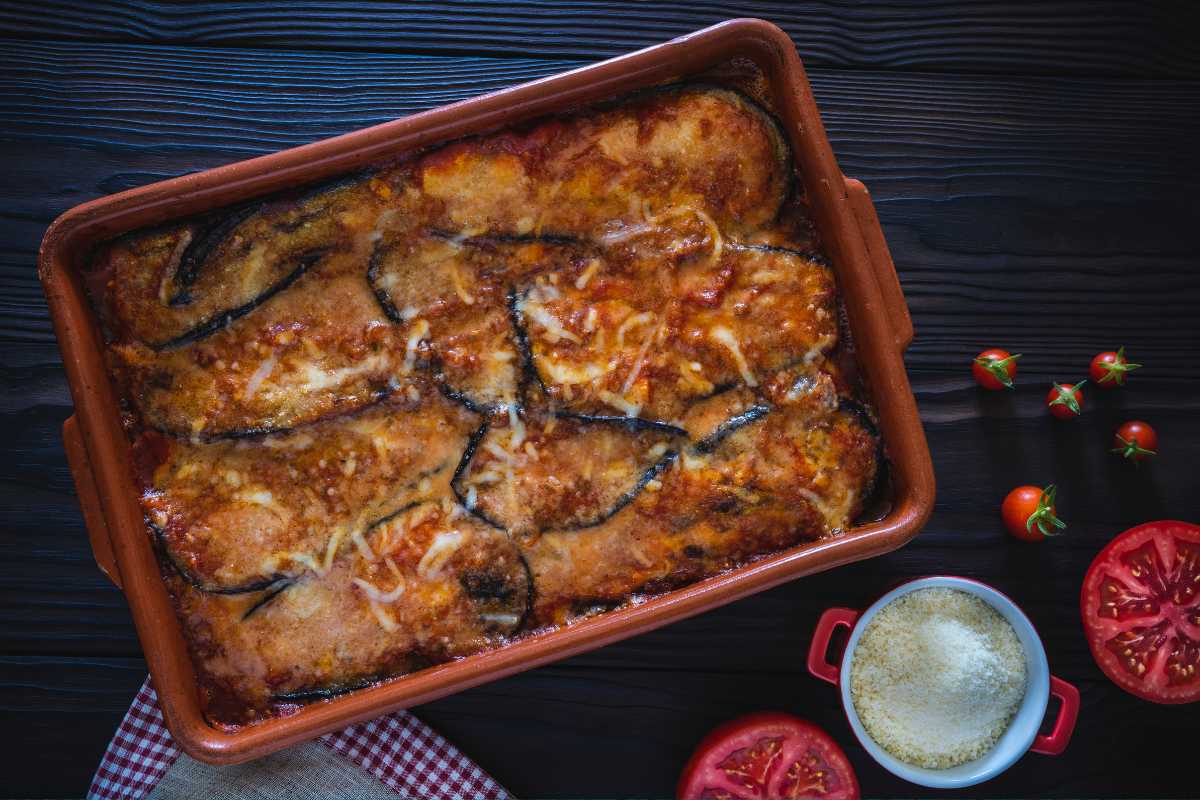
Among the vegetarian second courses, aubergine parmigiana cannot be missing, prepared by layering aubergines, tomato, cheese and basil and completing everything with generous cooking. The familiar variations are numerous and the discussion on ingredients and preparation is part of the tradition.
Puglia
View this post on Instagram
The Apulian bowlers are one of the most recognizable seconds in the region, especially in the Valle d’Itria area. These are small pork rolls stuffed with cheese and other ingredients and then cooked traditionally on the stove.
For a vegetarian second course you can instead focus on Mediterranean-style baked cheese: caciocavallo or other local cheeses are cooked in foil together with cherry tomatoes, olives, oregano and other Mediterranean flavours. The heat makes the cheese soft and stringy, while tomatoes and olives add freshness and flavor.
Basilicata
View this post on Instagram
One of the most characteristic second courses of Basilicata is cod with bran peppers. The flavor of the fish meets the famous dried and quickly fried Senise peppers, which thus acquire their unmistakable crunchy consistency.
It is one of the dishes in which few ingredients manage to express the Lucanian territory with particular effectiveness.
Calabria
View this post on Instagram
Calabria offers numerous second courses of both meat, fish and vegetarian dishes. Among the seafood dishes we find swordfish alla ghiotta, while among the meat preparations the morzeddhu or Catanzaro morzello deserves a mention, with an intense flavor and deeply linked to popular tradition.
Very interesting are the milingiani ‘mbuttunati, i.e. Calabrian-style stuffed aubergines. The filling varies from family to family: some versions contain minced meat, eggs and cheese, while others are prepared without meat.
Among the vegetarian second courses we can also mention the ricotta meatballs with sauce and the aubergines stuffed with potatoes, olives and capers, examples of a cuisine that manages to obtain dishes rich in flavor even starting from simple ingredients.
Sicily
View this post on Instagram
Among the most representative fish second courses are beccafico sardines. The sardines are rolled around an aromatic filling in which there is breadcrumbs, raisins, pine nuts, parsley and citrus aromas, creating the typical contrast between sweet, savory and aromatic of Sicilian cuisine.
Equally characteristic are the swordfish rolls, prepared with thin slices of fish stuffed with flavored breadcrumbs and ingredients that may include caciocavallo, capers, tomato and herbs.
Two recipes that perfectly describe the relationship between Sicilian cuisine and the Mediterranean.
Sardinia
Porceddu is one of the second symbols of Sardinia. The suckling pig is slowly roasted, traditionally on a spit or near the embers, until crispy skin and very tender meat are obtained. Myrtle is often used to perfume preparation or service.
On the fish side we instead find Catalan lobster, particularly linked to the Alghero area: the pulp of the crustacean is served with tomato and onion, in a dish that clearly shows the Catalan influences on local cuisine.
From this journey through the Italian regions it clearly emerges that the tradition of second courses still remains strongly linked to meat, often the undisputed protagonist of local cuisine, from the Florentine steak to the Abruzzo kebabs, up to the Sardinian porceddu. At the same time, there is no shortage of vegetarian options, often born from peasant and poor cuisine, capable of transforming simple ingredients such as cheeses, eggs, legumes and vegetables into rich and tasty dishes. A gastronomic heritage which, while remaining rooted in its more traditional foundations, still offers a wide variety of choices even to those who prefer a meat-free diet.
