
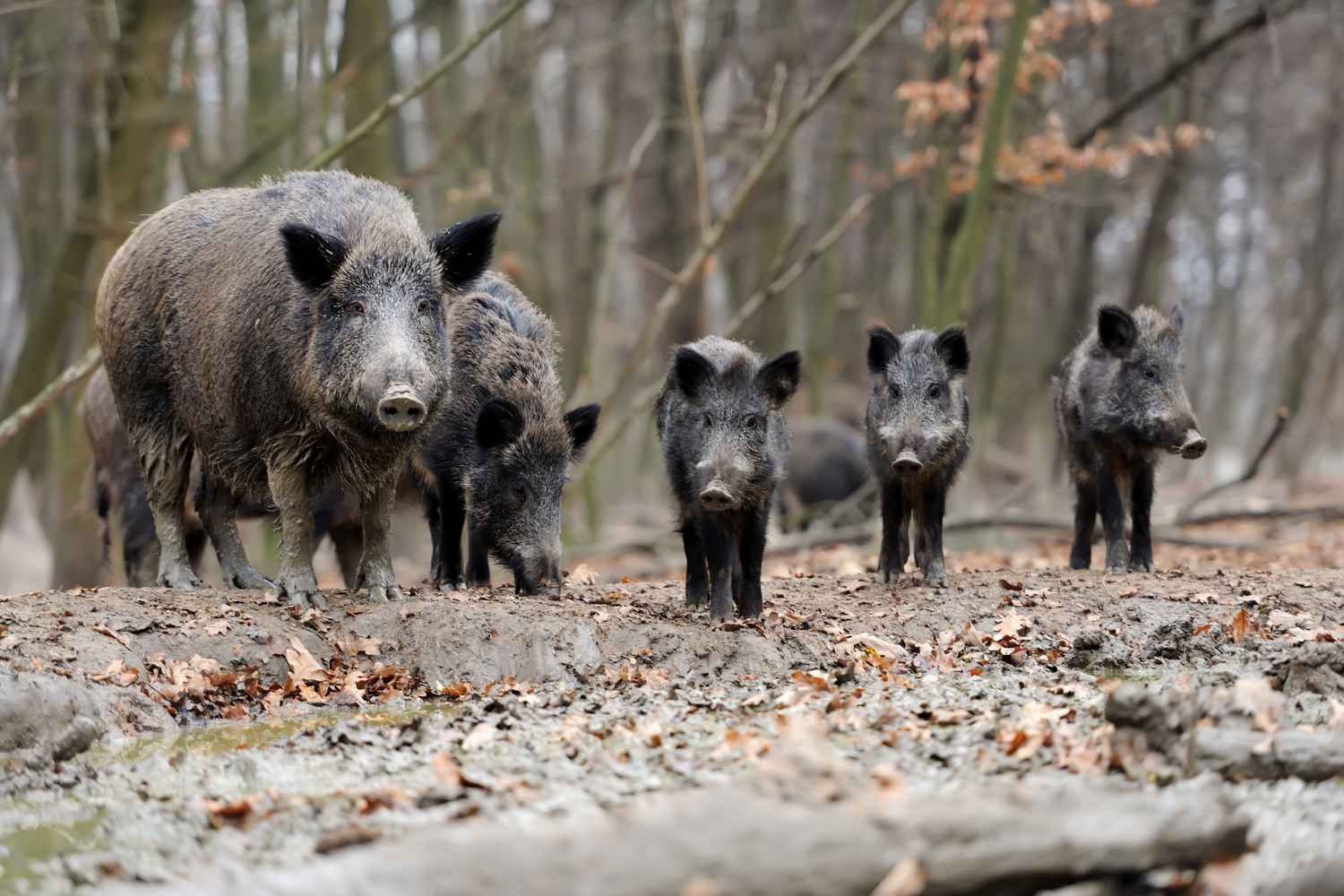
African swine fever (ASF) is once again worrying Lazio. After the confirmation of some cases among wild boars in the Riano area, north of Rome, an infected zone was established and various restrictions were introduced. Now 20 Municipalities and Municipalities III and XV of Rome Capital are asking the Lazio Region and the Extraordinary Commissioner for PSA to intervene quickly, with a coordinated plan to contain the spread of the virus.
The situation became complicated again at the end of August, with the discovery of virus-positive wild boar carcasses in the Riano area. The Lazio Region therefore formalized the infected area with ordinance Z00005 of 2 September 2026, triggering the related control measures.
Among these there is one that directly concerns free time activities. In fact, the ordinance prohibits outdoor events, gatherings and picnics in agricultural and natural areas. Activities such as trekking and mountain biking are also prohibited in the same areas.
The objective is to reduce the opportunities for contact with the environment frequented by wild boars and therefore the risk of contributing, even indirectly, to the spread of the virus. Citizens are also asked not to approach, feed or disturb the wild boars and to promptly report any carcasses or animals in difficulty.
We are certainly not talking about a new disease for the area. The PSA had already affected the Roman area in recent years, but the situation had progressively improved until the emergency emerged. The new circulation of the virus therefore brings Lazio back to a problem that simultaneously concerns wildlife, pig farming and the economic activities of the territories concerned.
The Ministry of Health explains that in Italy the disease mainly affects wild boars and only on a limited number of occasions farmed pigs. Precisely for this reason the national plan provides for specific surveillance of the wild population, the search for carcasses and a series of measures to prevent the virus from reaching farms.
The appeal of the 22 territories: “We can’t wait any longer”
The appeal was signed by the mayors of Campagnano di Roma, Capena, Castelnuovo di Porto, Civitella San Paolo, Fiano Romano, Filacciano, Fonte Nuova, Formello, Guidonia Montecelio, Magliano Romano, Mazzano Romano, Mentana, Monterotondo, Morlupo, Nazzano, Ponzano Romano, Riano, Rignano Flaminio, Sacrofano and Sant’Oreste, together with the Municipalities III and XV of Rome Capital.
The document asks the Lazio Region and the Extraordinary Commissioner for PSA for a coordinated and urgent intervention. The signatory territories ask in particular for an extraordinary containment and depopulation plan, together with the convening of an institutional table that clearly establishes interventions, resources, subjects in charge and times.
We have accepted restrictions and sacrifices, but we cannot face an emergency of this size alone – the administrators write.
The document also underlines that citizens, businesses and economic activities are already bearing the consequences of the limitations. Cancelled events, limitations on the use of some areas and difficulties for activities related to tourism, agriculture, hospitality and events risk, according to the Municipalities, having increasingly serious consequences if the emergency were to continue.
In their appeal, the 22 territories ask that the wild boar population be “significantly reduced” and talk about strengthening capture, control and depopulation, both in protected areas and in external territories.
Obviously, the real concern from an economic and health point of view is that the virus passes from wildlife to farms.
For a pig farm, an outbreak can mean restrictions on the movement of animals and products and, in the cases provided for by the regulations, the culling of animals present in the affected or epidemiologically related farms. Added to this are the indirect damages for the entire supply chain.
It is a situation in which the speed of response really matters, but the response cannot be reduced to just one measure, that of culling the wild boars.
ENPA contests the culling: “They don’t stop swine fever”
Already in August, before the new alarm north of Rome, the Viterbo and province section of the Enpa had contested the regional wild boar containment plan for 2026-2027, questioning the effectiveness of large-scale culling as a tool to combat African swine fever.
The association maintains that to contain the disease it is necessary to focus above all on prevention, on the management of food sources and waste, on fences to protect crops and on the search for alternative methods for managing the wild boar population, such as immunocontraception.
A position that brings an important question back to the center: is reducing the presence of wild boars really only possible through culling or are there complementary strategies that allow us to contain the virus by limiting the impact on wildlife?
What is African swine fever
African swine fever (ASF) is a viral disease that affects domestic pigs and wild boars and can cause high mortality. There is currently no specific cure or effective vaccine.
It is not transmitted to people, either through contact with infected animals or through the consumption of meat. However, the virus can spread rapidly between animals, both through direct contact and indirectly through contaminated carcasses, materials, equipment, vehicles and clothing. For this reason, biosecurity and the correct management of dead animals are essential to limit their circulation.
What citizens can do
People living in the affected territories can also help prevent the virus from moving. The first rule is to never feed wild boars and do not leave waste or food scraps easily accessible.
If a carcass is found, however, you should not approach or handle it, but report it to the competent services. The Municipality of Riano also indicates the regional Civil Protection toll-free number 803 555, active 24 hours a day, for the ongoing emergency.
These are simple behaviors that can help reduce opportunities for contact and, above all, improve disease surveillance.
